

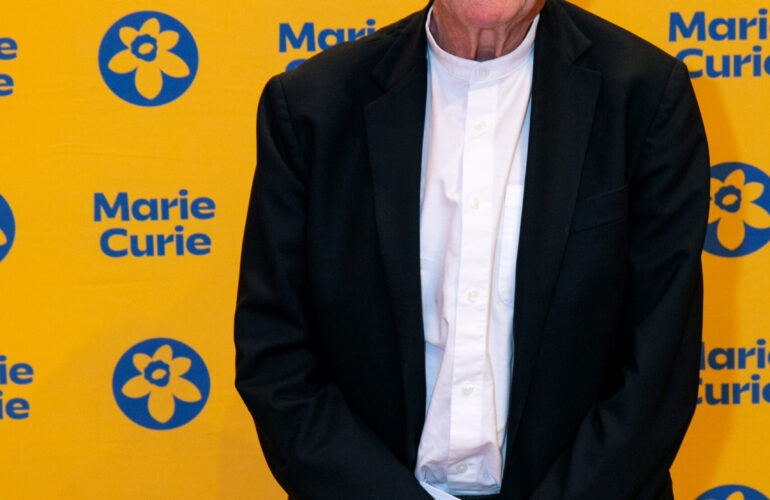
Michael Palin, Russell T Davies, Larry Lamb, Chris Kamara and Megan McKenna are among a hostof Marie Curie supporters speaking up on personal experiences of death to urge Prime Minister Andy Burnham to fix palliative care. Sharing their own experiences of supporting someone at the end of life, the celebrities insist recent talk and years of warm words must turn to action.
Stephen Fry, Alison Steadman, Stephen Mangan, Jim Carter, Greg Wise and Jacqui Joseph complete the group of household names who want the Prime Minister to seize the moment and follow through on his promises. In recent months he, like many MPs across the house, has publicly spoken of the need to fix palliative care.
Currently almost 1 in 3 people across the UK do not get the support they need at the end of life. Existing palliative care provision is patchy, and services vary significantly across the UK with many people resorting to 999 or A&E in the absence of anywhere else to turn. A recent survey by Marie Curie and Nursing Standard of 1,050 frontline nurses found more than 55% had delivered end of life care in a corridor.
Larry Lamb: “I spent most of my brother Wesley’s final week in his room with him at a Marie Curie hospice. I got to say goodbye properly. I can only imagine what it would have been like for Wes to not get the pain relief he needed in his final days. But this is a reality for many people. We all deserve to die in dignity and something needs to change to make that happen.”
Russell T Davies OBE: “My husband Andrew died in 2018 after living for eight years with brain cancer. During his final weeks, Marie Curie nurses came to our home. The care was extraordinary and it allowed Andrew to die at home, where he wanted to be. I feel so grateful for their care and support, and it’s sad to think how easily it could have been different. We need to look after people who are dying properly, and right now that’s too much of a battle.”
Sir Michael Palin: “I will be forever indebted to Marie Curie after the wonderful, thoughtful and caring treatment my wife received in the last days of her life. For her short time receiving hospice care, my wife was delivered from much of the pain and discomfort she’d endured for years, and given the chance to have a calm and dignified end to her life. Everyone should have access to the care they need and deserve.”
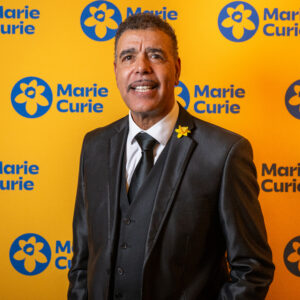
Chris Kamara MBE: “We were lucky enough to experience Marie Curie care when my mum died. She died supported, with the right medication and the specialised care for someone who was dying. I know how lucky we were – but it shouldn’t be down to luck. Not enough people get this, and it simply isn’t right. Andy Burnham has said palliative care needs fixing – we need to ensure he follows through to fix it now.”
In England, opportunity to make good on these promises lies on the horizon. Last year the UK Government promised to publish a plan – the Modern Service Framework for Palliative and End of Life Care – by this autumn. However, the charity warns that this must come with short-term funding support to make it happen.
Marie Curie is calling for a three-year, £200 million-a-year, transformation fund to redesign services and scale up proven models of care. Without this, the charity believes it will be difficult to shift more care from hospitals into the community.
Matthew Reed, chief executive of Marie Curie, said: “At the worst moments in life there’s the assumption there will be care and support ready to kick in. For nearly one in three people of us in the UK, this does not happen.
“Encouraging action can be hard because it is not until you’ve been in these shoes, helpless at the bedside of a loved one in needless pain and distress, that you see the gaping holes in end-of-life care in the UK.
We need the governments of all four nations to take heed and take action. But right now, our eyes are on Westminster as England can lead the way in publishing a workable strategy, backed by funding, that would drag us into the 21st century and look after our dying with care and compassion, not chance or luck.”
The charity supports the UK Government’s aims to shift more care from hospitals to the community and wants to see universal access to 24/7 support through 111, improved access to specialist end of life medicines and a 2-hour urgent community response service operating round the clock for people with palliative and end of life care needs. The charity has invested funding in developing new ways to support people earlier and proven they work It is working in hospital emergency departments, GP surgeries and care homes to identify people who need palliative care before crisis hits.
Sir Stephen Fry : “Dying is inevitable. Dying in pain and distress is not. To know that in the UK people die every single day without getting the right care is deeply upsetting. But there is an opportunity to do something about it. That’s why I support Marie Curie in calling on the UK Government to make the changes needed to transform palliative care provision in this country.”
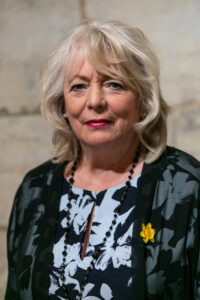
Alison Steadman OBE: “I’m an ambassador for Marie Curie because of the wonderful care my mum received when she was dying. Until a loved one dies, it can be hard to realise just how important those final days are. Like my mum, everyone deserves a good death. High-quality end of life care should be available for everyone, not a ‘nice to have’ if you are lucky.”
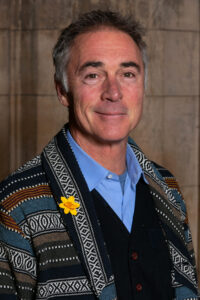
Greg Wise: “We are all going to die. We will all need end-of-life care. We all will need to be looked after, have our distress calmed, our pain managed – alongside the distress and pain of our loved ones bearing witness. The fact that nearly one in three people in the UK die without getting the care they need is an outrage. We should all feel ashamed. We, as a society, need to fix this woeful state of affairs. We are judged by how we look after the most vulnerable amongst us, after all…”
Megan McKenna: “Marie Curie nurses were there for my grandad when he died, and it was so important to know that he was properly cared for in his final moments. They knew exactly what to say and what to do and their support meant so much to our family. It’s very upsetting to realise that so many people die without this kind of support. That’s why I want to use my platform to share Marie Curie’s work.”
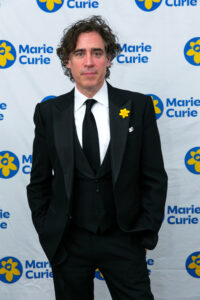
Stephen Mangan: “Both of my parents died at home. Every day, I was there caring for them, but I couldn’t have done it alone, and the support of organisations including Marie Curie made it possible for my parents to die where they wanted to. I’m so grateful that this is what the end of my parents’ lives looked like. No one should die in hospital when they don’t want or need to be there, and far too many people do.”
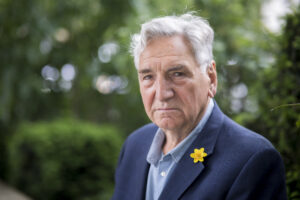
Jim Carter OBE: “In this country, dying often doesn’t come with care and dignity, but with avoidable pain, poverty, and significant uncertainty around where to turn for help. Andy Burnham has recognised that something needs to change – please let him use the Modern Service Framework to make this change a reality, and put funding behind a plan to fix palliative care in this country.”

Jacqui Joseph: “I’m an ambassador for Marie Curie because I believe no one should die without the support they need. It seems basic, but the Government need to properly fund and deliver good quality end of life care for everyone. I’m proud to support Marie Curie’s call to reform end of life care in this country. to ensure everyone gets the care they need when they are dying.”
Marie Curie is encouraging people to support its campaign to fix end of life care. To join the calls for action, sign the charity’s petition at Marie Curie Campaigns
Matthew Reed concludes:
“As our population ages, tens of thousands more people will need palliative care each year. Without action now, more families will be left without support and pressure on the NHS will deepen unless we ramp up doing things differently. At Marie Curie we have done the thinking, and trialled new services proven to work. Now we need UK governments to make them available to everyone. They must. Families saying goodbye do not get a second chance — and successive governments have had far too many.”
Marie Curie is the largest charity provider of palliative end of life care and biggest charity funder of research on dying, death and bereavement in the UK. It also provides services which offer practical information and emotional support on all aspects of death, dying and bereavement. Call free on 0800 090 209 or visit www.mariecurie.org.uk/support
*A recent survey of frontline nurses by Marie Curie and Nursing Standard, the journal of the Royal College of Nursing, found that of 1050 nurses surveyed more than 55% had delivered end of life care in corridors.
**To support implementation of the MSF, Marie Curie is calling on the Government to establish a three-year Transformation Fund, supported by at least £200 million per year. The Transformation Fund would be short-term, targeted funding that would help turn the ambitions of the Modern Service Framework into meaningful improvements for people and families. It would support local systems to redesign services, improve care coordination, adopt proven models of care and address inequalities in access and outcomes.
Palliative care provision across the UK
Healthcare, including palliative and end of life care, across the UK is devolved. Marie Curie provides services across the UK and campaigns for the governments of each nation to improve end of life care.
Wales
The Welsh Government has committed to address the key challenges facing palliative and end of life care in its recently published Programme for Government, marking a vital first step in recognising the importance of palliative care.
But Marie Curie Cymru says this headline commitment must be accompanied by action that drives meaningful change which is felt by those living with a terminal illness – including 24/7 access to advice and support from palliative care professionals via 111, the roll out of palliative care paramedics in all parts of Wales and the placement of a palliative care nurse in every community.
Northern Ireland
In Northern Ireland, Marie Curie is calling for core funding from the Northern Ireland Executive to ensure sustainable and fair access to palliative and end of life care. The Department of Health recently accepted the majority of recommendations put forward by a Health Committee Inquiry into access to palliative care services but conceded that the budget was not currently available to make any of the recommendations a reality.
Scotland
We know what makes a difference: early identification of needs, person-centred care, future care planning, support closer to home where appropriate, 24/7 support, and better coordinated services across health, social care and the third sector.
Much of this is acknowledged in the Scottish Government’s strategy ‘Palliative Care Matters for All’. However, while the strategy sets out a vision and direction of travel, it does not and can not guarantee consistent delivery.
To address this, the Scottish Government must legislate to recognise and deliver a right to palliative care for everyone in Scotland. The right needs to be underpinned by Minimum Service Standards, to create accountability and clarity for individuals and families, as well as the professionals and organisations responsible for providing care. These must act as a driver for sustainable funding and resourcing for palliative care and incentivise investment in community and preventative care.
——————-
Lead Photo: Michael Palin
=================
ehospice is proud to help promote individual, local, national and international voices in Hospice & Palliative Care
We are on target to have over One Million page views this year.
To stay in touch with colleagues and news around the world subscribe to our free Newsletter





Leave a Reply