


By Gaby García-Durán and Alex Daniels
ICPCN Education Team
Have you ever left a conversation certain that you had explained everything clearly, only to discover that the other person understood something completely different?
You spoke. They listened. The words were there. But did the message really get through?
Picture a conversation unfolding at the bedside of a seriously ill child. Fear, hope, uncertainty, and silence may all linger in the air. The words exchanged are shaped by languages, cultures, beliefs, and expectations. A parent may speak in ways meant to shield their child. A child may choose words that soften the burden for their parents. And a healthcare professional may search carefully for the words that feel “right.”
In Children’s Palliative Care (CPC), communication is not simply about passing on information. It is about what is said, what is heard, what is understood, and sometimes, what remains unspoken.
This is the starting point for the newly upgraded Communication and CPC e-learning course offered by the International Children’s Palliative Care Network (ICPCN).
What if the most important question isn’t “What should I say?”
Healthcare professionals often worry about choosing the right words.
How do I break serious news?
What do I say when a parent asks how long their child has?
What happens when a child asks, “Am I going to die?”
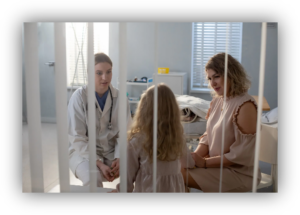
Perhaps communication begins with a different question: How can I create a space where this child and family feel safe enough to tell me what truly matters to them?
Across four modules, the upgrade course explores culturally sensitive communication; communicating with parents and caregivers; communicating with children, including conversations about illness, dying and death; and effective communication within multidisciplinary teams.
The focus is not on memorising a perfect script, but on developing the ability to listen, observe, respond, adapt and connect.
When words are not enough
Children communicate in many different ways. Through a drawing. A playful game. A teddy bear receiving an injection. A question asked repeatedly. In anger. In humour. In avoidance. Through eye contact – or by turning away. And sometimes, through silence.
This course explores play as much more than entertainment. Play can offer children a developmentally appropriate way to explore medical experiences, express emotions and make sense of what is happening around them.
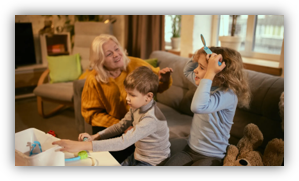
Learners are encouraged to reflect on developmental stages, sensory needs, neurodiversity, and each child’s unique ways of communicating.
The principle is simple:
Communication should adapt to the child, not the child to our communication.
Curiosity changes conversations
Culture, spirituality and religion can influence how children and families understand illness, make decisions, experience pain and suffering, talk (or not talk) about dying and death, and decide who should be involved in important conversations.
Culturally sensitive communication isn’t about memorizing a checklist of beliefs—it begins with genuine curiosity.
What matters to you?
Who would you like to include in the discussion?
What do I need to understand about your family to care for your child well?
The course encourages learners to move from “I know” to “Help me understand.”
That small shift can transform a conversation.
More than another “click Next” course
This course upgrade goes beyond refreshing content. It redesigns the learning experience.
Learners engage with clinical scenarios, videos, audio, flashcards, evidence-based readings, reflective activities, knowledge checks and opportunities to connect learning directly with practice.
Reflection Logs encourage participants to pause, capture their thoughts and consider what they might do differently in their own practice.
Because meaningful learning should not end when the browser closes.

Communication happens between teams too
Children and families interact with doctors, nurses, psychologists, social workers, therapists, spiritual care providers and many others. When professionals do not communicate effectively with each other, families can be left trying to put the pieces together themselves.
The final module therefore explores teamwork, collaboration, role clarity, shared understanding and structured communication.
Compassionate communication is everyone’s responsibility.
Ready to explore?
The upgrade course on Communication and CPC invites professionals across disciplines, countries and diverse care settings to see communication not simply as a clinical skill, but as a fundamental part of how we accompany children and families.
Perhaps the question we take into our next conversation should not be:
“Did I say the right thing?”
but something much more powerful:
“Did I create the space to hear what really needed to be said?”
Explore the upgrade course here:
https://www.elearnicpcn.org/course/view.php?id=549
For further information about the course, educational resources or any questions, please contact:
Gaby García-Durán
Education Officer, ICPCN
Email: education.officer@icpcn.org


Leave a Reply