

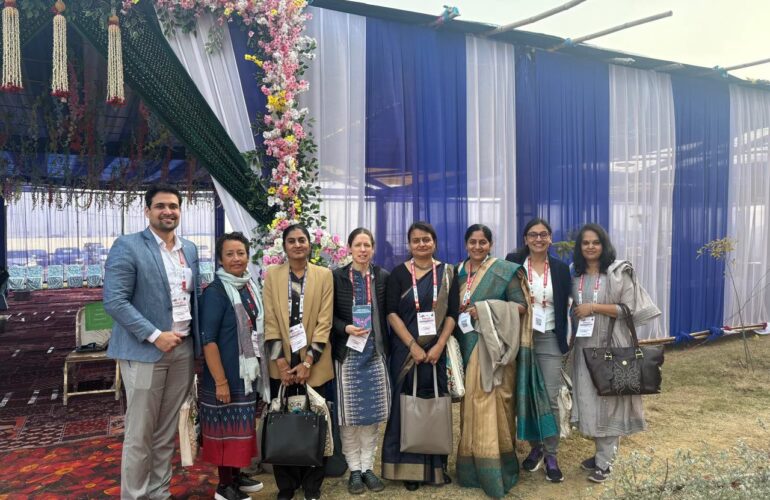
IAPCON 2025, the 32nd International Conference of the Indian Association of Palliative Care (IAPC), was held at the prestigious All India Institute of Medical Sciences (AIIMS) in Jammu. Jammu, known as the ‘city of temples’, is in the Union Territory of Jammu and Kashmir and is the largest city in the Jammu district.
The day before the main conference, over 300 healthcare professionals gathered at four venues across the city to participate in 14 pre-conference workshops. A small, spirited group of delegates met at the Government Medical College for a stimulating paediatric palliative care programme facilitated by local and international facilitators. The day commenced with a discussion on symptoms commonly encountered in a paediatric palliative care context, including delirium, neuro-irritability, dystonia, and dyspnoea.
Pain and distress, both within the context of non-communicating children as well as procedural pain in children with cancer undergoing invasive treatments, were discussed. Before lunch, the panel explored some of the issues unique to India that arise around complex ethical decisions including the child’s autonomy, informed consent/ permission and assent, feeding and hydration at the end of a child’s life. After lunch the three workstations looked at the use of opioids in chronic pain, common non-cancer life-limiting conditions in paediatrics and serious illness conversations, leaving delegates with some useful tools to manage their complex situations.
The following morning, over 750 local and international delegates converged on the impressive AIMMS venue for the first day of the main conference. This year’s theme: ‘Evidence based Palliative Care’ provided a forum for colleagues to come together to discuss latest advancements in the field. The Scientific Committee had received an amazing 250 abstracts for this event. Over the next two and a half days, delegates were treated to a range of engaging plenary, oral and poster presentations.
In an interesting plenary talk on Day One, Dr Sushma Bhatnagar reflected on the question: ‘Reaching to Every Patient Who Needs Palliative Care in India: How close are we?’ She suggested that the current deficits in PC delivery are primarily due to lack of trained manpower, policy and lack of integration. She recognised the need to increase exposure and acceptance of PC beyond cancer care.
An informative half day PPC track entitled ‘Palliative Care in Children: Prenatal to Adolescent (Parts 1 & 2)’ generated considerable interest and raised some important points for practitioners to consider across the spectrum from neonates to adolescents. The session began with an important session that highlighted the role Primary Health Care played in the road to UHC and a case study from Hyderabad was used to illustrate continuum of care between tertiary hospital, hospice and home care.
Dr Ritabrata Bandyopadhyay shared her experiences in Hyderabad around’ Perinatal Medicine’ highlighting the fact that birth defects constitute the fifth largest cause of death in newborn babies in India. In an insightful, heartfelt presentation, Monica Santos reminded us of the effects of humour on the brain as she shared experiences of working with children, staff and caregivers as a hospital clown.
Dr Megan Doherty, in a plenary session entitled, ‘Integration of Palliative Care into Primary Care’, reflected on the situation in India with 98 million people needing PC and the situation around access in India mirroring many different countries in the world. She shared the ‘’Sistema Único de Saúde (SUS) model of palliative care from Brazil which has been successfully integrated into the country’s public healthcare system. In addition, the WHO’s Conceptual model, the Palliative Care house, was promoted as essential building blocks to increase access to PC.
Dr Frank Ferris shared his invaluable experience as a veteran clinician focusing on strategies to grow and sustain PC services. He proposed that referring physicians and managing teams were the most important customers in this context, briefing us on consultation etiquette where we seek first to understand and then to be understood. He encouraged the audience to empower everyone to a leader, a teacher and a change agent to achieve extraordinary results.
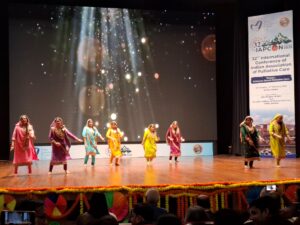
The cultural programme was an exhilarating experience showcasing exquisitely crafted colourful costumes, soulful music and performances by highly skilled artists. Many of the performers were health care professionals and the audience heartily appreciated the energetic dancers and musicians as they proudly performed, drawing upon the country’s rich cultural heritage representing many of the different regions across India.
On the last morning of the conference, the nursing track was particularly inspiring with nurse leaders sharing invaluable experiences. Dr Terrymize commenced the session with an interesting presentation on the role of the nurse in the management of patients with delirium, and the session that followed provided useful tips for nurses managing patient’s requiring Palliative Chemo- Radiation. It was good to hear from Dr Mamta Parihar about the difference a Comprehensive Geriatric Assessment had made to her patient’s home care. Ms Sangeetha shared an innovative app that she had created to support Palliative Care Initiatives for Non-Cancer Conditions in India.
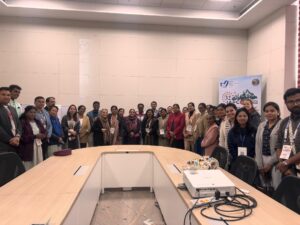
In the valedictory ceremony that marked the end of the conference, numerous prizes were distributed. These included Dr Terrymize, a nurse, who received a prize for the best oral presentation and Ms Gilly Burns who received an International Nurses Excellence award. Finally, Dr Sushma Bhatnagar stepped down as President of the IAPC and Dr Geetha Joshi was welcomed as the organisation’s new President (2025-2028).
IAPCON 2025 provided an invaluable space for learning, great discussions and networking. Thank you and congratulations to Dr Rohit Lahori and Dr Sunana Gupta (Organising secretaries), and to Dr Anjum Joad (Scientific Chair) and the team at AIIMS Jammu and IAPC for an enriching experience and a successful conference.


Leave a Reply