

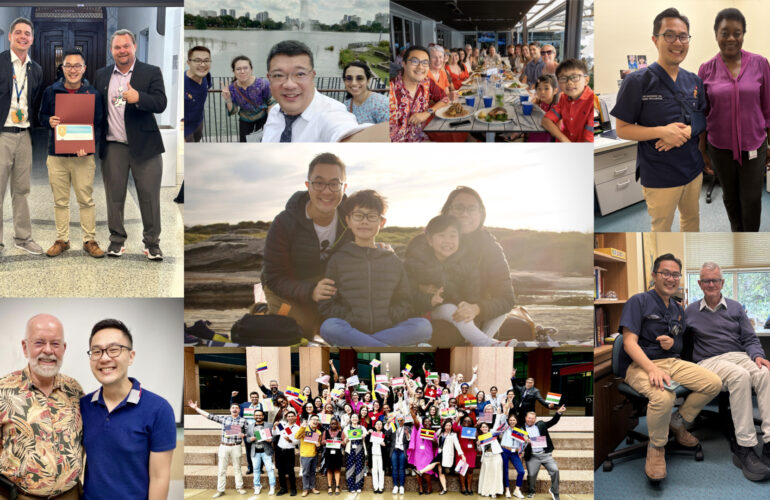
With just two months left in my Paediatric Palliative Medicine (PPM) fellowship, I find myself reflecting on how deeply this journey has shaped me—its beginnings, lessons, and the profound impact it has left on both my professional development and personal growth.
My first glimpse into palliative care came during my internship in 2012. I remember accompanying an elderly gentleman home for terminal extubation. He passed away peacefully, surrounded by family. There was a stillness in that room—not just of silence, but of peace.
It was the first time I truly understood that there is dignity in dying well — something rarely talked about in our medical training. That moment left an imprint on me, though I didn’t fully realise it then.
Years later, as a paediatrician, I met a 10-year-old boy with end-stage renal failure. After countless ICU admissions, he told us, “I know I will die soon, and when that is happening, I want to be at home.” His words stayed with me. In that moment, I felt the weight of what we couldn’t yet offer—and the possibility of what we could.
That conversation became the quiet turning point that led me here, to paediatric palliative care.
In the year 2022, I uprooted my family from Kuching to Kuala Lumpur then to Sydney for a 3-year fellowship under the Malaysian Ministry of Health subspecialty training programme. It has been an intense and humbling experience—one that has taught me the importance of presence, compassion, and holistic care.
Seize the Day
There is an urgency in this work—not just because death comes, but because life is still happening right until the end. Caring for dying children can feel just as intense as managing those in the PICU. Perhaps even more so, because every moment matters.
There’s no room for delay, or detachment. You feel everything—because you must.
A 16-year-old girl with advance cancer once asked us, “Am I going to die?” and followed with, “If I am, there are two things I need to do before that happens – to record a thank-you video for my love ones and to bake a birthday cake for my friend”.
Only later did we know we only had 1 week and heaps of pain relief for us to help her complete those tasks. On the day she died, the family sent us a video of her thanking all the doctors and nurses who took good care of her.
That moment broke and healed me at the same time. It reminded me that palliative care is about love. About making space for meaning. About the one chance we have to make someone’s last days count.
The Power of Teamwork
Palliative care work can come across as a lonely journey when you’re the only one seeing through the lens of palliative care. On the other hand, the paediatric palliative care (PPC) fraternity has grown remarkably across the globe in the recent years.
In this journey, I met mentors and teammates who understood the weight of this work—and carried it with both strength and gentleness. I am especially grateful to the consultants who supported me during my own burnout, encouraging me to break out of my comfort zone and grow.
They helped me become a more self-aware, and courageous paediatrician.
In Sydney, I witnessed what a passionate multidisciplinary team can achieve. The energy, synergy, and dedication were inspiring. Every team member—from doctors to therapists to the administrative team—played a role in delivering holistic care that honoured the child and family as a unit.
Working in with the team left a lasting impact in me on team-based PPC service development.
I also felt embraced by the adult palliative care community, and by global networks like St. Jude Global Alliance, ICPCN, and APHN. These connections reminded me that we are not alone in this calling. We are part of something bigger—a family of hearts working to bring light into the hardest places.
Self-Discovery and Growth
This journey has taught me more about myself than I could have imagine. I’ve discovered a deeper calling, one that aligns closely with who I am, not just as a doctor, but as a human being.
What stays with me are the hugs and thank yous at funerals, the quiet moments of gratitude, and the profound privilege of walking with families through their most vulnerable times. These are not just clinical experiences—they are life lessons.
Palliative care taught me compassion and the essence of being human. It reminds me that while we may not always have all the answers, we can always offer kindness and love.
Moving as a family was not easy. There were sacrifices, tears, and moments of doubt. But we also found strength we didn’t know we had. We grew closer. We learned to hold joy and sorrow in the same hand. I’ve learned to appreciate the small, sacred things — hugging my own children, being present with loved ones, and finding beauty amidst hardship.
Moving forward
So where do I go from here? I find myself asking more questions than ever. The more I learn, the more I realise how much I don’t know. But I am committed—to keep learning, to keep improving, and to keep showing up for children and families with courage, compassion, and love.
I carry the stories of the children and families who trusted me with their most vulnerable moments. I carry the lessons from my team, my mentors, my journey.
Paediatric palliative care isn’t just a subspecialty. For me, it’s a calling. A way of seeing, being, and serving. And I will carry it forward, always.
Dr Nickson Tai Boon Khean
MBBS (Manipal); MRCPCH (UK)
Malaysia Ministry of Health Paediatric Palliative Medicine Fellow (2022 – 2025)
– 12 months @ Paediatric Palliative Medicine, Hospital Tunku Azizah (Kuala Lumpur Women and Children Hospital)
– 7 months @ Adults Palliative Medicine, Selayang Hospital 7 months
– 12 months @ Paediatric Palliative Medicine, The Children’s Hospital at Westmead, Sydney, Australia
– 5 months @ Malaysian Children’s Hospice Kuala Lumpur – Community PPC
Nickson is a father of 2; enjoys traveling and learning about different cultures; prefers his caffeine served as affogato.


Leave a Reply