

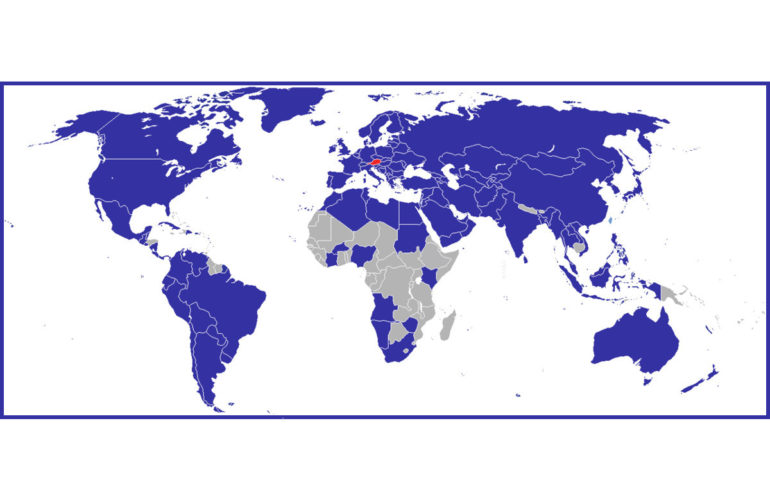
It is costly to attend meetings in Vienna and less than half of the countries in Africa have diplomatic missions in the city where the draft of the UNGASS outcome document was finalised at the 59th session of the Commission on Narcotic Drugs.
The Common African Position
As a result, the African Union (AU) countries decided to submit a Common African Position with regard to the UN General Assembly Special Session (UNGASS) to be held this month in New York.
The South African Deputy Minister of Social Development chaired a group of representatives from African countries who have developed a balanced document to describe the Common African Position (CAP) on controlled substances.
The document starts with the recognition that the world drug problem requires an “integrated approach to drug supply, demand reduction and harm reduction strategies, as well as ensuring the availability of controlled substances for medical and scientific use.”
The process of developing the CAP started in October 2014 when the African ministers in charge of drug control met and appointed the AU Specialized Technical Committee (STC) on Health, Population and Drug Control chaired by the South African Deputy Minister of Social Development, Ms Hendrietta Bogopane-Zulu.
African states recognise the importance of treating drug dependence as an illness rather than a criminal activity and, in the CAP, state that: “drug addiction must be considered a public health problem with socio-economic causes and consequences” and commit to drug education and treatment programmes.
Access to medications for pain relief
One of the serious consequences in Africa of the ‘War on Drugs’ and the UN Conventions on narcotic drugs and psychotropic substances has been the lack of access to medicines for pain relief in African countries.
The Pain & Policy Studies Group (PPSG) WHO Collaborating Centre at University of Wisconsin, Madison, estimated the average global consumption of opioids measured as morphine equivalence (ME) minus methadone in milligrams per capita, at 45mg/capita for 2013.
The average opioid consumption for the AFRO region in the same year was 0.7 ME mg/capita.
There were only four African countries with opioid consumption above 1 ME mg/capita – South Africa, Namibia, Botswana and Tunisia.
These bare facts hide a continent of suffering, people who are not able to access appropriate analgesics for pain relief.
In order to address this problem of access to opioid analgesics in Africa, the African Palliative Care Association (APCA) held advocacy workshops in four regions of Africa, bringing together government officials who develop country policies, law enforcement personnel and palliative care personnel to improve regulations regarding access to controlled medicines.
Working with governments
In addition, the Pain and Policy Study Group enrolled Pain Policy Fellows from different countries in Africa to improve restrictive opioid laws and to work with governments develop appropriate legislation with regard to opioid prescribing and access.
Advocacy activities have also continued at national levels, however, the suffering continues despite these efforts.
The opportunity afforded by the UNGASS meeting later this month is eagerly awaited by the palliative care community across the continent.
The CAP expresses concern “that approximately 80% of the world’s population has either no, or insufficient access to controlled drugs for the treatment of moderate to severe pain” and calls for “greater support to ensure the provision of opiates and other essential and controlled medicines for palliative care and pain relief.”
These statements are welcomed by palliative care practitioners in Africa, but the work continues.
Improving health and wellbeing
At a recent meeting RUN2016 Drug Policy week held in Cape Town, Ms Maria-Goretti Ane, International Drug Policy Consortium’s Consultant for Africa, summarised the CAP by saying that the objective of the CAP is to improve health and wellbeing and ensure a balance between supply, demand and harm reduction; and to ensure the provision of essential medicines.
She went on to say that drug use must be considered as a public health problem and public health and law enforcement should pursue alternatives to punishment for minor offences; and that government should reallocate resources to treatment.
This challenge calls for more collaboration and partnership between the drug law enforcement and health workers in harm reduction and palliative care. The spirit must be to work for the common good of even those who are trapped by the drug problem while ensuring access to medicines for palliative care reasons.
Working towards a common position
The preparation for the UNGASS 2016 has seen government departments in many countries working together towards a common position.
Examples of such efforts have been recorded in Uganda where the palliative care community including APCA, the Palliative Care Association of Uganda, the Uganda Network on Law and Ethics for HIV (UGANET), the Narcotics Police, the Ministries of Health, Internal Affairs, Justice and Foreign Affairs as well as the National Drug Authority, have worked together in preparation for the event.
In Kenya, the National Authority for the Campaign Against Alcohol and Drug Abuse (NACADA) has worked closely with Kenya Hospices and Palliative Care Association (KEHPCA) and other relevant stakeholders to review the Kenya Narcotic Law, and to prepare a position paper for UNGASS 2016 that supports access controlled substances for medical and scientific purpose, while ensuring balance.
Promoting the CAP
As palliative care advocates in Africa, we need to promote the CAP at national levels and encourage our governments to do the same in Vienna and New York.
We should also give consideration to the lack of representation of African countries in Vienna and at other international meetings. This results in lack of engagement of many countries and domination by a few.
It also means that countries with more ‘power’ can capture the whole African vote. Our governments should be encouraged to have representation in Vienna and especially with links to health attachés to ensure that access to medicines for palliative care and prevention and management of ‘the world drug problem’ are not seen as being opposed to the general wellbeing of patients.
We need to be vigilant in the next battle regarding access to essential medicines that of ensuring appropriate access to ketamine, which is used as an essential surgical anesthetic in many African countries.
You can find out more about the preparations for UNGASS 2016 online, or follow the account @UNGASS2016 or teh hashtag #UNGASS2016 on Twitter.


Leave a Reply