

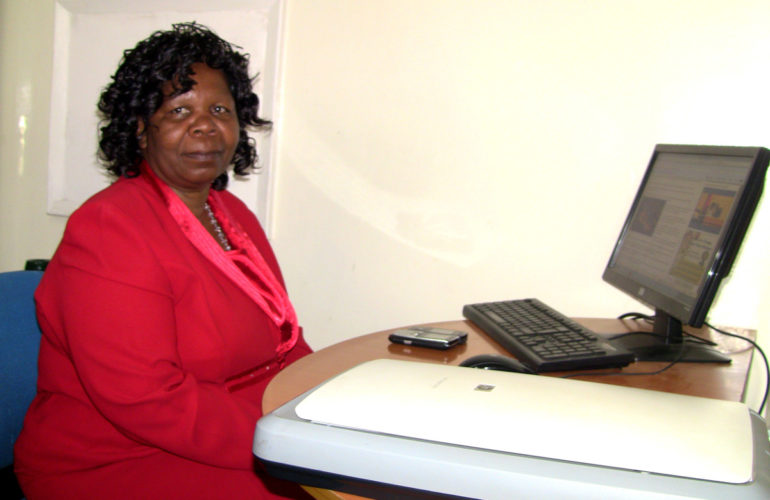
Kenya Hospices and Palliative Care Association (KEHPCA) was
host to the Chief Nursing Officer of Malawi’s Ministry of Health Mrs.
Immaculate Kambiya for a week, during her 3 week clinical placement in Kenya.
Pursuing a post graduate degree in palliative care, her 3 weeks clinical placement is a requirement for students
pursuing palliative care studies.
“We are out to improve our palliative care competencies in
areas including decision making within the multidisciplinary team, exploring sustainability of the service,
management and leadership styles, reviewing the planning and implementation of
programs and critically to appraise the monitoring and evaluation processes.”
Mrs. Kambiya said.
During her stay at KEHPCA, Mrs. Kambiya sought to understand
the leadership of the national palliative care program in Kenya.
She had an opportunity to get an insight of activities at
the national association to bench mark palliative care improvement in her own
country and also do a self appraisal of existing collaboration between her organization and own country association .
“I am glad to learn that integration of palliative care at
undergraduate level in training institutions for nurses, doctors & clinical
officers for sustainability of palliative care knowledge and skills is
underway.” She said.
Mrs. Kambiya said that pain management in Kenya is a learnt
lesson for best practice where the Ministry of Health has seconded a doctor to
work at the association and engage other doctors in health institution on pain
relief and pain control. “This is a good gesture as doctors tend to listen to
fellow doctors”
She attended a Continuous Medical Education (CME) session at
DREAM, an outpatient care facility that takes care of HIV/AIDS patients and
said that this was an eye opener seeing how palliative care is integrated at such
centers.
“I could use this experience to share the knowledge and explore
the situation of Malawi DREAM center.” She said after the session.
At Nairobi Hospice, Mrs. Kambiya noted that patients and
their family members have the option to choose whether to be visited by a
doctor or a nurse at home after being given information on the cost to be
incurred on various scenarios.
“A daily patient care conference by the hospice team is
impressive as they share information on patients and identify their needs
including those who need follow-up for continuum of care either through calling
or making a home visit.” She said.
She said she gained knowledge, skills and attitudes on
activities on day care such as the opportunity it presents for patients to
socialize, reduce stress, encourage and give hope to each other through sharing
personal testimonies and experiences.
Mrs. Kambiya was glad for the hospice volunteers who after going through structured self-sponsored palliative care training chose
where and how to offer their services.
“They volunteer to chat with, cook and serve patients with
food during day care as well as volunteering in during the Christmas party and
other fundraising activities carried out by the hospice annually.” She said.
She noted that the social worker takes charge of group
therapy during daycare, coordinates volunteers as well as
encourages well wishers to donate any materials in form of money, food or
clothing to the welfare of the patients.
“She advocates for
patient rights, advice on legal matters in cases where patients are divorced or
abandoned when sick, assessing community structures for support, managing and
referral and networking with Community Based, Non-Governmental and Faith Based
Organizations to support the needs of patients.” She said.
She said that from the placement she would bring change in
planning for palliative training for health and non-health care workers as well
as lobby with the Palliative Care Association of Malawi (PACAM) to advocate and
raise awareness for integration of palliative care in DREAM-Malawi.
She added that she will advocate for piloting the concept
for volunteers for hospices and palliative care units back in Malawi.


Leave a Reply