


Written by Tracey Brand – Social Worker and Director of Umduduzi – Hospice Care for Children
Leela (not her real name) was sick from the age of 8 years old. The doctors decided that they would remove her thyroid and hopefully that would resolve her symptoms. During the operation it was discovered that Leela actually had thyroid cancer, something rare for children. There had been spread to the surrounding lymph nodes. Leela went through chemotherapy and radiotherapy. At age 11 she was given the all-clear.
Shortly after her 14th birthday she noticed lumps in her neck. There were several new nodules which required further chemotherapy. At this stage, Leela was seen as an adult according to the Department of Health rules where she lived. She therefore had to be admitted to the adult ward. This was an extremely difficult time for her as her mother was not allowed to stay with her at the hospital and she was surrounded by older women with advanced cancers.
A difficult turning point
Leela became very angry and withdrew from everyone. Her friends were “tired” of her always being sick and stopped messaging her. They didn’t want to hear about everything that was happening. When the oncologists stated that she needed more chemotherapy at 16, she refused. She did not want to go through that again and didn’t want to lose her hair, she was very vain, understandable given her age and developmental stage. She wanted to celebrate her life and live whatever normality she could. She had reconciled that without treatment she would probably die but she had had enough of hospitals, blood draws, drips, chemotherapy, everything! Her mother and the doctors were desperate for her to continue treatment. Leela was resolute in her decision. It was her body and therefore this was her decision. She was tired of things being done to her, she had never had a say, that was going to stop. She wanted to live!
Support on her terms
The palliative care team got involved with the family and supported Leela in her decision. She would send many messages to her palliative care social worker longing for the future she would never have, she dreamed of getting married and having children of her own. She remained firm in her decision although she felt that she was just waiting to die. The palliative care team eventually convinced her to come and see them at the hospital where she had received treatment. Any trip back triggered PTSD for her and she never wanted to go back there.
Finding hope and a voice
She eventually agreed, but everything was on her terms and was her decision. The team had to tell her that she in fact was not going to die anytime soon and that she can live. Yes, her life may be shorter than she anticipated but she can still have all the dreams she had, relationship, family, a home of her own. Leela is now going out with her friends, meeting new people and living life. She is grateful for the decision she made, but she was more grateful that someone heard her, that she had a voice, that she was allowed to make decisions herself about her health care. She had never felt heard until she was given a voice by the team.
Palliative care and adolescents
Talking about palliative care with adolescents isn’t easy. It’s not just about managing physical symptoms; it is about the emotional and social weight that comes with serious illness. For teenagers, this “psychosocial pain” can feel heavier than what they are enduring through the medical side of things.
What makes it so tough?
- Dreams interrupted: Teens are busy imagining their futures. The diagnosis of a life-threatening or life-limiting illness can suddenly slam the brakes on those dreams, leaving them grieving possibilities that may never come. Their sense of identity is fragmented, and this grief can manifest in emotional volatility, withdrawal, or heightened anxiety.
- Loss of independence: Adolescence is all about freedom and autonomy. Being dependent on parents or medical teams can feel suffocating and teens are left feeling powerless.
How we can help
It is crucial that autonomy is supported and that adolescents are involved in care and treatment decisions. Friendship Gaps: While peers are out living “normal” teenage lives, sick teens often feel left behind, isolated, or misunderstood. Loneliness exacerbates fear and increases anger. We need to keep it honest. Teens value straight talk. Age-appropriate honesty builds trust and reduces fear.
Teens need to have a say in what is happening to them. Involving them in decisions about their care restores a sense of control. Connection needs to be encouraged, whether it’s through school (if this is possible), social media, or creative outlets. Emotional outlets such as counselling, art, journaling, or even music can help them process feelings they can’t always put into words.
Parents often struggle with balancing protection and independence. They acknowledge that they need to promote autonomy, but their instinct of protection goes into overdrive. Guidance and support for them is just as vital. Why It Matters Ignoring psychosocial pain risks leaving teens feeling invisible. Addressing it means they can still experience dignity, identity, and emotional well-being, even in the hardest circumstances.
This article was originally published in the PALPRAC newsletter and is republished with permission.
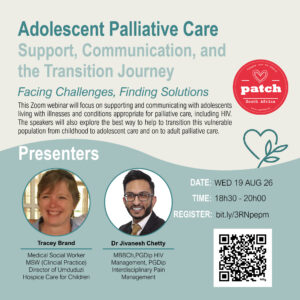
Visit the PatchSA YouTube channel to watch a webinar on adolescent palliative care featuring Tracey Brand and Dr Jivanesh Chetty
Adolescence is a complex stage of development, and for young people living with life-limiting or life-threatening conditions, navigating illness, relationships, independence and changing healthcare needs can bring additional challenges. Providing appropriate adolescent palliative care requires healthcare professionals to understand these unique needs and communicate in ways that respect young people’s developing autonomy and preferences. In this webinar, Tracey Brand, Medical Social Worker and Director of Umduduzi Hospice Care for Children, and Dr Jivanesh Chetty, MBBCh with postgraduate diplomas in HIV Management and Interdisciplinary Pain Management, explore practical approaches to supporting and communicating with adolescents living with conditions appropriate for palliative care, including cancer and HIV.


Leave a Reply