

Trinity Hospice has partnered with local organisations, artists and arts groups to help bring the first Good Grief Festival to Blackpool next Autumn. Good Grief Blackpool will feature an exciting range of workshops, events and activities, including films, talks, performances, arts and crafts, storytelling, singing and nature-based sessions.
The events will showcase local artists and creative groups, highlighting the fantastic work of Blackpool-based charities and organisations. From choirs and walks to mobile podcasts and grief raves, the festival will bring bereavement and loss into the open to help people across Blackpool feel more confident talking about bereavement and reaching out to local support.
Good Grief Blackpool is being brought to the Fylde coast by Trinity Hospice working in partnership with Empowerment, Blackpool Teaching Hospitals NHS Foundation Trust, The Coastal Community & Creative Health research project and Good Grief Festival CIC. Co-produced with local community members and groups, it will offer plenty of opportunities to get involved.
Good Grief Blackpool will take place between the 8th and 10th October, with in-person and online events that will encourage people to get creative, join together and share experiences of loss. It follows previous Good Grief Festivals in Weston-Super-Mare and Hastings.
Trinity’s Chief Executive, David Houston, said: “We’re thrilled to announce the news that we will working in partnership to bring Blackpool its first Good Grief Festival next Autumn.
“Our goal is to make grief everyone’s business in Blackpool, reducing isolation and stigma around bereavement while strengthening our compassionate community network across the Fylde coast.
“Grief isn’t only private pain; it’s a shared human experience that benefits from open conversations. We know this all too well from our work in the Linden Centre at Trinity Hospice, so we’re delighted to play a key part in this festival, taking our support out into our communities.”
Creative Director, Phill Fairhurst, said: “Good Grief Blackpool reflects everything we value about Creative Health; bringing creativity, community and compassion together to support people navigate life’s most difficult moments.
“Working alongside Trinity Hospice, Empowerment, Good Grief Festival CIC and so many talented local artists feels like a real privilege. Blackpool’s cultural community is joining together with care, openness and generosity to create something that’s deeply human and genuinely supportive.
“Through music, art, storytelling and shared experience, the festival opens space for conversation, connection and meaning, showing how creativity can play a powerful role in responding to some of the challenges our town faces.”
Sue Flowers is a Co-Investigator on the Coastal Community & Creative Health research project and is leading the Creative Public Engagement strand of the research in Blackpool with her colleague Helen Shearn.
She said: “We are delighted to support the Good Grief Blackpool Festival. There are some amazing cultural organisations working hard to support the needs of Blackpool’s communities.
“We hope our research will be able to provide an important evidence-base to showcase the role of culture in positively impacting coastal communities, many of whom face significant health inequalities.”
Jackie Brunton, Lead Nurse for End of Life and Bereavement Care at Blackpool Teaching Hospitals NHS Trust, said: “This is a wonderful chance to work together across our community. Dying and bereavement touch every part of life, not just healthcare. We hope to gently break down taboos and support one another with care and kindness.”
Mike Crowther, CEO of Empowerment – a Blackpool-based charity passionate about ensuring people’s voices are heard and empowering individuals to live their best lives – is delighted to support Blackpool’s first-ever Good Grief Festival.
He said: “This incredible event offers our local community a safe and welcoming space to talk openly about experiences of loss, whether of loved ones who are dying or those we have already lost. It’s an opportunity to break down barriers around grief and create conversations that matter.
“The festival also celebrates the collective power of Blackpool’s amazing creative community. Through art, music, and other creative expressions, we can explore meaningful ways to honour the memory of those we love, express grief, and support one another through life’s toughest days—until brighter days come.”
Professor Lucy Selman, founding director of Good Grief Festival and Co-Lead of the Coastal Community and Creative Health project said: “We are delighted to be partnering with Trinity Hospice to bring this one-of-a-kind festival to Blackpool, helping to open up conversations around grief, loss and the end-of-life. We hope the festival inspires and uplifts, while offering opportunities for connection, comfort and community.”
More information about Good Grief Blackpool will be available during 2026. For more information about Good Grief Festival, visit www.goodgrieffest.com.
For information about the Coastal Community & Creative Health research project, visit www.coastalcch.bristol.ac.uk/
——————
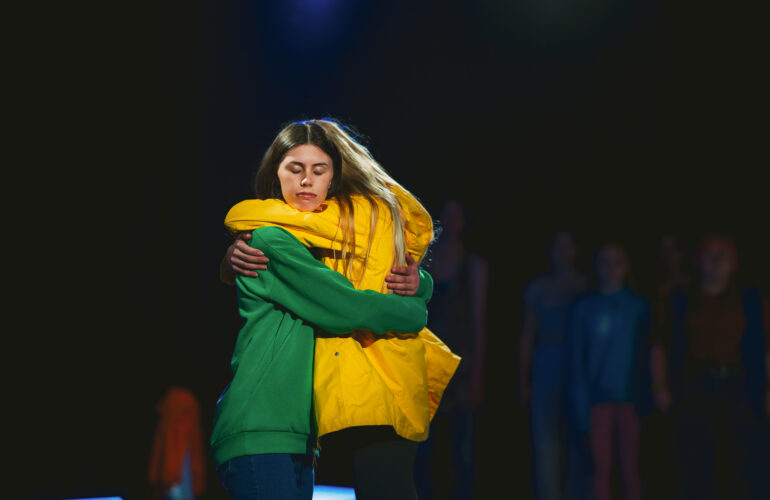
Lead Image: The Super Culture Youth Theatre put on a performance for Good Grief Weston in 2024. Image credit: Mark Gray
————–
Good Grief Festival
Good Grief Festival CIC offers affordable and accessible events, education and resources that open up conversations about grief, death and the end of life. We provide support, information and community to bereaved people and those who work with them, helping to build a more grief-informed and compassionate society. It is co-directed by founder Prof Lucy Selman and Dr Lesel Dawson. For more information, see: https://www.goodgrieffest.com/about/
The Coastal Community & Creative Health Project
Coastal Community & Creative Health is a three-year project focussed on three coastal areas of England which have significant health inequalities but are rich in community assets: Blackpool, Weston-super-Mare and Hastings. The project brings together the NHS, local authorities, researchers, voluntary and community organisations and residents together to tackle health inequalities. It focuses on three mental health priority areas in coastal towns: young people’s mental health, substance misuse, and life-limiting illness and bereavement. The project is led by Prof Lucy Selman and Dr Barbara Mezes, Lecturer in Clinical Psychology at the Institute of Population Health, University of Liverpool.
The project is funded by the Arts and Humanities Research Council via the mobilising community assets to tackle health inequalities programme, which aims to improve health through access to culture, nature and community. The projects in the programme seek to tackle entrenched and long-standing health inequalities in some of Britain’s poorest communities. For more information, see: https://www.bristol.ac.uk/news/2024/february-/coastal-communities.html
Trinity Hospice has provided excellence in specialist, compassionate care on the journey towards the end of life on the Fylde coast for 40 years, touching the lives of around 8,000 local people every year. Trinity helps people live life to the full, and live well right to the very end.
Demand for its care keeps on growing and its services continue to evolve to meet changing expectations.
Open 24 hours a day, every day of the year, Trinity is rated ‘outstanding’ and is proud of its modern facilities and high standards. But Trinity is more than a set of buildings – its nursing teams work at the hospital and out in the community day and night, covering every part of the Fylde coast.
It costs more than £14million to run all of Trinity’s services each year, which are provided completely free of charge to everyone who needs them. But with little help from the government, it must continue to call on its community – the people it cares for – for support.


Leave a Reply