

If you’re involved in running a hospice, VAT might seem like a complex and low-priority task. However, understanding the rules can make a significant difference to your finances. Major changes were introduced for hospices back in 2015, and with the passage of time and inevitable staff turnover, it’s easy for crucial knowledge to be lost. This article is a friendly reminder of the key VAT issues for hospices and why now may just be the perfect time for a VAT health check.
The Basics: Business vs Non-Business Activities
First, let’s recap the fundamentals. For VAT purposes, your hospice’s activities fall into two main categories:
- Non-Business Activities: These are activities where you provide services, like patient care, free of charge. They are typically funded by grants and donations where the funder receives no direct benefit in return. Most of your core hospice work falls into this category and is considered ‘outside the scope’ of VAT.
- Business Activities: These involve making supplies in return for payment. This includes running a charity shop, providing paid-for training, or hiring out rooms. These activities are ‘within the scope’ of VAT and can be taxable (standard, reduced, or zero-rated) or exempt.
This distinction is vital because it determines your ability to recover the VAT you pay on your costs. The presence of non-business activities is the gateway to two significant benefits available to your hospice: VAT savings on major capital projects and day-to-day running costs.
New Builds: A Major VAT Saving Opportunity
For hospices undertaking a new building project, there’s a significant VAT relief available. The construction of a new building intended to be used solely for a ‘relevant charitable purpose’ (which includes providing hospice care) can be zero-rated. This means you pay 0% VAT on the construction services, potentially saving hundreds of thousands of pounds.
However, the devil is in the detail. The building must be new, and while a self-contained qualifying ‘annexe’ might be zero-rated, a simple extension to an existing building will not. The building must be used solely for the charitable purpose. Any intended business use, such as a café open to the public or rooms regularly hired out for commercial events, could jeopardise the zero-rating from the outset. Furthermore, a change of use within ten years can trigger a VAT charge. It is essential to get specialist advice before starting any construction project to ensure you meet the strict conditions.
The 2015 Game-Changer: Sections 33C and 33D
On 1 April 2015, the government introduced Sections 33C and 33D of the VAT Act 1994. This was a turning point for hospices and palliative care charities.
Before this, VAT on non-business costs was an irrecoverable expense. The new rules created a special VAT refund scheme which is your primary tool for VAT recovery on non-business costs. In a nutshell, if your charity’s main purpose is providing palliative care under medical supervision to people with terminal illnesses, you can now reclaim the VAT on most goods and services used for your non-business activities. It is important that your governing documents, such as your constitution or trust deed, clearly state this as your main purpose, as HMRC will look at these to confirm your eligibility.
How to Claim Your VAT Refund
The way you reclaim VAT depends on whether you are registered for VAT. Crucially, to ensure any claim is valid, you must hold evidence that the goods or services were supplied directly to your charity.
- VAT-Registered Hospices: If your taxable turnover from business activities (like shop sales) exceeds the £90,000 threshold, you must register for VAT. You will then submit a quarterly VAT return, including your non-business VAT reclaim under Section 33C in Box 4 of the return.
- Non-VAT-Registered Hospices: If your taxable turnover is below the threshold, you do not need to register. Instead, you can make claims using form VAT126. You can submit this form for a period of at least one calendar month. If your claim is for less than £100, it must cover a period of at least 12 months. This offers flexibility to align claims with your accounting periods.
All claims are subject to a four-year time limit from the end of the month in which the supply was received, and you must keep all supporting records for six years.
The NHS Funding Puzzle: Is It Business or Non-Business?
This is a common area of confusion, and worth a quick look:
- Non-Business: HMRC’s guidance in VAT Notice 1001 states that if you receive funding from the NHS or a local authority to support your general palliative care services, and there is no direct link between the funding and the care provided to specific, named individuals, the funding is not consideration for a supply. It is treated as non-business income, and the VAT on related costs is recoverable under Section 33C.
- Business (Exempt): If, however, you enter into an agreement to care for referred or named individuals (often seen in Continuing Healthcare funding), your activities under that arrangement may be considered a business activity. This would likely be an exempt supply of welfare services. VAT on costs related to exempt supplies is generally not recoverable, which could restrict your claim and negatively impact the recovery of VAT on your general overheads.
It is crucial to review the wording of your NHS contracts, as the categorisation will make a significant difference to your levels of VAT recovery.
Navigating the VAT on Fundraising Activities
Fundraising income can be non-business, exempt, or taxable, and the treatment directly affects your ability to recover VAT on associated costs.
- Campaigns for Donations: When you run a campaign asking for donations and nothing is given in return, this income is outside the scope of VAT. The good news for hospices is that under the Section 33C refund scheme, the VAT you pay on the costs of these fundraising campaigns (like marketing and mailshots) is recoverable as it relates to a non-business activity.
- Sponsorship: When a business sponsors your hospice, the VAT treatment depends on what you give them in return. If you provide a ‘significant benefit’ – like prominent advertising or naming rights – this is a business supply, and you must account for VAT at the standard rate. Consequently, you can recover the VAT on any related costs. However, if you simply acknowledge their support in a list of donors, this is not significant, and the payment can be treated as a donation outside the scope of VAT.
- Fundraising Events (including Charity Balls): This is where things can get particularly tricky. While many assume all charity fundraising events are exempt, the reality is more complex. The exemption has strict conditions. A charity event can qualify if:
-
- It is organised by the charity for its own benefit.
- Its primary purpose is fundraising. A key court case (Yorkshire Agricultural Society) clarified that fundraising doesn’t have to be the only primary purpose. If your ball also aims to raise awareness, it can still qualify as long as fundraising is a genuine, central objective.
- It is promoted as a fundraiser. The same court case confirmed that while the event must be promoted as a fundraiser (e.g. “in aid of the hospice”), this doesn’t have to be the main message in your advertising.
Crucial Restrictions: The exemption is limited to 15 events of the same kind at the same location per financial year and does not apply if it distorts competition with commercial businesses.
The VAT Recovery Trade-Off: Here’s the critical point. If your ball is exempt, you don’t charge VAT on ticket sales. But you also cannot recover the VAT on any of the costs of putting on the event, such as venue hire, catering, or entertainment. This can be a significant irrecoverable cost, so you need to weigh the benefit of the exemption against the loss of input tax recovery.
Trading Activities: Charity Shops and Gift Aid Complexities
Your charity shops are a business activity. The good news is that the sale of donated goods is zero-rated, meaning you don’t charge VAT but can still recover VAT on related costs (like shop rent and utilities).
However, be cautious with enhanced Gift Aid schemes. If your shop acts as an agent, selling goods on behalf of donors who then gift the proceeds, you are no longer selling zero-rated donated goods. Instead, you are facilitating a sale for a commission. This changes the nature of your income and can significantly impact your VAT recovery on overheads. This is another example of the complexity and nuance of VAT.
Overheads and Apportionment
If you have overheads that support a mix of activities (non-business, taxable, and exempt), you must use a ‘fair and reasonable’ method to apportion the VAT. This method should be documented and regularly reviewed to ensure it still reflects your activities. Failure to do so can lead to incorrect claims and potential penalties.
Time for a VAT Health Check
Given the complexities and the time that has passed since 2015, a VAT health check may be a sensible step. It can help you:
- Maximise VAT recovery: Are you claiming everything you are entitled to?
- Ensure compliance: Are you correctly distinguishing between your different income streams and using a fair and reasonable method to apportion costs?
- Adapt to change: Have your activities or funding models changed, and have you considered the VAT implications?
It is worth remembering that the changes in April 2015 were implemented to help the sector, and it is therefore worth checking that compliance is in order, as getting it right can free up significant funds for your vital work.
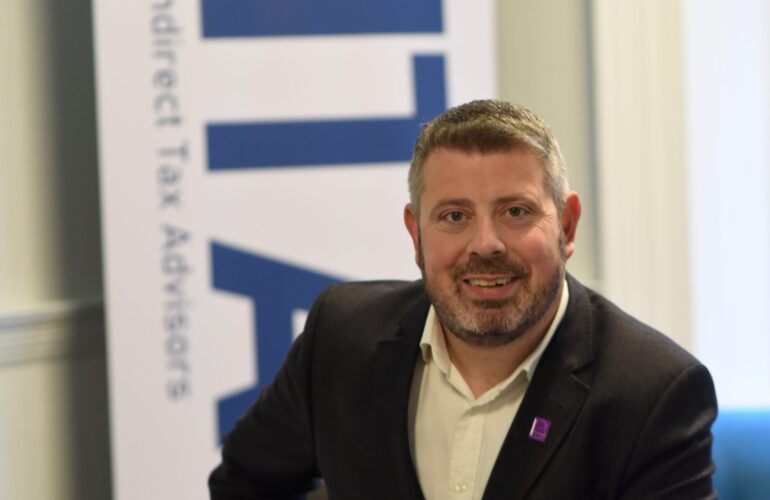
Greg McNally is founder of VITA, one of the UK’s leading independent VAT advisory firms.
For further information, please contact Greg McNally,
Partner at VITA
Baltic Chambers, 50 Wellington Street, Glasgow G2 6HJ.
T: 0141 437 0000.
E: greg@vita-uk.com.
W: www.vita-uk.com.





Leave a Reply