


Our Boulder community is grieving in so many ways after the March 22 King Soopers killings. And we hear talk of healing for our community. To begin the long process of taking in a traumatic experience, we must start by standing in this moment of time, looking at what has happened, and trying to begin to absorb the magnitude of the loss in our individual lives. I would like to share with you some of what I have learned personally from the traumas and losses in my life, and from 45 years of work with professionals and grieving people in a wide variety of settings.
Some of us have felt deep shock and sadness, because for many of us, this is our grocery store, our neighborhood, the place where the clerks, baggers, pharmacy techs and managers all smile and recognize us. We feel a personal violation and invasion of our safe place, as all who live in Boulder feel for our city. Friends and neighbors talk of feeling shattered, heartbroken. We are reeling with the reality that this horrible tragedy could happen here, and for some of us, to people we know.
The experience of trauma lies outside what we assume about and expect in our world. This feels personal, not just to those of us in the King Soopers neighborhood, but to all who live in Boulder, and to many across our country. We think, “I could have been shopping there then.” Or, “Am I safe even going to the grocery store?” Tragedy reminds us of our shared vulnerability.
I know how devastating trauma is, and how experiences like the killings this week bump up against my heart, reminding me again that the world is not a safe place and that outrageous things can randomly happen.
This last week in March, the traditional spring break in Boulder, brings distress for me. In 1985 my daughter Ellen and her friend Stephanie were killed here when a drunken driver ran a red light. They were seniors at Fairview, along with their friend Cathy, who was driving and survived. They were coming home from a night of board games with friends. Like the recent tragedy, they were doing normal life things. This is also the week my beloved husband died two year ago. He became my sheltering place when we met seven months after my daughter’s death.
Carl Jung believed that what is most personal is most universal. My story reflects that of many people, and also reflects some of what we fear most. It is human to wonder if and how we can deal with tragedy and losses.
Tragedy and trauma change the assumptions we have about the world. And losses change the way we see ourselves and the world. There is almost a line drawn between how we were and how we saw the world before the events at King Soopers, and how we are and how we see it now.
Typically in our society, we would rather look away or avoid painful realities, especially when they make us feel powerless. And there will be another big tragedy in a different town that will make us turn our attention, and we will be tempted to avoid looking at the imprint of this experience. Or, on ordinary days, we get busy, distract ourselves and try to tuck away the reality. When we pack things away they can accumulate and pop out at us in unsuspecting or similar times. In the course of this pandemic, for many of us, our collective sense of vulnerability is already exaggerated.
So what are the ways we can try to look at and begin to take in and absorb this painful reality? What can we do with all the sadness, anger, the loss of our sense of safety and feelings of powerlessness that linger like fog over the Flatirons? How do we work with these feelings and the losses they are attached to, as individuals, families, and as a larger community?
Health always involves accepting and working with the circumstances of our lives. It is important to acknowledge the magnitude of this reality, and how it impacts us in our own lives. We need some core of internal strength and beliefs that allow us to still see a moment of pink sunrise, the sun glowing on the faces of the Flatirons, or to hear the voice of a friend reminding us for even a brief moment that there is still and always beauty and care in our world.
Because our bodies are our first line of defense in the world, taking care of our physical being is a top priority. All the basics of eating well, staying active, breathing and mindfulness practices help greatly with managing the stresses of grieving.
Fred Rogers was right: it’s important to look for and find the helpers. These people may be the natural helpers in our circle of family and friends, or they may be professional resources. In the King Soopers tragedy, Officer Talley’s courage was followed by the acts of many brave first responders as well as ordinary citizens who helped prevent further loss of life.
Another important truth is to “Hold on to what is good.” Looking to our key connections helps us reclaim our sense of safety and our belief in each other.
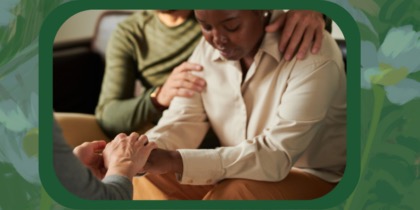
No one of us can get through difficulties only on our own. To continue on, we need the care and support of others, to listen, be present, and encircle us in these darker moments. There are times when we must show up for each other in whatever ways are possible.
If we are all shaken, being together creates a collective sense of belonging. Rituals like visiting the site at the store, vigils and gatherings, checking in with neighbors and friends all help us feel less alone, like we are beginning to build back our strength. For the families who have lost a loved one, donations, meals and other tangible acts of helping make a huge difference. The message is: “your loved one matters, we care, and we will stand by you, and with you.”
One of the great secrets to managing our own distress is to focus on caring for others. It is true that a life lived for others is a life well lived. By turning our attention to others, to the collective impact, we rebuild our sense of being part of a community. Of course, there is also a responsibility to seek care and support for ourselves when we need it as well. Then we can move toward the hallmark of healthy families: ”We’re in this together.” Because we are.
Healing does not happen in the short run, and grieving is a process that continues across our lifetimes. What we do now matters and influences our well-being in the long run. Feeling cared about and supported is a counterpoint to tragedy. It reminds us of the kindness and goodness that is in others.
Current research and understandings remind us that we do not “get over” our losses. Rather, the goal is to integrate our experiences, and keep our important connections internally to strengthen and sustain us. Continuing bonds help us honor those whose love has shaped and formed us.
Taking action is an important part of integrating loss, and part of making meaning. We cannot begin to accept mass shootings as part of our normal world. The two realities we must address are the insufficient services for mental health difficulties in our communities, and gun safety, including the inordinate presence and availability of guns. Changes happen when people are willing to advocate for them. Look at what MADD did to protect us from more alcohol-related car deaths.
As I’m writing this, my neighbor friend for all the 47 years I’ve lived in this home calls to check in, telling me that she is remembering my daughter, Ellen. She says how hard the current tragedy is and sometimes how hard it feels to carry on. For those of us who feel particularly vulnerable, that is true. For the long months my husband Mike was ill we used to say “all we have to do is today.”
As I sit at my kitchen, my dog Happy at my feet, I am so aware of all the love the walls of this home have held. And, I remember all the people who graced these rooms who are no longer here in this world. The ultimate way we live with tragedy and loss is to work to find meaning in our experiences. My work with people who are dealing with grief and loss began years before Ellen’s death. Since then I have continued to commit to live the best life I can, offering care, learning, and support to strengthen others on this difficult journey.
My experiences and those of others I have been privileged to work with have taught me that we need to live with the losses and tragedies of our lives in a way that allows us to hold and carry with us the love we have been given. None of us choose the losses and tragedies of our lives. If we could, we would rewrite and change them. The only and important choice we are given is in how we respond, how we care about and for each other.
-###-
Marcia Lattanzi Licht is a co-founder of Boulder Hospice, now TRU Community Care. She is author of The Hospice Choice and Coping with Public Tragedy. She maintains a limited consulting and psychotherapy practice.
Marcia Lattanzi Licht, LHD, RN, LPC
Boulder, Colorado
Email: mllicht@comcast.net
© Marcia Lattanzi Licht, 2021.


Leave a Reply