

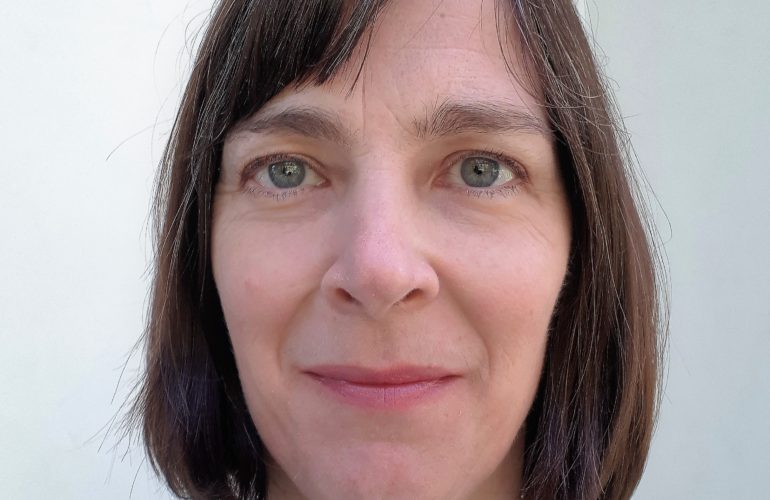
Dr Colette Hawkins, Academic Consultant in Palliative Medicine at St Oswald’s Hospice in Newcastle, writes about the end of life learning programme for care providers that is tackling the gap between the delivery of education and applying learnings into practice.
In 2015, Health Education England North East (HEE-NE) funded a project to create a novel, inter-professional learning programme around end of life care based on stories of experiences. This represented a new approach to learning intended to build confidence and compassion amongst the wide workforce.
The project was a collaborative venture between myself, Patient Voices (digital stories), CAIPE (Centre for Advancement of Inter-professional Education) and HEE-NE. Stories were collected from informal carers and professional care providers. The patients themselves found the methodology of digital story creation too onerous, and their voices were captured through short written vignettes. Professionals were invited to share their experience within their professional roles, to increase awareness and understanding of what they bring to end of life care. What transpired, however, was that most professionals coloured their story with personal experience, revealing that the distinction between professional and person is very blurred.
The resulting programme blends core learning around key topics such as Advance Care Planning, with reflective questions around stories, encouraging learners to consider what really matters beneath the medical model of care. Piloting identified that the materials had greatest impact when delivered in facilitated group sessions (inter-professional sessions were most highly evaluated).
Since its development, I have delivered the programme to over 500 people in the North East of England. Service managers, volunteers, ancillary staff, community organisations and charities have all been represented, along with clinical service providers of every grade across a wide range of health and social care disciplines.
As well as delivering core information around a topic, sessions enable discussion and the sharing of experience and views. Crucially, they allow honest debate around the reality of care delivery, exploring challenges, opportunities and vulnerability in a supportive and positive environment. The reasons behind the gap between national standards of care (and indeed the care that professionals want to be providing) and the reality of care are open for discussion and shared learning. The ‘soft skills’ that can so easily be missed in traditional learning, are organically interwoven.
Much of the learning from sessions is generic and not specific to end of life care. Exploring how communication empowers or disempowers people on the receiving end of care is central to any clinical encounter. Experiencing the consequences of missed opportunities for planning ahead or a paternalistic approach to decision making are relatable to most service providers. Considering the barriers to seamless care across boundaries reveals obstacles which can be impossible for individual practitioners to cross, but discussion in inter-professional groups can start to build bridges for better communication and team working.
Honesty around the personal and professional challenges to providing care reveals far-reaching vulnerability. Carefully facilitated discussion is proving reassuring and encourages better self-awareness, self-care and support. It also values the contribution of every learner, whether clinical or not, trained or untrained, highly specialist or in a support role, and it disables hierarchy. In delivering sessions, I can see that there is a real opportunity for learning around end of life care to trigger wide-reaching improvements in care.
The bank of evaluations is growing steadily. Feedback has been incredibly positive; even sceptics and hard-core fact-based learners surprising themselves with the value and power of this approach. What is clear is that there is a place, and a need, for learning grounded in honest reality. However, enjoying sessions is one thing, changing practice as a consequence of learning is another. The sessions I am currently delivering, Supporting Choice towards End of Life include follow-up to explore practice change as a consequence of attending a session.
Experience of delivering sessions has led to continuous development and refinement of the programme. I am now looking to a sustainable model of delivery, as well as wider dissemination. Colleagues at University Hospitals Warwickshire and Coventry are testing the potential of a team of facilitators from a range of disciplines to use the programme within trust-based teaching. This will not only test use of the programme by another organisation, but will also provide important experience of facilitation by professionals outside specialist palliative care services. Further facilitator training is planned with a view to making the programme widely accessible.
Ultimately, learning facts and practical skills will help us manage disease. If we want to look after people, our learning needs to shape our fitness to care. Who cares? Every one of us.
If you would be interested in future facilitator training, please get in touch


Leave a Reply