

When a patient is admitted in the hospital, someone needs to take care of them. To feed them, bath them, and give medication on the right time. Often the mother or sister of a patient is a caregiver but sometimes this responsibility falls to the children.
This is a story of a ten years old girl that I recently came across:
‘Margret was a woman of 43 years old. Her first husband passed away, leaving her with three children. Her second husband had run away because he couldn’t pay his debts, leaving her again with three children. Besides that she had to take care of the six children and the debts, she also found out she was also HIV-infected. She tried to make the best out of the situation. She was living in poverty but with the faith that she would manage, somehow. The first three children grew up. But the three children of the second marriage were still young. (7-10 years).
Unfortunately Margret developed Kaposi Sarcoma on her left cheek and it disseminated very fast. She was admitted in the hospital, with severe pain and smelling, oozing wounds. She was enrolled on our program at Hospice Tororo. Besides the medical problems it was clear that the social situation was also not very positive.
Although she had three adult children, the men were unemployed, the woman got married far away and wasn’t allowed by their husbands to come and take care of her mother. Culturally the men were also not allowed to take care of their mother in the hospital. There was no contact with other relatives and although the neighbors were supportive, nobody could be with Margret in the hospital.
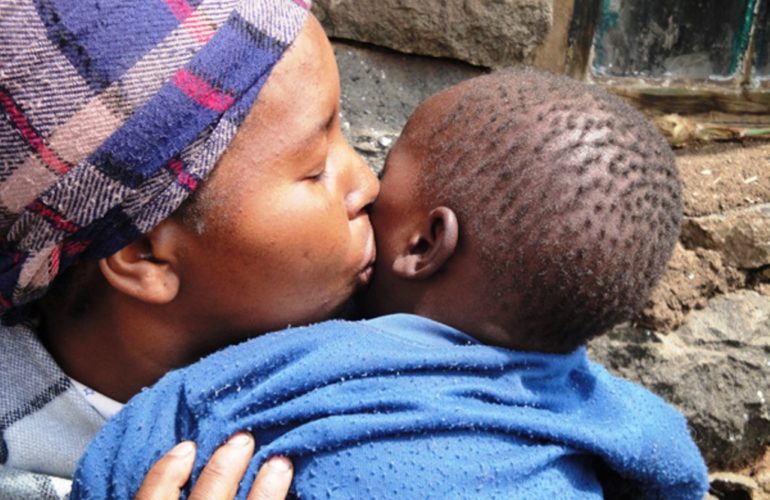
This is the way that her ten year old daughter became responsible for the complicated care of her mother. She bathed her, made her bed, gave her food, made sure she got her medication and dressed all the wounds twice a day.
A ten year old girl, taking care of her mother who is so severely sick and looked mutilated by the Kaposi Sarcoma in her face. The girl did her ‘job’ well, but shouldn’t be in this position. The girl was very quiet and looked sad. We spoke with her, invited her everyday to our office. She made drawings and played with us with balloons when her mother was asleep. We stimulated her to play with the other children around the hospital, but she was too worried and didn’t really connect with the other children.
In the meantime we tried to talk with the oldest sons and neighbors to arrange someone else to take care of the mother. When finally someone came to take care, Margret was at her last hours. She passed away not long after an adult had taken responsibility. And her daughter… she blamed herself for the death of her mother. She felt that she was responsible for the care of her mother and now her mother had passed away.’
Sadly, her story is not unique. It is estimated that millions of other children across Africa also have to care for parents who have HIV/AIDS.





Leave a Reply