

Across many African countries, palliative care is becoming more visible in national health policies and hospital systems. More patients with cancer and other life limiting illnesses are now being identified earlier than before. Yet beneath this progress lies a quieter crisis. The expansion of services is moving faster than the number of specialists, researchers, and educators needed to sustain it.
In many hospitals, doctors and nurses are expected to manage severe pain, breathlessness, and emotional distress with limited advanced training. As a result, care often begins late, after symptoms have already worsened. At the same time, much of the evidence guiding practice still comes from outside the continent, despite the very different realities faced by African health systems, especially in rural clinics with limited medicines and overstretched staff.
While services continue to grow across the region, the systems needed to produce local knowledge and leadership are struggling to keep pace.
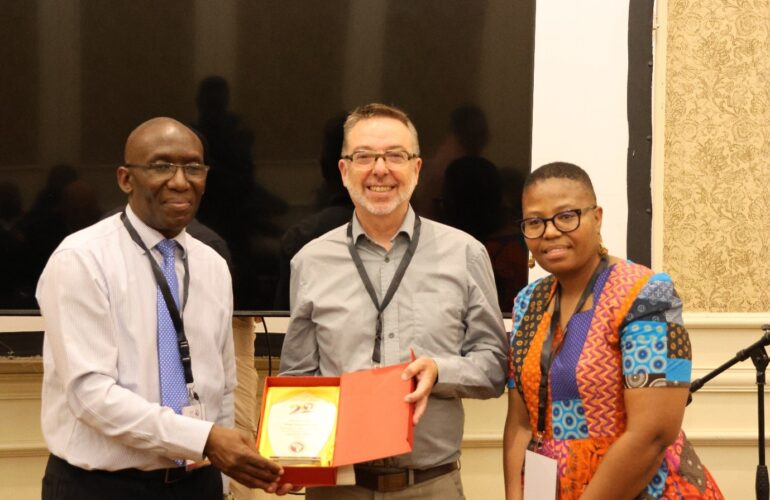
To respond to this challenge, a partnership led by the National Institute for Health and Care Research and the African Palliative Care Association is supporting a new wave of training and research across Africa. The programme brings together institutions such as King’s College London, University of Cape Town, and University of Zimbabwe, alongside training sites in Uganda.
At present, eight Master’s students are examining how palliative care is delivered in Ugandan hospitals, while three doctoral researchers are exploring broader questions shaping policy, education, and health systems across the continent. Together, they are helping build a pipeline of specialists, researchers, and educators for the future.
The gap between policy and practice
Even with stronger policies in place, many district hospitals continue to struggle with consistent delivery of palliative care. Staff shortages, limited medicines, weak referral systems, and inadequate training often slow implementation, creating a gap between national commitments and what patients experience in everyday clinical settings.
 In Luwero District in central Uganda, Mark’s study is examining whether health facilities are truly prepared to integrate palliative care into routine primary healthcare, or whether services still depend on isolated efforts by a few committed individuals.
“Integration cannot remain a policy statement. We need to understand whether health facilities are actually equipped to provide palliative care as part of routine primary healthcare.”
Across Africa, similar concerns continue to emerge as governments commit themselves to universal health coverage, while district level realities remain constrained by limited resources and uneven training.
Beyond access, what does a good death look like?
Beyond access to services, another question continues to shape the conversation around end of life care. What does a good death look like within African contexts?
 In Uganda, Dr. Muwanga Moses is examining this often overlooked issue. His work shifts attention away from the existence of services alone and toward the lived experiences of patients and families during the final stages of illness.
“We have expanded access in many areas, but we still lack a clear understanding of what a good death means in our context. If we cannot define it, we cannot improve it.”
His work pushes the debate beyond infrastructure and policy toward dignity, comfort, symptom relief, and emotional wellbeing at the end of life.
What nurses see at the frontline
 Meanwhile, research led by Dr. Liz focuses on nurses working in regional referral hospitals, particularly within paediatric wards where children with life limiting illnesses require constant support.
In many of these settings, nurses manage pain, comfort distressed families, and navigate emotionally demanding situations with limited supervision and specialist backing. Her findings reveal how responsibility is often transferred to frontline staff faster than systems are prepared to support them.
“Understanding the realities nurses face in paediatric palliative care is essential if we are to design systems that genuinely support both patients and providers. Their experience is central to how care is actually delivered.”
Her work also highlights another persistent challenge. Skills gained in higher level hospitals do not always reach district facilities and frontline clinics where most patients seek care. A wide gap therefore continues to exist between training, policy, and day to day clinical realities.
Training the next generation of clinicians
At the doctoral level, attention is increasingly turning toward the future of medical education itself.
 At King’s College London, Dr. Edwina Beryl Victoria Naa Deedei Addo Opare-Lokko is exploring how palliative care can be integrated into mainstream medical education in Ghana. Her concern stems from the reality that many graduates enter clinical practice with very limited exposure to pain management, communication around serious illness, and end of life care.
“Specialist palliative care providers alone cannot meet the growing need across Africa. We must equip general health professionals with the knowledge and confidence to provide quality palliative care wherever patients are seen.”
Her research reflects a growing shift in thinking across African health systems. Palliative care skills are increasingly being viewed as essential for the wider health workforce rather than for specialists alone.
Building an African knowledge system
Alongside these individual research projects, the African Palliative Care Research Network, coordinated by the African Palliative Care Association, is strengthening collaboration between researchers and institutions across the continent.
The network is helping knowledge move more effectively between countries and institutions, while strengthening African leadership in research and policy development.
According to Dr. Eve Namisango, the shift has taken far too long to emerge.
“For too long, palliative care in Africa has relied heavily on external expertise and fragmented capacity building efforts. What we are now building is an African led system that can generate its own evidence, train its own specialists, and define its own standards of care.”
She says the investment goes beyond scholarships alone. The programme is preparing scholars who will shape the future direction of palliative care across the continent.
The question that remains
Across all these levels of work, one question continues to surface. Can Africa build strong palliative care systems without equally strengthening research, higher education, and knowledge production? The direction of this programme suggests otherwise.
Without specialists, services struggle to expand. Without research, health systems remain dependent on external evidence. Without trained educators, progress becomes difficult to sustain.
Ultimately, the future of palliative care in Africa will depend on whether countries can strengthen the institutions, knowledge systems, and professional networks that allow compassionate and dignified care to reach those who need it most.
Watch the video of the scholars here…


The power of education and strengthening the professional should take forefront line for championing Palliative care in Africa .
Hi
I am Clinical Psychologist from Sudan
I defended my PhD in 2024″ Quality of life and Palliative Care for Women with Breast Cancer in Sudan”
I would be very much apprecied if I could find a chance for training in Palliative care
Thank You
Wafaa Eltayeb