

“We felt powerless when we received patients with life-limiting illness, the only option was to refer them to the district level without any appropriate care”.
Abias Habiyaremye, a nurse from Rusororo sector.
Pain, other symptoms, and psychosocial distress are highly prevalent among patients with serious chronic diseases such as cancer and HIV/AIDS and these can greatly reduce the quality of life.
Palliative care focuses on relieving such suffering and on maximizing the quality of life of patients and their families. It is considered a fundamental human right.
Yet, it is rarely accessible in resource-limited countries such as Rwanda. This is due to multiple factors which include lack of opioids, training, and the decentralisation of key services from the central hospital level to the health centre or patient home.
Patients with advanced chronic illnesses are typically discharged from the healthcare system to return home with no or little follow-up when they are most likely to have severe or worsening symptoms. This is a time when these patients are most physically and socio-economically vulnerable, and their families are under the greatest stress. This is the time when they are in the greatest need of palliative care.
With the support of a grant from the Roros Foundation, Inshuti Mu Buzima/Partners in Health will work with the MOH in Rwanda to build on the the existing palliative care policy by developing and testing new models for palliative care services for Rwanda.
The MOH of Rwanda have targeted all health centres from 42 districts as well as community health workers, which will move the integration of palliative care at lower level of Rwanda health system.
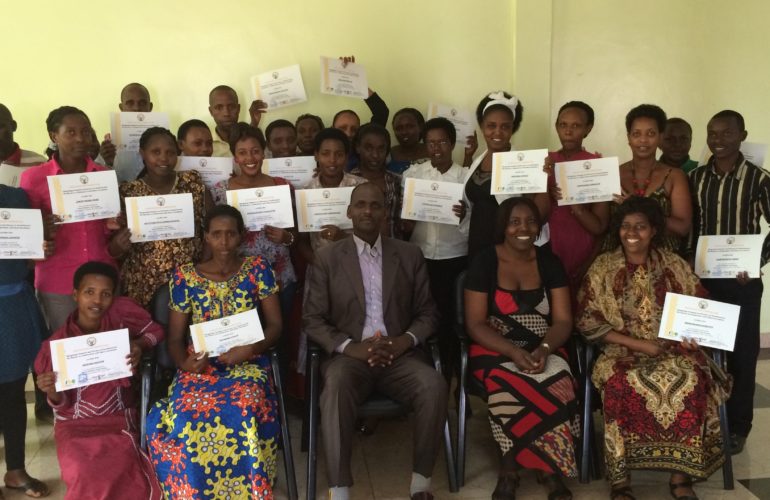
Kibagabaga hospital, a district hospital located at Gasabo district recently finished a 5 days of training in palliative care of nurses from 16 health centres supervised by the hospital. In addition this has also been started in Burera district by Butaro hospital which has trained 17 health centres from their district.
Dr Osee Sebatunzi, the Director of Kibagabaga Hospital mentioned in his speech when he closed the training: “We are very proud to be the first district hospital with Butaro hospital that have implemented the first training in palliative care at health centre level; we now have no excuse for all patients who will reach our health facilities”
The aim of the training was to create model palliative care teams for urban and rural Rwanda that are integrated into the national healthcare system.
Both sites had these basic elements:
- Formation of a multidisciplinary palliative care team offering comprehensive and coordinated services that includes general practitioners, nurses, social workers, and community health workers.
- Training at community, health centre, and district hospital levels for all cadres of staff.
- Integration of palliative care into the community via training of community health workers and adoption of model teams at facilities and mobile teams visiting homes
- Creating referral networks between levels of care and between the two implementing districts for care of patients who come from other catchment areas.
At the end of the training, health providers from health centre planned to improve the quality of care for their patients by improving the quality of life focus not only in physical aspect but also psychological, spiritual and social.
The Rwanda Ministry of Health ordered Morphine (IV/IM, Oral, Powder), which will be used at all levels of health system. The nurses trained will be able to use tools for palliative care and follow patients in the community focused in pain assessment & management. Before the availability of morphine ordered, the Ministry of Health targeted to train all health centers in the concept of palliative care, opioids and tools management.
The overarching objective of the national strategy is to ensure that palliative care is available, accessible and affordable for all people, and especially the most poor through the 502 health centres in Rwanda.
The Minister of Health, Dr Agnes Binagwaho has clearly specified that, “access everywhere to dignity despite pain” is the vision of Ministry of Health.


Leave a Reply