
On 6 September 2025, at a palliative care conference1 hosted by Mackay Memorial Hospital in Taiwan, Hospis Malaysia nurse Emily Yap delivered a keynote titled “Hospice Practice in Malaysia: A Nursing Perspective.” Her talk was more than a presentation — it was a call to national leaders, voiced through the heart of a nurse who has walked beside patients at the edge of life.
Emily shared the story of a patient under Hospis Malaysia’s care. Through this deeply personal narrative, she showed that well-trained palliative care nurses are not just task-doers — they are witnesses, companions, and protectors of dignity in life’s most vulnerable moments. Her story reflecting the depth of care provided by palliative care nurses moved many to tears.
Yet, she asked, “Why is palliative care nursing still so invisible in Malaysia?”
Malaysia is not alone in facing this challenge. Across the world, nurses remain the backbone of palliative care, yet their contributions are consistently under-recognised in research, governance, and policy spaces.
Even in community-led systems like Kerala, where nurses deliver most home-based care, their visibility in leadership and documentation remains disproportionately low.
Global commentaries highlight that palliative care cannot claim to be truly compassionate while marginalising those who sustain its work. Evidence shows that when nurses are included in leadership and supported with structured frameworks, the quality, equity, and humanity of care improve significantly.
Malaysia’s next chapter must reflect this global learning — by giving nurses the space, recognition, and authority they have long earned.
 A moment of connection: Emily with a patient and his caregiver, demonstrating how compassionate, evidence-guided palliative care supports comfort, dignity, and family togetherness at home.
A Profession Overlooked
Though palliative care became a medical subspecialty in Malaysia in 2005, nursing has lagged behind. There’s no national framework, no formal recognition from the Ministry of Health (MOH) nor Nursing Board, and no structured curriculum in nursing colleges to develop palliative care as a recognised specialty.
Nurses are often posted to palliative units without specialised training, expected to deliver complex care unsupported. Even the Ministry of Health’s Diploma in Palliative Care was quietly discontinued — not for lack of interest, but, in Emily’s opinion, a lack of vision.
Regional Lessons
Singapore’s Ministry of Health has formally integrated nursing competencies into its palliative care competency framework2. Taiwan runs a professional certification led by TAHPN3, and foundational training is mandated for all medical and nursing students.
Their nurses stand on stronger ground — empowered, respected, and better equipped.
Emily asks: “If others can build these pathways, why can’t we?”
She challenges Malaysian nurses to reflect: “Are we ready to define our path? Ready to grow from caregivers into educators, researchers, and leaders?”
A Legacy Worth Renewing
Tracing nursing’s roots in Malaysia to the Catholic sisters of the 1800s, Emily reminded the audience that the profession was built on compassion, courage, and service. Today, that legacy calls for renewal.
Hospis Malaysia continues to lead — training nurses, advocating for the profession, and nurturing future leaders. But one organisation alone cannot carry the weight.
A Call to Action
Emily urges all stakeholders — educators, policymakers, professional bodies, and nurses — to:
- Develop a national palliative care nursing framework
- Integrate palliative care education into nursing colleges
- Establish national competency standards
- Include nurses in strategy, governance, and policy planning
Because in life’s most fragile moments — when breaths grow shallow and families hold their final moments together — it is the nurse who remains: steady, compassionate, present.
It’s time for Malaysia to recognise its palliative care nurses — not only as hands that heal, but as hearts that lead. Only then can we attract the right people into this vocation, and only then can access to evidence-based palliative care be improved.
——————-
Footnotes
- Hospice-Focused Palliative Outcome (HFPO) Conference
- Singapore Ministry of Health: Palliative Care Competency Framework (2018)
- Taiwan Association of Hospice and Palliative Nurses, a professional organisation dedicated to advancing hospice and palliative nursing in Taiwan
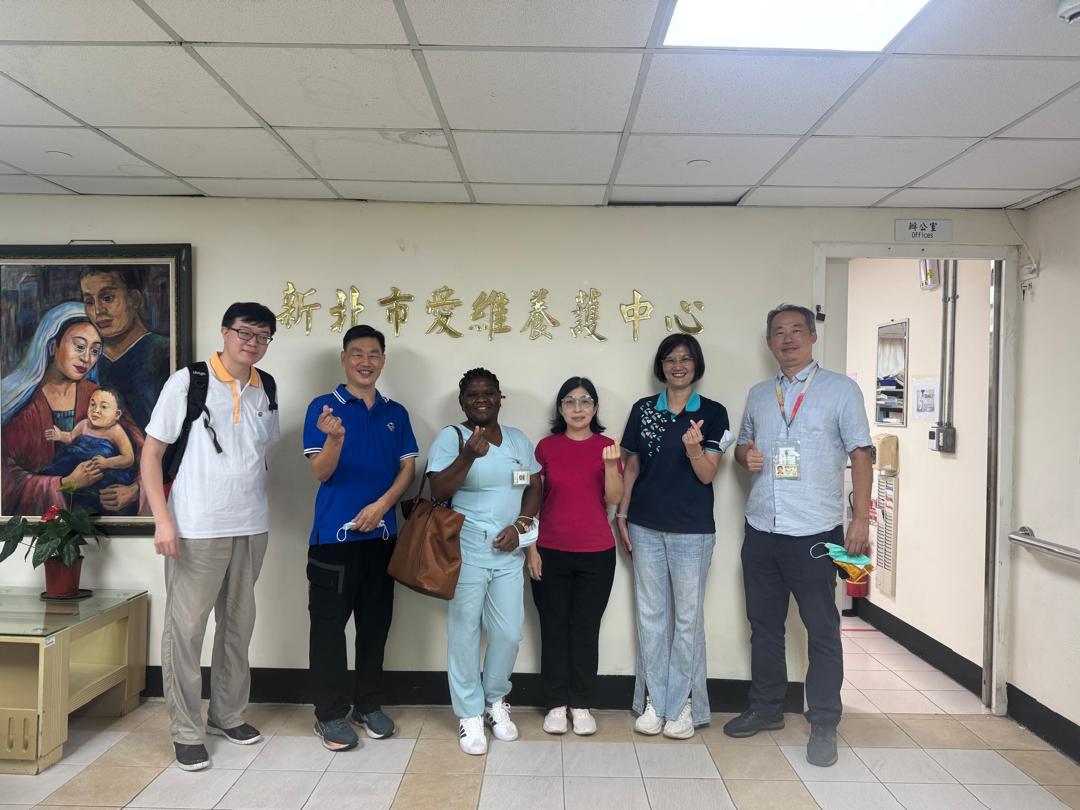
Lead photo caption: Emily, who was the sole Malaysian representative, joined nurses and doctors from around the world during her Taiwan stint — sharing smiles before heading out on home visits.
————-
This article was published in the Hospis Malaysia newsletter and is republished here with permission.
——————
ehospice is proud to help promote individual, local, national and international voices in Hospice & Palliative Care
We are on target to have over One Million page views this year.
To stay in touch with colleagues and news around the world subscribe to our free Newsletter


Leave a Reply