


RESEARCH FROM SEVERAL DIFFERENT COUNTRIES points to the need for a seismic shift in policy and practice to address three universal, public health issues facing prisons worldwide: a rapidly aging population, costly and often inadequate healthcare, and the provision of timely and compassionate end-of-life care.
Related is the current thinking with regard the merits of compassionate release or medical parole, which can have a profound impact on how prison inmates with complex medical needs spend their last days.
The dilemma facing many correctional services and prison authorities, however, is one of weighing concerns about security, i.e., public safety and the perceived prospect of reoffending, against a prison inmate’s basic right to healthcare comparable to what is available in the “outside world.”
Following are summaries of articles, reports, etc., of recent years that clearly demonstrate the common ground that correctional services worldwide share, under the sub-headings ‘Aging Prison Population,’ ‘Correctional Healthcare,’ ‘End-of-Life Care,’ and ‘Compassionate Release.’
____________________________________________________________________________________
Aging Prison Population
In addressing the challenges posed by the aging prison population, society faces an opportunity to re-examine the purpose and humanity of incarceration. Elderly inmates, for example, often fraught with complex medical needs, social isolation, and limited mobility, represent a growing and vulnerable demographic that demands thoughtful reform.
By implementing specialized care units, expanding rehabilitative programs, and streamlining compassionate release policies, the justice system can strike a balance between fiscal responsibility, public safety, and human dignity.
Ultimately, caring for aging prisoners is not merely a matter of logistics, but a reflection of societal values – one that calls for compassion, innovation, and a commitment to justice for all.1
A study by researchers at Portugal’s Lusófona University echoes the findings of much other research, stressing that ageing in prison requires urgent and integrated reforms that promote dignified ageing and the health and social reintegration of older prisoners, while ensuring full respect for their fundamental human rights.
The researchers analysed the dynamics of ageing in a prison context, addressing the challenges faced by elderly prisoners, and the effectiveness of social programmes aimed at improving their quality of life. They identify five central “dimensions”:
1) insufficient infrastructure to meet the needs of this population;
2) the impact of premature ageing on the prison environment;
3) the limited effectiveness of social programmes;
4) the need for palliative care; and,
5) structural and ethical barriers in the treatment of people with dementia.2
Recently published U.K. studies underscore the urgent need for correctional staff to have adequate training that addresses the realities of working with a growing population of ageing prison inmates. Not only is this population increasing in numbers, but as prison inmates age, the problems presented also increase.
Many older prison inmates suffer additional burdens due to their age and length of sentences, with many describing this as exacerbating the already numerous deprivations of imprisonment. Dealing with the increasing number of deaths of older men in prison requires significant input from training and support.3,4
One of the key take-aways of a joint-investigation by Corrections Investigator Canada and the Canadian Human Rights Commission also echoes the findings of much of the published research in other countries: prisons were never intended as facilities for older persons. Prisons in general fail to recognize older inmates as a vulnerable population within the prison population and, as a result, their health, safety and dignity are not being adequately protected.5
Correctional Healthcare
The large and growing population of people who experience incarceration makes prison healthcare an essential component of public healthcare and a critical setting for reducing health inequities.
People who experience incarceration have a high burden of physical and mental healthcare needs and have poor health outcomes. Addressing these health disparities requires effective governance and accountability for prison healthcare services, including delivery of quality care in custody and effective integration with community health services.
Despite the importance of prison healthcare governance, little is known about how prison health services are structured and funded or the methods and processes by which they are held accountable. There is a critical lack of evidence on current governance models and an urgent need for evaluation and research, particularly in low- and middle-income countries.6
Continuity of care is critical to the principles of restorative justice, which holds that people who experience incarceration emerge better off than when they entered the criminal justice system.
The path toward improved correctional healthcare, however, is long and complex.7 People in prison exist in a twilight zone between criminal justice and health systems. Neither adequately addresses or takes full responsibility for the health and rehabilitation of these communities, rendering them some of the most neglected and vulnerable in society.
Meanwhile, prison populations are spiralling – an unsustainable and dangerous trend that will have adverse repercussions for wider society by further embedding life-threatening disparities.
Governments have a duty of care to incarcerated individuals, ranging from meeting essential healthcare needs to tackling social exclusion.
Prisons – and those who live in and work in prisons – are easily forgotten, ignored, or dismissed. It is time to recognise the centrality of prison health to any reasonable conception of social justice.
Our societies can do better.8
Adequate healthcare for elderly inmates is frequently inadequate and costly. Life sentences, longer term-of-year sentences, confinement without opportunities for parole, limiting parole eligibility until many years of the sentence are served, parole boards’ reluctance to grant parole, and legislative efforts to limit executive pardons and commutations all coalesce into the graying of this nation’s inmates and the increased costs of confining the elderly.9
End-of-Life Care
End-of-life care has long been been a topic of much debate and discussion, in the literature and in the news media. One of society’s most neglected and, therefore, vulnerable populations has not always been visible on the radar screens of the policy makers and practitioners responsible for healthcare services in prisons. As previously observed, caring for aging prisoners is not merely a matter of logistics, but a reflection of societal values.
One of the most comprehensive studies to date by researchers in the U.K. focussed on high-income countries (e.g., Australia, Canada, Ireland, New Zealand, Scotland). Their findings and observations make for compelling reading, with the potential for widespread application.
They identified and assessed three basic models of care delivery for people in prison:
1) embedded hospice model, typified by an interdisciplinary team and volunteer caregivers providing care on-site;
2) outsourcing care model, in which end-of-life care is provided outside the prison; and,
3) collaborative community model, which involves prisons engagement with other healthcare facilities or practitioners.10
NHS England » Dying well in custody charter
The researchers suggest that frameworks such as the U.K.’s Dying Well in Custody Charter can support national quality standards, but would require robust implementation and monitoring.11
Researchers at Portugal’s University of Lisbon focussed on studies from Australia, France, the U.K., and the U.S. Key “facilitators” that they identified included access to family, support from prison staff, specialized care availability, and cultural/spiritual support.
“Barriers” encompassed discomfort, patient-clinician relationship constraints, time limitations, protocol uncertainty, restricted patient agency, negative attitudes, inequality, conflicting priorities, and lack of grief support.
Policymakers, healthcare providers, and correctional authorities, the authors urged, need to prioritize the enhancement of palliative care services within prisons, supported by further research and targeted interventions to address disparities and optimize care provision.12
An oft neglected topic in correctional health is care planning. Prison inmates typically have little say over the care they receive at the end of their lives. This despite a broad consensus among standards boards, policymakers, and healthcare providers that terminally ill people in custody should receive treatment that minimizes suffering and allows them to be actively involved in care planning.13
The issue of prison inmates’ rights to informed decision-making when it comes to their health, particularly when living with complex medical needs, or terminal or life-limiting illness, is gaining traction in the literature. Researchers at Canada’s Memorial University Centre for Bioethics, for example, sought to address the issue.
From limited access to treatment options to correctional staff involvement in medical encounters, incarcerated patients face unique constraints to their autonomy. Most troubling is the role of correctional officers, who frequently and inappropriately become involved in healthcare decision-making, despite lacking any legal authority to do so.
The influence of institutionalization can erode incarcerated people’s autonomy in more insidious ways.Imprisonment strips people of choices, fostering dependency and undermining self-determination or even just one’s belief in their capacity to make choices for themselves. This loss of agency does not vanish upon walking through the hospital doors; it may even deepen in the similarly institutionalized environment.
Relationships that support one’s ability to act with autonomy are often restricted in prison, leaving incarcerated patients without critical networks of support.14
Prison is not the appropriate environment to provide end-of-life care. Hospice and palliative care are specialized services and should not take place in a prison setting.
A community placement would more easily facilitate visits from family and friends and ensure that prison inmates have access to care that is equivalent to that offered in the community. Human rights protection requires these kinds of appropriate alternatives. Moreover, community placements would also bring a more humane approach to very difficult situations.5
Compassionate release
Basically, compassionate release is a process that allows for the early release or parole of an inmate due to advanced age, with a life-limiting illness, complex medical care needs or significant functional decline and deemed not a threat to public safety.
This brings into play another consideration and perhaps an incentive to effect change. The care of incarcerated older adults, many of whom have high rates of chronic disease and disability, has generated rising prison healthcare costs and strained prison healthcare infrastructures. The many benefits seem obvious, and yet, compassionate release is rarely given.
As noted, the aging population is a universal phenomenon, with it an unsettling, corresponding increase in more and more people living with disability, or with a chronic or terminal illness. Nowhere is this more evident than in the prison populations of almost every country.
Prisons and correctional facilities, consequently, are caught between the proverbial “rock and a hard place,” between issues of security and public safety, and the civil rights of the incarcerated to healthcare comparable to what is available to the populace-at-large.
There is wide-spread evidence that few applicants are granted early release so that they may live out their last days no longer confined within the four walls of a prison cell. Coupled with the other world-wide phenomena of overcrowded prisons, there’s clearly a blatant disconnect between policy and practice in the prevailing concept of compassionate release.15
But, there is a flipside, so to speak, to the issue of compassionate release, post release accommodation and healthcare. On release many face the prospect of becoming what is euphemistically termed “unhoused,” in other words homeless. Not everyone has an accepting or loving family to return home to. Extended prison time more often than not weakens “outside” social support systems, if any existed in the first place. Critically, more often than not, few community resources offer accommodation or support until advancing illness forces hospitalization.15
————————
This brief review of the literature and other sources barely scratches the surface of the critical public health issue referred to in the opening paragraph. A “call to action” at all levels of government, correctional services, the palliative care and hospice communities, and the general public is long overdue.
Barry R. Ashpole
References
- ‘The forgotten inmates: Addressing the challenges of aging prison populations,’ inmate AID (2025)https://bit.ly/3Em8VZk
- Chaves, E. et al. ‘Challenges and support programs for aging in prisons: A literature review,’ Temas Sociais, December 2024. https://bit.ly/3PiIciz
- Radley L., Waldgrave, KE.‘Invisible men: Unlocking compassion and understanding the needs of older men behind bars,’ Social Sciences, 2025;14(1):21. https://bit.ly/40SlRz1
- Price, J. ‘Growing old and dying inside: Improving the experiences of older people serving long prison sentence,’ Prison Reform Trust, September 2024: https://bit.ly/3zbqCIT
- ‘Aging & Dying in Prison: An Investigation into the Experiences of Older Individuals in Federal Custody,’ Corrections Investigator Canada & Canadian Human Rights Commission (2019) https://bit.ly/3y7wItD
- MCLeod, KE., et al.‘Global prison healthcare governance and health equity: A critical lack of evidence,’ American Journal of Public Health, 2020;110(3):303-308. https://bit.ly/41ajXJP
- Jolin JR., et al. ‘Correctional healthcare – an engine of health inequity,’ Journal of General Internal Medicine, 2023;38(1):216-218. https://bit.ly/4h4BpGb
- ‘Promoting health beyond prison walls,’ The Lancet: Public Health, 2022;7(7):E573. https://bit.ly/3ZWgrTL
- Aprile, JV. ‘The cost of incarcerating the elderly,’ American Bar Association, 2024. https://bit.ly/3yU4EKw
- Gilbert, E., et al. ‘How do people in prison access palliative care? A scoping review of models of palliative care delivery for people in prison in high-income countries,’ Palliative Medicine, 2024;38(5):517.534. https://bit.ly/3w5V9q2
- ‘Dying Well in Custody Charter,’ National Health Service England (2024). https://bit.ly/4evqeEQ
- Correia-Garcia, G., et al. ‘Facilitators and barriers in palliative and end-of-life care in prisons,’ Journal of Correctional Healthcare, 2024;30(6):414-425. https://bit.ly/4ffNrL9
- Rayasam, R. ‘Prisons routinely ignore guidelines on dying inmates’ end-of-life choices,’ Kaiser Health News, May 2025. https://bit.ly/4jnlN0t
- Raabis, A. ‘Rethinking autonomy in healthcare for incarcerated patients,’ Memorial University Centre for Bioethics (2025) https://bit.ly/3YFlPcf
- Ashpole, BR. ‘Compassionate Release: Call for humility and more leniency,’ End-of-Life Care Behind Bars (2025) https://bit.ly/4faVTMH
Additional Recommended Reading
‘Care for Aging Patients in the Correctional Setting,’ [U.S.] National Commission on Correctional Health Care (2024): https://bit.ly/3VF9DpN
‘The WHO prison health framework for assessment of prison health system performance,’ World Health organization (2023).https://bit.ly/3UCUqFn
Ashpole, BR. ‘Governance of Prison Healthcare: “People in prison exist in a twilight zone between criminal justice and health systems,’ End-of-Life Care Behind Bars (2025). https://bit.ly/4nYRxwa
Ashpole, BR. ‘Prison policies and practices generally remain male- centric and often fail to address the gender-specific needs of incarcerated women: A brief overview,’ End-of-Life Care Behind Bars (2025). https://bit.ly/3UusQdt
McParland, C., Johnston, BM. ‘Palliative and end-of-life care in prisons: A mixed-methods rapid review of the literature from 2014-2018,’ BMJ Open (2019). https://bit.ly/2PTCRR2
Ashpole BR. Prison Hospice: From the Inmate Hospice Volunteers’ Perspective – a “Snapshot,” End-of-Life Care Behind Bars (2025). https://bit.ly/4l96x8k
‘Dying behind bars: How can we better support people in prison at the end of life,’ Hospice UK (2021) https://bit.ly/4ekKKqN
Photo Credits
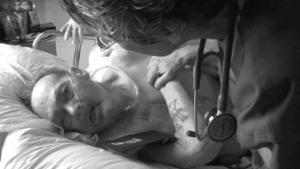
‘Prison Terminal: The Last Days of Private Jack Hall’ (https://bit.ly/46sspYC) Reproduced with permission.
____________________
BARRY R. ASHPOLE is an educator and communications consultant living in Ontario, Canada. Now semi-retired, he has been involved in palliative and end-of-life care since 1985. He established the End of-Life Care Behind Bars website (https://bit.ly/4dU4qmi), an advocacy, teaching and research “tool” to inform and, hopefully, affect a seismic shift in society’s attitudes towards the health and well-being of the incarcerated. Regular postings include annotated listings of current articles, reports, and so on, culled from the professional literature, the news media and other sources.
Republish This Article:
The author believes in the free flow of information. Republish this article for free, online or in print, under Creative Commons licence, with due credit to the author and source. https://bit.ly/3B9EK6n



I have read the article and have learnt great lessons , I am Christopher Mindiera palliative care expert i lead a Yankho Medical Foundation whose mission is to provide care to the elderly persons and also provide care or meet palliative care needs for prisoners . Challenges and gaps raised in the above article are real and apply to all
My foundation is based in Malawi , am calling for networking and also am willing to take part in any further studies that would improve the well fare of the elderly persons and prisoners
Looking for health networking collaboration