

This overview comes from https://endoflifecarebehindbars.com (from where you can also find previous editions) and is republished here with permission.


“It’s getting more like a care home”: The prison struggling to accommodate an ageing population
ITV NEWS (Scotland) | Online – 23 June 2025 – Prisons across the U.K. are struggling to cope with increasing numbers. Short term emergency release has given some institutions breathing room, but for many, it barely scratches the surface.
If it wasn’t for the cell doors and coordinated inmate uniforms, you could easily believe you were inside a care home, with most using wheelchairs and walking aids. The idea of a prison care home has been raised, which would mean a dedicated place for older prisoners to be looked after.
Glenochil has adapted some bunk bed cells to be able to contain a hospital bed but that ultimately reduces a two person cell to one, when they are already running over capacity.
The cost of this social care is crippling for the prison service. In Scotland alone it rose from £636,000 in 2018 to £2,877,000 last year. That’s down to the rising population of older prisoners. In Scotland over 50s has jumped from an average of 612 in 2010 to 1419 last year. Full text: https://bit.ly/3HNKZQD
Growing old behind bars: Inside Germany’s “grandpa prisons”
RADIO FRANCE INTERNATIONALE | Online – 14 June 2025 – Germany’s prison population is ageing. The largest unit for senior prisoners in the country is in Bielefeld-Senne, east of Cologne – where inmates live in specially adapted cells and aren’t required to work once they pass retirement age.
According to a 2022 study … “in Germany, the number of prisoners over 60 years of age has quadrupled since the 1990s” reflecting a wider demo- graphic trend which has seen the percentage of people over 60 in the country’s general population rise from almost 25 percent in 2003 to more than 28 percent in 2018. (1)
As the study notes “prisons were designed with a much younger population in mind and as a result are ill-equipped and ill-prepared to deal with the often complex needs of older people.” In total, German prisons currently provide 331 age-segregated places for older inmates, who have specific needs. Full text: https://bit.ly/462DQpk
Palliative care (PC) is not integrated in the German prison system, with some states using external hospices and others transferring inmates to prison hospitals, which the 2022 study notes “suggests the emphasis lies on meeting medical needs rather than on providing a holistic service.” For some long-term prisoners, on-site PC would allow them to end their days in, for better or worse, environment they know.
1. ‘The fragmented picture of social care for older people in German prisons,’ Journal of Aging & So- cial Policy, 2022;35(4):509-520. Full text: https://bit.ly/4jUaFIl
Why the justice system’s hidden “silver tsunami” needs an urgent healthcare response
HEALTHCITY (U.S.) | Online – 5 June 2025 – As the U.S. healthcare system braces for the silver tsu-nami, there is a hidden demographic that demands special consideration: the growing population of aging adults within the prison system.
By 2030, it is estimated that one-third of incarcerated individuals in the U.S. will be 55 or older. Upon release, elderly incarcerated individuals face myriad challenges to accessing the healthcare they need. In addition, compassionate release laws in some states enable frail older adults to be released on medical parole, adding to the complexity of care navigation for severe illness.
Geriatricians and primary care physicians are at the frontlines of this crisis and must consider these patients’ specific challenges. How can correctional and healthcare systems evolve to better serve this wave of justice-involved older adults as they transition into the mainstream health system? Accelerated aging is a recognized phenomenon within prison populations. Full text: https://bit.ly/4dPTxCh
Related:
‘Geriatric justice: Advocating for equity in healthcare for elderly populations in correctional facilities,’ Geriatric Nursing, 2025;62(Part B):291-293. (U.S.) While the National Commission on Correctional Health Care’s recommendations provide an evidence-based framework for improving healthcare for older incarcerated adults, significant challenges persist. (1)
Implementing age-friendly practices requires not just pro- tocols, but also adequate funding, a trained workforce in geriatric care, and collaboration among healthcare professionals, policymakers, and advocacy groups. It is essential to create pathways for nurses and healthcare professionals to pursue careers in corrections, which includes promoting and encouraging spe- cialized training programs focused on correctional healthcare. Full text: https://bit.ly/3SEB55Z
1. ‘Care for Aging Patients in the Correctional Setting,’ National Commission on Correctional Health Care (2024). Position statement: https://bit.ly/3TjvJgw
‘Elderly and incarcerated in North Carolina,’ North Carolina Law Review | Online – 1 May 2025 – The author examines the growing issue of elder incarceration in North Carolina’s prison system, highlighting the unique challenges and dangers faced by the aging incarcerated population. Despite a decline in North Caro- lina’s overall prison population, the number of incarcerated elders has continued to rise, exacerbating health and safety concerns due to the prison system’s lack of adequate healthcare infrastructure. This research aims to identify the causes behind this trend in North Carolina, including failures in the now abolished parole process, the increasing number of life sentences without the possibility of parole, and restrictive standards for compassionate release. Full text: https://bit.ly/3HFsNse
Prison Healthcare Services
A public health prescription for U.S. carceral facilities
THE LANCET | Online – 23 June 2025 – The U.S. has one of the highest rates of incarceration in the world. Shelves of books and reams of media exposés have revealed the inhumanity of American jails, prisons… They describe overcrowding, violence, prevalence of use of solitary confinement, arbitrariness in rules and their application, neglect and indifference to health needs, and inadequate oversight and accountability.
Outbreak Behind Bars: Spider Bites, Human Rights, and the Unseen Danger to Public Health, by physician and epidemiologist Homer Venters, adds to this literature by focusing on the negligence, indifference, and malfeasance that characterise responses to infectious disease threats in U.S. carceral facilities. The author’s stories about the pain, morbidity, and mortality resulting from lack of sound public health practices are accompanied by detailed and practical prescriptions for preventing, assessing, and treating infectious disease in these facilities. Full text: https://bit.ly/3ZLqJVS
Related:
‘Mass incarceration Is a public health crisis,’ Vera Institute of Justice (U.S.) | Online – 17 June 2025 – Conditions behind bars … lead to adverse health outcomes for incarcerated people. But the impact of incar- ceration on health extends far beyond the millions of people behind bars – it affects families, corrections staff, entire communities, and public health-at-large. Mass incarceration is not just a criminal justice issue – it is a public health crisis. Compared to the general population, incarcerated people experience higher rates of chronic medical conditions… Incarceration often exacerbates these health conditions – or leads to new ones. Research shows the stark impact of incarceration on how long one lives: each year spent in prison is associated with a two-year decline in life expectancy. Full text: https://bit.ly/3HRkjOO
‘The intersection of community health and carceral health,’ JAMA Network Opern (U.S.) | Online – 3 June 2025 – Many public health and medical organizations assert that the health of incarcerated individuals is inextricably linked to community health.
Up to 95% of incarcerated individuals are expected to ultimately return to the community, many with untreated health conditions acquired or exacerbated during incarceration and with lasting legal limitations on their engagement in community resources. Addressing the mortality crisis of incarceration requires not only reforming carceral healthcare but also fundamentally shifting policy priorities toward investment in community health, including education, affordable housing, economic opportunity, and accessible quality healthcare for all communities. Full text: https://bit.ly/45Ayt0D
Physical health in prison
(U.K.) | Online – 16 June 2025 – In fact, His Majesty’s Prison & Probation Service has adopted the age of 50 as the start of “old age” in the prison population, based on evidence that the health-related needs of people in prison are brought forward by around 10 years, relative to people in the general population.
Healthcare in prison is based on the principle of “equivalence” meaning that people in prison should have access to services or treatment that are at least consistent with those available to the wider community. Specific commissioning arrangements have been put in place to provide healthcare to people in prison. However, as is set out in further detail in this briefing, both existing evidence and new survey findings … show that there are still significant problems with access to care, and people in prison are often not getting the level of care to meet their needs or as they would receive in the community. These challenges are exacerbated by problems within prisons themselves… Download report at: https://bit.ly/4e5ce5b
Related:
‘Investigation calls for clinical governance framework at prison following prisoner death,’ Manx Radio (U.K.) | Online – 12 June 2025 – Clinical Leads within Manx Care should ensure that healthcare staff at the Isle of Man Prison have the appropriate competencies to the level of care they are providing for acutely ill/deteriorating patients. That’s the conclusion from an independent investigation into the death of a prisoner by the Prisons & Probation Ombudsman. The clinical care [the inmate] received at Isle of Man Prison was “partially equivalent to that which he could have expected to receive in the community.” However, [the reviewer] was concerned that “there was no clinical governance framework in place to help ensure practice, policies and procedures were evidence-based.” Full text (w. link to PPO’s report): https://bit.ly/4e0YSqB
Health conditions among women in prisons: A systematic review
THE LANCET: PUBLIC HEALTH (Canada) | Online – 11 June 2025 – Despite rapidly rising incarceration rates, the health needs of women in custody are overlooked. The health of women in carceral settings is often neglected because they are a minority within a justice system designed by men for men.
This re- view shows this limited focus on women who are incarcerated reflected in the research literature, with direct effects on our understanding of the health of women in custody, and on the evidence we can use to identify, advocate for, and implement change. Some findings within this review … are striking in-and-of themselves and point to a need for focused research and action.
This review provides a synthesis of the current evidence that can be used by both correctional and healthcare authorities to inform services and policies in custody, transitions between custody and community, and community-based services after women are released. Full text: https://bit.ly/3HEvj1T
N.B. See ‘A Brief Overview of End-of-Life Care in Women’s Prisons’ at: https://bit.ly/4n2Lhmx 
An experiential curriculum and clinical care pathway to advance equity for patients hospitalized while under correctional control
NEJM CATALYST (U.S.) | Online – 11 June 2025 – Much of the existing medical research related to incarceration … focuses on specific physical and mental health conditions in prisons, jails, or post incarceration settings. However, there is limited focus on the clinical education or resources offered to health professions students or practicing clinicians about the care of people impacted by incarceration. Furthermore, trainees and clinicians are primarily exposed to hospitalized incarcerated people in shackles and/or guarded by correctional officers, thereby limiting the opportunity to build a deeper patient rapport. Clinicians without structured guidance in navigating these perceptual and systems-based complexities risk deferring to law enforcement or correctional officers in ways that compromise patient rights regarding issues such as provider-patient and provider-family communication, mobility, safety from hospital- associated complications, and discharge planning. Abstract: https://bit.ly/3FPVBO9
Related:
‘Caring for the incarcerated patient: Provider perceptions of quality of care in the State of Louisiana,’
Journal of the Louisiana Public Health Association | Online – 4 June 2025 – Prior research and litigation have documented challenges with healthcare service delivery within prisons, but less is known about the higher acuity care incarcerated people receive… Providers at state-contracted hospitals may be unaware of how to improve care for incarcerated people. Educational campaigns and organizational support to enhance coordination between prisons and external hospitals and clinics may improve the quality of care (QoC) incarcerated people receive. Healthcare providers perceive incarcerated people to receive inadequate QoC, and there are steps organizations can take to improve this care. Full text: https://bit.ly/43wpUlZ
A critical realist analysis of digital health screening for older people in prison
QUALITATIVE RESEARCH IN HEALTH (Australia) | Online – 5 June 2025 – The growing cohort of older people (50+) in Australian prisons have high rates of physical, psychosocial and cognitive conditions, with evidence that many of these remain under diagnosed or undetected.
It is necessary to better identify the priority health and social needs of older people in prison to ensure a safe, equitable and cost-effective prison health system. Increased digital health screening in prison is seen as one promising approach to achieve this end. This study aims to explore the factors that are likely to impact future adoption of digital health screening tools for older people in prison. Providing adequate prison healthcare is a persistent and growing challenge for policymakers, clinicians and researchers alike because of the increasing numbers of older Australians in prison, and their disproportionately high levels of physical, mental and cognitive health issues. Full text: https://bit.ly/44c7vKz
Prison Reform Trust: Digital technology in prisons in England and Wales
‘Update and restart: Post-pandemic prison digitisation in England and Wales’ | Online – 12 June 2025 – In some prisons, prisoners can now use self-service kiosks to book healthcare appointments. The HMPPS Content Hub, an information service available in-cell in 19 prisons, enables people to access information about healthcare. Telehealth appointments have now become a reality in prisons. Medical appointments outside a prison, however, are often dependent on staff availability for escorting the patient. Download report at https://bit.ly/4mYX5pS
N.B. See ‘Standards for health services in Australian prisons,’ Royal Australia College of General Practition- ers (2023). Download at: https://bit.ly/4mUtTjR
Whistleblower sounds the alarm on inadequate prison healthcare
THE BULLETIN (Belgium) | Online – 15 May 2025 – A general practitioner has filed a 25-page complaint with the Belgian Medical Association condemning a series of serious shortcomings in healthcare at [Brussel’s] Haren prison. Healthcare for prisoners must be “equivalent” to that provided to people outside prisons, according to the guidelines of the Directorate-General for Penitentiary Institutions, but this was rarely the case. Instead, working conditions are shameful, patients are often left to their own devices and healthcare providers are powerless against an administration that focuses on punishment and control… These shortcomings also fuel the already prevailing tensions between staff and prisoners… Some sick prisoners wait weeks to be treated and it becomes too late for medical interventions. A patient who complained of abdominal pain for more than six months eventually died from what turned out to be cancer, along with another prisoner who died while on a waitlist for consultation… Full text: https://bit.ly/3FTy3I5
End-of-Life Care in Prisons
“Patients not prisoners”: Palliative care nursing behind bars
NURSING IN PRACTICE (U.K.) | Online – 1 July 2025 – The U.K.’s older-age inmates are the fastest growing group in the prison population, with 17% of inmates in the U.K. prison estate being aged 50 or above. Strikingly, the number of prisoners aged 60 and over has also increased by 82% in the last decade, and 243% since 2002.
The Dying Well in Custody Charter is used by healthcare workers and wider staff as a framework for delivering high quality and end-of-life care within prison settings. (1) The guidance was introduced in April 2018 in England, but it is not mandatory, and it is hard to know how many prison- ers are impacted by the Charter at any one time. The Charter is divided into six points, each with instructions for how the ambition should be achieved. It pushes healthcare staff to centre patients in a prison environment, to provide personalised care which is delivered through collaboration between prison and health professionals. Full text: https://bit.ly/3I6zGDc
N.B. Download the Dying Well in Custody Charter at: https://bit.ly/4evqeEQ
Project on Death in America: Interview with Katherine Foley, Chief of Palliative & Pain Care, Memorial Sloan Kettering Cancer Center (Extract)


Online–27June2025–At Angola Prison in Louisiana, where the majority of inmates were there for life, the family members not only didn’t get a chance to visit their dying relative, but often didn’t even know they were dying. Funeral services were held and prisoners made coffins for the dying, and the dead were buried in unmarked graves.
We supported a documentary on the creation of the first prison hospice program called the Angola Prison Project. It was extraordinary to see inmates becoming hospice volunteers, often passing pain medication to dying inmates through locked doors. In one powerful moment you hear a volunteer saying, “the last person I saw dying was the person I killed,” and now he was a hospice volunteer, caring for a dying fellow prisoner. The project led to significant policy changes, including improved compassionate release policies. Full text: https://bit.ly/4l1PFAN
Prison Inmates’ Perspective
The long walk back to my cell after watching my friend die
PRISON JOURNALISM PROJECT (U.S.) | Online – 12 June 2025 – It was the second time in a week I had watched someone die. This is the experience of an incarcerated hospice worker, an occupation I volunteer for. I want to be there for those who would otherwise have no one in their final moments – the way I wasn’t there for my best friend when he ended his life two years ago. Full text: https://bit.ly/460ssdA
N.B. The interview with Dr. Foley includes Edgar Barens’s 1998 documentary on the Angola Prison Project., one of the nation’s first prison-based hospice programs. Scroll down to ‘Why am I here: Redefining compassionate release to address the dementia crises in prisons,’ in which the author states that the first for-mal prison hospice program in the U.S. was initiated in 1987 at the U.S. Medical Center for Federal Prisoners in Springfield, Missouri. Authors of a 2019 survey identified 113 such programs in America.1 BRA
1. ‘Characteristics of hospice and palliative care programs in U.S. prisons: An update and 5-year reflection,’ American Journal of Hospice & Palliative Medicine, 2020;37(7):514-520. https://bit.ly/42nxIGB
Related:
‘State Correctional Institute Waymart meets needs of aging incarcerated population by training in-mates in hospice care,’ WVIA Radio (U.S.) | Online – 8 June 2025 – State Correctional Institute (SCI) Waymart trains inmates to care for fellow inmates in hospice care. Some are bedridden, needing help with eating, changing and using the bathroom. Some have just a few more months to live. The medium security prison’s hospice unit looks like a nursing home. SCI Waymart is one of two prisons, along with SCI Laurel Highlands, in the Commonwealth [of Pennsylvania] that has a personal care unit. Waymart receives medical transfers from institutions across the state, making its population older than most of Pennsylvania’s state prisons. Waymart’s aging population is not unique. Full text: https://bit.ly/4mS6ek0
‘Behind bars and beyond reach: Systemic barriers to preventive and palliative healthcare for justice involved older adults,’ Journal of the American Geriatrics Society (U.S.) | Online – 3 June 2025 – This case study underscores the challenges in achieving quality healthcare for older justice-involved individuals. It highlights the impact of the social and structural determinants of health, namely the lack of regulated, high- quality preventive healthcare in carceral settings, which often results in delayed screening and diagnosis of preventable conditions. This case also illustrates the challenges in determining what matters most to justice- involved patients and their families, e.g., difficulties in identifying surrogate decision-makers, engaging in ad- vance care planning, and accessing palliative care services. Access article at https://bit.ly/3ZF30Xm
‘Leon County Sheriff’s Office and Big Bend Hospice launch inmate comfort care program for terminally ill patients,’ Big Bend Hospice (U.S.) | Online – 6 June 2025 – The partnership marks the official launch of an inpatient hospice room within the Leon County Detention Facility, a unique initiative dedicated to dignity and humanity for those facing their final days in custody – to ensure that when rare but critical final stages of life situations arise, inmates receive the same caliber of comfort, clinical care, and emotional sup- port as any other member of the community. The collaboration … sets a powerful precedent for how com- munities can come together to ensure that dignity, compassion, and quality care are extended to all, regard- less of their circumstances. Full text: https://bit.ly/4mShYTO
The accessibility to health services and the end-of-life desires of elderly inmates
CHULALONGKORN UNIVERSITY JOURNAL OF SOCIAL SCIENCE (Thailand) | Online – 16 June 2025 – The purpose of this article is to study the state of Thai health services and the Thai correctional sys- tem’s accessibility to palliative care under various conditions based on the concept of human rights, in- mate rights, supportive care and treatment, and the international regulatory framework and national laws. It also aims to study the approach of health services towards end-of-life (EoL) care. It explores the needs of elderly inmates in prisons and the methods for dealing with death in prison through the Thai correction- al system, which involves various multidisciplinary teams that come to provide services to inmates during the EoL period. Inmates face difficulties in terms of their living conditions in prison, resulting in them being easily exposed to illness. The prison environment is not, therefore, compatible with the elderly. Access full text in Thai (click on pdf icon) at: https://bit.ly/465pnJg
———————
The articles, reports, etc., noted on each monthly posting on the End-of-Life Care Behind Bars website are a representative sample of current thinking on end of- life care in prisons. If you think any important articles, reports, etc., have been missed or overlooked, please let us know: https://bit.ly/4cdWVFD
Care Planning
From the archives: An interesting read you might have missed
A review and content analysis of U.S. Department of Corrections end-of-life decision making policies
INTERNATIONAL JOURNAL OF PRISON HEALTH, 2021;18(2): 165-175. The authors found significant variability in the accessibility of the policies, eligibility criteria, who can serve as a healthcare proxy, witnessing requirements, use of “do not resuscitate” orders and documentation. The variability between correctional policies regarding end-of-life (EoL) decision-making suggests an opportunity to develop national guidance for prisons that reflect community standards in this area. Standardization of these policies across systems would help to ensure that incarcerated people across jurisdictions have the same opportunity to document their EoL wishes and increase assurance that those wishes will be honored. The standardized policy would ensure that documentation of EoL decisions is offered to all incarcerated people … that there are fewer barriers to who can serve as a healthcare proxy or agent and would state clearly how to transfer the policy to other facilities or settings. Full text: https://bit.ly/3R7gkPD
Incarcerated people lose many of their rights, and international law does not necessarily protect a person’s right to choose a particular medical treatment. According to standards set by the National Commission on Correctional Health Care,(1) incarcerated people have the right to end -of- life (EoL) care decisions, including whether to receive measures to prolong life. Autonomy in medical decision making is essential at EOL, though often sits in contradiction to priorities or policies in correctional settings.
1. ‘Care for Aging Patients in the Correctional Setting,’ National Commission on Correctional Health Care (2024): https://bit.ly/3VF9DpN

Grief & Bereavement
From the archives: An interesting read you might have missed
A literature review of loss and grief among prisoners
JURNAL KEPERAWATAN, 2023;15(3):999-1005 (Indonesia). Based on the results of a review of five articles…, there are various kinds of populations in this study, namely men, women and the elderly. This shows that there are different experiences and reactions to loss and grieving experienced by each population. However, there is one similarity in grief reactions that prisoners experience, namely unspeakable grief or disenfranchised grief, where when a person experiences a loss that cannot be acknowledged openly, cries openly, and lacks social support. In addition, there are various kinds of coping responses experienced by participants in the five articles, ranging from adaptive to maladaptive coping. In prison, the regime’s very strict and structured requirements can adversely affect an individual’s ability to meet the physical, psychosocial, and emotional needs associated with a person’s death. This results in the loss of experience of loss and grieving in prisoners. Full text: https://bit.ly/43G22et
The role of health workers in prisons in coping with loss and grieving is very important. However, several studies have found various problems related to the inability of prison health workers to deal with the loss and grieving of inmates. Mental health practitioners working in prisons who attempt to treat symptoms related with loss and mourning are frequently ill-equipped to give therapies that adequately ad- dress the core cause.


To keep abreast of current thinking on palliative and end-of-life care check out ‘Literature Search’ on the website of the International Association for Hospice & Palliative Care at: https://bit.ly/3WWxUYC
Compassionate Release
Why am I here: Redefining compassionate release to address the dementia crisis in prisons
JOURNAL OF AGING LAW & POLICY, 2025;Spring:3-24 (U.S.). Across the country, sentencing laws and practices governing the ad- ministration of criminal justice should be revised to account for the degeneration of brain function that occurs later in life, and the rapid degeneration that specifically occurs as a result of living in prison. If we fail to adopt these changes as our prison population continues to age, society will pay for it not only in additional healthcare costs but also with a moral cost. We must provide education about person centered care that will engage elder prisoners with dementia in a process of making choices, fostering personal agency or recovery of lost agency, and improving quality of life. This paper provides a holistic path forward for developing a response to dementia in prison. Through updated compassionate release laws and increased focus on creating prison settings which are attuned to the unique issues with geriatric and hospice care, we can better manage the dementia crisis in prisons. Full text: https://bit.ly/4ke14ME
Many older prisoners may receive a death by imprisonment sentence, making end-of-life care crucial. The first formal prison hospice program in the U.S. was initiated in 1987 by a pair of inmates at the United States Medical Center for Federal Prisoners in Springfield, Missouri. The inmates then recruited eight other inmate volunteers, creating a model for prison hospice that has since proliferated nationwide in scores of state and federal prisons and jails. Programs like these can become a transformational experience for both the caregiver and the one receiving the aid.
This French nursing home accepts inmates others won’t
MEDSCAPE | Online – 19 June 2025 – France’s prison population is aging. In 2019, nearly 2,600 inmates were over the age of 60, and close to 500 were over 70. According to the French Prison Administration Directorate, 115 of these individuals were classified as dependent, and 430 were living with physical disabilities. Despite these needs, few healthcare facilities in France are equipped to accommodate older, dependent former inmates. Currently, only two nursing homes accept individuals with a history of incarceration. Medical parole is granted by a sentencing judge… However, it only becomes a viable option if a long-term care facility is willing and able to admit the individual. Roughly 80-90 older inmates in France each year would meet the criteria for such release. That is a relatively small number considering the total nursing home capacity nationwide. But the fear of recidivism, especially involving individuals convicted of sexual offences, remains the primary barrier to placement. Full text: https://bit.ly/4nqYCWj
The biggest barrier is stigma: the fear that someone who has committed a crime may reoffend. Facilities are concerned about how families will react, whether there are safety risks for other residents, and what staff will think. These fears continue to prevent many nursing homes from accepting former inmates. Yet these individuals are often seriously ill and no longer capable of living independently in a prison setting. In some cases, their living conditions behind bars may even be incompatible with basic human dignity.
The state expanded medical parole four years ago, but the number of medical paroles has plummeted
KGOU NEWS (U.S.) | Online – 17 June 2025 – Imagine a criminal. Not a murderer sentenced to life without parole, but something bad… Imagine that the criminal was sentenced to many years of incarceration, and after decades in prison his body has begun to break down and die. He has years left on his sentence, but only months left to live. A series of health emergencies have incurred huge costs and strained the resources of the prison where he is held. Would you accept that such an inmate could be paroled for the final months of his life, if it was guaranteed that he posed no threat and that his release would save taxpayers potentially hundreds of thousands of dollars? That is the idea behind Oklahoma’s revised medical parole statute, signed into law by Governor Kevin Stitt in 2021 with the goal of increasing the number of paroles granted. It may not be working as planned. The revised medical parole statute [has been found] to be convoluted and frustrating. Full text: https://bit.ly/3G0WXWm
——————-
Please report any broken links: https://bit.ly/4cdWVFD
Barry R. Ashpole, Ontario, CANADA Biosketch: https://bit.ly/3XMTRs4


Compiled by Barry R. Ashpole Prison Hospice July 2025
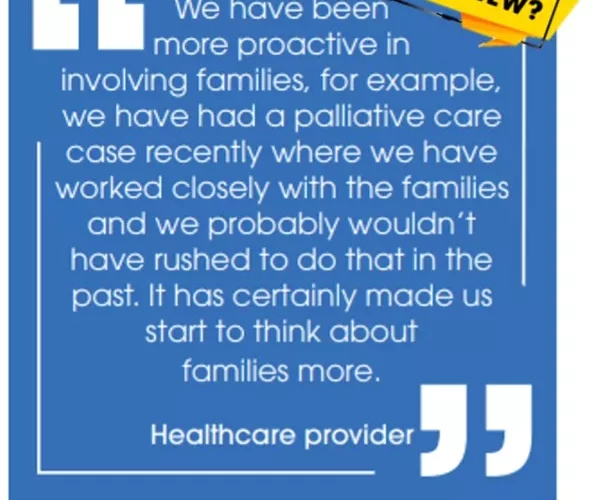
Lead Illustration: Image: ‘What families say about prison healthcare,’ Prison Advice & Care Trust (2023) https://bit.ly/3Fic2SV


Leave a Reply