


by Christiaan Rhodius. This article introduces the concept of “the palliative paradox”, a perspective on dynamics within the relational realm. It provides a framework for clinical thinking and points to possible interventions. It can also be used as a means of psycho-education for patients and family.
Abstract: Attachment theory described by John Bowlby greatly influenced the perception of relationships. The theory proposes a framework for thinking about relationships—the propensity of mankind to seek closeness to particular others.
Attachment behaviour and the longing for a secure base are focal points within the concept of attachment. Both are thought to play a role from cradle to grave.
In palliative care (with approaching death as the ultimate threat to connection) dynamics in relationships will inevitably change. This article introduces the concept of “the palliative paradox”, a perspective on dynamics within the relational realm. It provides a framework for clinical thinking and points to possible interventions. It can also be used as a means of psycho-education for patients and family. As such “the palliative paradox” can provide insight for clinicians, patients, and family alike. This enables all involved into becoming and being a secure base for each other.
The presence of a secure base amidst the process of separation makes it possible to die connected. Thereby increasing the quality of life, the focal point of palliative care.
————-
Keywords: attachment, secure base, palliative care, palliative paradox.
————–
How it started
Wouter and I are having lunch in the regional teaching hospital we work in. He is a medical intern and I am a doctor specialised in palliative medicine.
“You do things differently. But what?” He looks at me and takes a bite of his sandwich.
I am flabbergasted.
“Remember the conversation we had with that patient and their family?” he continues after swallowing his cheese sandwich, “I saw a different approach, but I can’t put my finger on it. And I’ve read your charts. Your notes stand out. But what is it?”
“Don’t know really… Doesn’t palliative care always add to existing care provided?” I respond for lack of an alternative explanation.
“Could be. But I think there is more. Can you think about it and teach us?”
“Challenge accepted!”
Walking back to the outpatient department (OPD) after lunch, I am perplexed. I contemplate the observation he has shared and try to identify it. Where, in my work, has contact with a patient been “different” lately? Herman comes to mind.
Herman was a seventy-year-old male with end stage chronic obstructive pul- monary disease (COPD). COPD will cause limitations to daily living, even with the best possible medication given. Although relatively effective medication had been prescribed, Herman had been left with severe physical limitations. He was referred to the OPD of the palliative care services by his pulmonologist because of his “diffi- culty to grasp the severity of his condition” and his continual “complaints about the lack of effect of the medication given”.
Herman and his wife Ans (who had had a minor physical impairment since contracting meningitis at a young age) met me at the OPD.
He spoke to me angrily about the medication he’d been given which did little for his breathlessness. In his opinion none of his healthcare professionals (general prac- titioner, pulmonologist, pharmacist, and insurance) had done a good job. His anger hampered further conversation and exploration of the perceived problem.
Amidst his anger his wife said: “But you were never given a pat on the back.”
He nodded. I tried to tune into this abrupt change of topic and emotional atmosphere. “Help me understand why it is important to mention this?”
“His dad never gave him compliments and didn’t agree with us getting married because of my physical disability.”
Still not grasping the point, I invited him to elaborate. It turned out that his father had never complimented him about anything and told him “You are no good.” So, he decided to prove him wrong. When marrying against his father’s advice and without his blessing his priority in life was to take good care of his wife. With his COPD progressing (even though the best medical treatment was given) he could not take care of her anymore. That made him once again hear his father’s voice like when he had been a child saying, “You are no good.”
Our conversation continued about his approaching death, how he would be separated from his wife, and therefore the impossibility of caring for her. Together we discussed the practical, financial, and social support his wife would need. It turned out he had made arrangements for every possible situation she could en- counter; he had proactively taken good care of her. With the knowledge of his life story and after hearing his actions in the present to take care of his wife in the future I could explicitly compliment and affirm him. “You have done well.” Together we concluded that he proved his father wrong. After having reached this conclusion it was easy to make him see and accept that medication could only bring partial relief. He was willing to continue with the medication he had started on and came to terms with his physical limitations. When leaving OPD I patted him on his back. It brought a smile to all our faces.
It was only somewhat later that it dawned on me that although “different”, my contact with Herman also felt familiar. Familiar because it made me think about the attachment theory of John Bowlby (Bowlby, 1977a, 1977b, 1997, 1998a, 1998b). Through the lens of attachment, his seemingly irrational behaviour made sense once placed within his life story and relational context.
Accepting “the challenge” of my younger colleague proved to be the start of a journey of discovery. This article describes the development of thinking that has occurred since that lunch in June 2016.
Attachment theory and palliative care
Attachment theory described by John Bowlby originates from observational studies of childhood (Ainsworth, 1967). It sets out a framework for thinking about relationships and centres around the human need to form affectionate bonds to particular others, “the attachment figures” (Bowlby, 1997).
During infancy this individual is usually a caregiver. This propensity of mankind to seek closeness becomes especially apparent in moments of distress and threat such as unwilling separation and loss (Bowlby, 1977a). Attachment behaviour is any form of behaviour that results in the attaining or maintaining of closeness to the “attachment figure” (Bowlby, 1958).
This behaviour of seeking closeness is terminated when the attachment figure is accessible and responsive. If connection is not made however, the behaviour intensifies (Bowlby, 1998a). Even though foremost and originally studied in childhood, Bowlby stressed that attachment behaviour was “held to characterise human beings from the cradle to the grave” (1977a, p. 203).
Early attachment relationships with caregivers provide an internal “working model” for later social relations. In the development of these “working models,” patterns or styles can be observed (Bowlby, 1998a).
Bowlby also sees “attachment figures” as crucial for providing security and by doing so becoming a “secure base” for children (1977b, 1988). A secure base can be seen as “a platform from which to move out into the world, take risks, and explore and develop a sense of competence and autonomy” (Johnson, 2019, p. 7). When threats cause anxiety a secure base provides comfort and shelter. In order to provide a secure base, one needs to be accessible and responsive.
Outside the strict psychological realm broader definitions of a secure base arise. Kohlreiser, for instance, defines a “secure base” as “a person, place, goal or object that provides a sense of protection, safety and caring and offers a source of inspira- tion and energy for daring, exploration, risk taking and seeking challenge” (2012, p. 8).
This article focuses on the applicability of attachment in the medical (read: outside the strict psychological) practice.
When using “secure base” in this article, it is meant to describe any person or team of people providing security as well as support for the things to come by being accessible and responsive.
Life and death are inseparably connected. The inevitability of death at the end of life can be seen as a major threat to connection. Approaching death, being a form of (physical) separation is a potent trigger for attachment behaviour involving both the patient and their family. The need to attune to the whole relational matrix can be seen in the definition of the World Health Organization. They describe palliative care as “an approach that improves the quality of life of patients (adults and chil- dren) and their families who are facing problems associated with life-threatening illness” (WHO, 2022).
Attachment has proven its value to medicine as well. The importance of attach- ment to (palliative) medicine has been extensively explored and published else- where (Hunter & Maunder, 2001; Rodin et al., 2007; Vehling et al., 2019). The use of attachment styles in relation to palliative care has been published elsewhere and, as such, lies beyond the scope of this article (Tan et al., 2005). Healthcare staff and institutions functioning as a secure base has been documented before (Adshead, 1998; Tan et al., 2005).
This article introduces the concept of the palliative paradox. This model takes attachment and the presence of a secure base as a starting point for providing pallia- tive care. It does so without going into the details of, for instance, attachment styles. The palliative paradox can help in the interpretation of clinical observations and points to potential interventions. It can support the healthcare practitioner and be a means of psycho-education for patients and families. Clinical practice will be used to introduce and illustrate the model.
Margaret and her brother—closeness and security
One morning Margaret, a patient in our hospice, has fallen whilst washing herself. I visit her later that day. Her physical decline is our topic of conversation when she bursts into tears.
“What’s making you cry?” I ask.
“It’s becoming so concrete,” she sobs.
“ ‘It’ being…?”
“My death, there’s no getting away from it.” Her crying intensifies.
Her brother Jim stands up, sits down next to her, and puts his arm around her. After some time, her tears stop flowing, she blows her nose, and exhales deeply.
“My heartbeat’s getting back to normal.” She smiles faintly whilst looking at Jim.
“Out of curiosity, help me understand … what sent your heartbeat back to normal?” I ask.
“Jim being next to me is tangible proof that I am not alone in this. That is a great relief,” Margaret replies.
Our continuing conversation covers the importance of feeling connected whilst death—as the ultimate “unwilling separation”—is approaching. Openly engaging in the topic of her approaching death from an attachment point of view (including mention of the necessity of feeling secure) made it possible for her and her brother to see her tears and relief, in the presence of her brother, as logical. With his arm around her, she experienced a sense of security. By his presence and attuning to her emotions Jim has become a secure base. By addressing attachment and the need for a secure base as such both become aware of the roles they can play. For Margaret to mention her needs and for Jim to actively engage with her in response to her longing.
As our conversation ends, Margaret looks at me and says:
“When I actually die, will you be there with me? It would be a great comfort for me.”
“I cannot promise to be there, but I can promise you that the hospice team will be there for you.” “Thank you. It’s a great comfort to be here.”
This case illustrates the basic principles of attachment theory. First of all, closeness to and connection with others is sought. It soothes and calms the anxiety that is brought about by imminent death. The loss of connection with others makes dying a vulnerable process. Finding others accessible and responsive to one’s sharing of vulnerability strengthens the mutual bond. Second, a secure base is sought and found: in contact with both her brother, as well as contact with staff of the hospice. By being accessible and responsive a sense of security can be developed.
The frame of attachment helped to soothe anxiety in the present as well as give support for the future.
Palliative paradox in practice
The palliative paradox is a dynamic concept that brings together the threat of death as ultimate separation and the impact it has on the felt sense of connection and therefore security.
Explicitly acknowledging death as a trigger for attachment behaviour also makes it possible to unleash connection as the potential agency to provide a secure base for each other. By doing so, it is paradoxically made possible to be separated in a connected way.
The palliative paradox gives a framework for clinical thinking and practice. It is merely a model to assess a situation. It informs and is not suited to define as such. Nonetheless it can be insightful to categorise. The palliative paradox can best be understood by visualising it along two axes (Figure 1).
The x-axis visualises the patients’ and loved-ones’ recognition of the coming death as a definite separation and therefore source of anxiety. Even if an illness is diagnosed that will inevitably result in death, the topic of death and dying is not always addressed; even though open dialogue about dying contributes to “good dying” (Meier et al., 2016).
The y-axis visualises the impact that recognition of death has on the felt sense of connection and security. This felt sense of connection relates to the way patients and their families can share their emotions and attune to the vulnerabilities of the other. When this results in a high sense of connection, they provide security and thus become a secure base for each other.
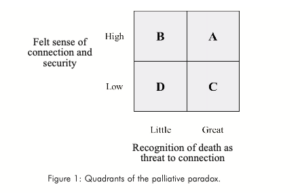
Figure 1: Quadrants of the palliative paradox.
Each quadrant will be illustrated by a case. As stated, the palliative paradox focuses on dynamics in relationships caused by impending death. By definition “dynamic” implies movement. The cases mentioned illustrate a particular quadrant, but also illustrate movement towards an enlarged felt sense of connection and security amidst imminent death. The concept of the palliative paradox aims to provide support by clarifying and giving insight into the dynamics at hand. In clinical practice with patients and their families it has proved useful to introduce the palliative paradox as a means of psycho-education. By doing so all involved are helped in becoming a secure base for one another.
It is important to note that Bowlby saw the role of the therapist (or in this con- text the healthcare professional) as one who provides the right conditions in which self-healing can take place (Bowlby, 1988). “Self-healing”, being the human capacity to cope with threat. This natural tendency needs to be supported by clinicians (Crittenden, 2017).
Being eager to discover the palliative paradox on an individual level, that is to discover how death impacts the relational dynamics for a specific patient, is a way for the clinician to support the patient. It makes being accessible and responsive tangible and helps to attune to behaviour and things mentioned.
The following cases illustrate how the palliative paradox can be seen in clinical practice and what interventions are possible.
Case A—feeling fully alive and dying connected—the story of Cora
Great recognition of death as threat to connection and high sense of connection
Cora, a sixty-year-old female was admitted to the hospice.
Cora: “I feel more alive now than twenty years ago.” Doctor: “How come?”
How attachment transformed my palliative practice: discovering the palliative paradox
Cora: “Now that I know I am dying I feel more connected. I notice more, like little birds eating breadcrumbs. I also feel much more connection with my loved ones. We can openly discuss feelings of vulnerability. It feels extraordinarily rich. This makes the coming departure even more difficult, mind you. Strangely enough, my grief intensifies as I feel the grief of the people I am connected with. Our bond together is also what helps me the most in this process of letting go of them … and life.”
Doctor: “What a powerful statement on the importance of connection as strength in difficult times.”
Case B—Charles and his ladies
As Charles, their husband and father, is nearly passing away, I talk with his wife and four daughters.
Little recognition of death as threat to connection and high sense of connection
Wife: “This is so incredibly sad.”
Daughters are crying.
Wife: “This time that he’s here is so dark and heavy …”
Doctor: “Saying goodbye certainly isn’t easy. Please, don’t take this the wrong way, but I also see a lot of beauty in how you are dealing and have dealt with the situation. Your grief as a family shows me how much you have all cared for each other and how connected you still are together. I hope the strong connection you have felt during your life together will also prove to be a source of strength in this difficult hour.”
Wife: “That’s true. Strange that I have never looked at the situation that way. It’s actually very comforting to see it this way.”
Case C—Beth and her husband’s anger
Beth, a fifty-five-year-old woman with a gynaecological tumour with partial bowel obstruction was transferred from the hospital to the hospice. Before she arrived at the hospice the hospital phoned to say she still needed to get her enema. I visit her upon arrival. She is lying in bed with her husband sitting next to her. Before even being able to introduce myself, he shouts angrily, “Give her the enema!” He immediately walks out of the room slamming the door behind him. She lies in bed, sighs, and closes her eyes.
Great recognition of death as threat to connection and low sense of connection
“What just happened?” I ask her.
“I don’t know, but it feels lonely,” she replies.
After a couple of minutes her husband enters the room again.
Husband: “I’m sorry about my anger. It has nothing to do with either of you. It’s so overwhelming being here, knowing death is approaching. She should have had that enema already. Everything’s going wrong.”
Doctor: “Besides the enema, which hasn’t been given yet and which we will be giving shortly … What else is going wrong?”
Husband: “I promised her that she could die at home. But because her condition deteriorated, I had her admitted to the hospital and now she’s been transferred to the hospice. She will never see our home again. I’ve failed.”
In the conversation that followed we could talk about his feeling of failure as a pointer towards his longing to provide security. About the fact that disease cannot be orchestrated, but that they could attune to each other regardless of her geographical location. She explicitly told him she did not think of him as a failure, but as a loving husband who wished to take extremely good care of her. By doing so, she was able to affirm him in his desire to provide security for her. The conversation helped them to feel connected. They could provide a secure base for each other even though the admission to the hospice was something they previously had hoped to avoid.
Case D—Elisabeth and “the script”
Elisabeth, a thirty-three-year-old mother of three children, is admitted to the hospice. She is terribly angry, especially at Martin, her husband, who is also present.
Little recognition of death as threat to connection and low sense of connection
Elisabeth: “I don’t want to be here. I should be at home taking care of the children.”
Martin: “Don’t make me feel like a jerk for saying that staying at home is not an option. You are in too much pain. The noise of the children sets your teeth on edge.”
Elisabeth: “But you’re writing me out of the script when I am not even dead yet.”
The situation gets so intense that conversations with both partners are held separately. Both felt like they were failing; she because she was not the mother she wanted to be with a strong desire to do everything in her power to say goodbye to the children properly and to be remembered for who she was. He felt as if he were the judge, declaring “the verdict” of admission to the hospice and also felt in- adequate to deliver the care his wife needed. On top of that he saw all kinds of practical business coming his way: work, mortgage, kids needing to go to their football club, etc. Worries about practicalities he faced alone and did not want to share with her: “I don’t want to bother her with my worries.”
In our conversation together it was possible to frame the current negative cycle as the “bad guy” and her imminent death as a logical threat to being connected and leaving them feeling alone/lonely. Both also had their own agenda with “priorities” that were kept away from the other enhancing their individual feeling of loneliness. By mentioning the human longing for connection and security both were encouraged to open up to each other and share their priorities. Afterwards they could discuss their personal longings as well as how they could provide support for each other.
She could share her ideas about activities she wanted to do so that the kids would remember her; a video was made, they painted the coffin together with the children and a “remembrance box” was made. He could also share his worries about the future without her. Now that she knew his worries and what he needed to do at any given time she could understand that he couldn’t be with her all the time in the hospice. In the three weeks until her demise they were able to mention personal needs and attune to each other’s needs. This sense of connection supported them in the process of letting go.
After her death Martin came to the hospice for a talk. He mentioned that their relationship had been going through “a rough patch” even before she got ill. The disease only made things worse. He expressed his gratitude for the attention given to their relationship in the hospice. He confided that he had decided during the period of sickness that he would not speak at her funeral. It would make him feel a hypocrite if he did so, he did not love her as he had done before. Two nights before her death they had a conversation in which they were able to reach for each other and truly feel connected again. Now he did not only say goodbye to his lawfully, wedded wife, but also his loved one. He spoke at her funeral without any feeling of hypocrisy.
Palliative paradox and the future
Attachment behaviour is demonstrated from the cradle to the grave. Its effects, how- ever, reach even beyond the grave. As can be seen in the case of Herman, patients in their last phase of life can be occupied with providing good care for their loved ones after their demise. They do so by tuning into expected needs and feelings of their loved ones. The following three other short cases illustrate this proactive providing of a secure base.
John, young father of Tess (ten years old) and Andy (seven years old) tells me how he prepared his children for the time when he would not be there with them anymore.
“Remember our next-door neighbour? How she lost her husband?” The children nodded.
“Have you seen her laugh since then?”
“Sure,” replied the children. “She even tells us jokes.”
“That’s how it will be when I die too. Of course, you’ll cry and be sad. But you will also still laugh. Remember this conversation when you laugh. Remember that I told you, life will continue after I have died.”
“Thanks for sharing,” I replied. “What a wonderful and wise lesson you have given your children. I am sure it will support them in difficult moments ahead and make them cherish your memory.”
A young husband shares with me how he spoke with his wife concerning new part- ner relationships.
He told her: “If, and when, a new partner enters your life, do not feel held back on my account. I think you are far too splendid to be alone. So please feel the freedom to connect again.”
“What a considerate thing to say. I am sure that when she does find a new partner she will find encouragement in these words and thoughts.”
Sybil is terminally ill and comes to me with her two teenage daughters to discuss her practicalities in light of her wish to die at home. Her daughters start crying during our conversation.
One of them says, “We will think of you every day.”
Sybil laughs.
“Why are you laughing?” Her daughters ask surprised and somewhat angry.
“Because I said the same thing when my mother died. And you know what… the day came that I did not think of her, and felt guilty. The day will come when you will have not thought about me. When that day comes, be glad. I told you so, life goes on.”
“What a reassurance you are giving your daughters, Sybil!” I say looking to Sybil and then turn towards her daughters. “Make sure to remember this special moment, your mother is comforting ahead of time … this moment invites you to smile even if you’re crying.”
The palliative paradox and the frame it provides
The palliative paradox uses the frame of attachment to see death as a threat of connection.
By doing so it normalises death as a source of impact to interpersonal dynamics.
The palliative paradox helps healthcare practitioners to not feel over-whelmed by the emotions they encounter in treating patients who face death.
Knowledge of attachment helps them to focus on being accessible and responsive. They can provide security by attuning to the emotions that are present. This attuning to others is illustrated in the cases. In many instances it is about affirming what you see happening (the case with Herman, with Margaret and Jim, case A, and in the cases where a future secure base is provided).
Sometimes it comes in the form of helping to see the connection between the felt sense of connection and unavoidable separation (case B). More in-depth focus on specific elements of attachment was needed in cases C and D. Whatever the intervention, the goal is to allow all involved to attune to the emotions of each other and thereby become a secure base for each other. This makes it possible to feel connected and secure whilst death is approaching.
Conclusion
Attachment theory is extremely relevant to palliative care as it clarifies dynamics in behaviour in the face of death.
The palliative paradox as a model gives insight into interpersonal dynamics and facilitates interventions. Through the lens of attachment, clinicians can not only provide a secure base for patients and families, but furthermore, clinicians can facilitate all involved in becoming a secure base for each other. A secure base that makes it possible to die whilst being connected. This greatly enhances quality of life, the focal point of palliative care.
—————————
Attachment • Vol 17 • No 1 • 58–68 • © Phoenix Publishing House 2023
Print ISSN 1753-5980 • Online ISSN 2044-3757 • https://doi.org/10.33212/att.v17n1.2023.58
This article is distributed under the terms of the Creative Commons Attribution 4.0 license (http://creativecommons.org/licenses/by/4.0/) which permits adaptation, alteration, reproduction and distribution without further permission provided the original work is attributed. The derivative works do not need to be licensed on the same terms • First published online June 2023
—————————–
References
Adshead, G. (1998). Psychiatric staff as attachment figures: Understanding management problems in psychiatric services in the light of attachment theory. British Journal of Psychiatry, 172(1): 64–69. https://doi.org/10.1192/bjp.172.1.64
Ainsworth, M. D. S. (1967). Infancy in Uganda: Infant Care and the Growth of Love. Baltimore, MD: Johns Hopkins Press. https://books.google.nl/books?id=-5GWAAAAIAAJ
Bowlby, J. (1958). The nature of the child’s tie to his mother. International Journal of Psychoanalysis, 39(5): 350–373.
Bowlby, J. (1977a). The making and breaking of affectional bonds. I. Aetiology and psychopathology in the light of attachment theory. An expanded version of the Fiftieth Maudsley Lecture, delivered before the Royal College of Psychiatrists, 19 November 1976. British Journal of Psychiatry, 130(3): 201–210. https://doi.org/10.1192/bjp.130.3.201
Bowlby, J. (1977b). The making and breaking of affectional bonds. II. Some principles of psychotherapy. The fiftieth Maudsley Lecture. British Journal of Psychiatry, 130(5): 421– 431. https://doi.org/10.1192/bjp.130.5.421
Bowlby, J. (1988). A Secure Base: Clinical Applications of Attachment Theory. London & New York: Routledge.
Bowlby, J. (1997). Attachment and Loss, Vol. 1: Attachment. New York: Basic Books.
Bowlby, J. (1998a). Attachment and Loss, Vol. 3: Loss: Sadness and Depression. London: Pimlico. Bowlby, J. (1998b). Attachment and Loss, Vol. 2: Separation: Anxiety and Anger. London:
Pimlico.
Crittenden, P. M. (2017). Gifts from Mary Ainsworth and John Bowlby. Clinical Child
Psychology and Psychiatry, 22(3): 436–442. https://doi.org/10.1177/1359104517716214 Hunter, J. J., & Maunder, R. G. (2001). Using attachment theory to understand illness behavior. General Hospital Psychiatry, 23(4): 177–182. https://doi.org/10.1016/s0163-8343
(01)00141-4
Johnson, S. M. (2019). Attachment Theory in Practice; Emotionally Focused Therapy (EFT) with
Individuals, Couples, and Families. New York: Guilford.
Kohlrieser, G. (2012). Care to Dare: Unleashing Astonishing Potential Through Secure Base
Leadership. Chichester: Wiley.
Meier, E. A., Gallegos, J. V., Thomas, L. P., Depp, C. A., Irwin, S. A., & Jeste, D. V. (2016).
Defining a good death (successful dying): Literature review and a call for research and public dialogue. American Journal of Geriatric Psychiatry, 24(4): 261–271. https://doi.org/ 10.1016/j.jagp.2016.01.135
Rodin, G., Walsh, A., Zimmermann, C., Gagliese, L., Jones, J., Shepherd, F. A., Moore, M., Braun, M., Donner, A., & Mikulincer, M. (2007). The contribution of attachment security and social support to depressive symptoms in patients with metastatic cancer. Psycho- Oncology, 16(12): 1080–1091. https://doi.org/10.1002/pon.1186
Tan, A., Zimmermann, C., & Rodin, G. (2005). Interpersonal processes in palliative care: An attachment perspective on the patient–clinician relationship. Palliative Medicine, 19(2): 143–150. https://doi.org/10.1191/0269216305pm994oa
Vehling, S., Tian, Y., Malfitano, C., Shnall, J., Watt, S., Mehnert, A., Rydall, A., Zimmermann, C., Hales, S., Lo, C., & Rodin, G. (2019). Attachment security and existential distress among patients with advanced cancer. Journal of Psychosomatic Research, 116: 93–99. https://doi.org/10.1016/j.jpsychores.2018.11.018
World Health Organization (WHO) (2022). WHO Definition of Palliative Care. https://www. who.int/health-topics/palliative-care
Christiaan Rhodius
———————————-
ehospice is proud to help promote individual, local, national and international voices in Hospice & Palliative Care
We are on target to have over One Million page views this year.
To stay in touch with colleagues and news around the world subscribe to our free Newsletter







Leave a Reply