

Travel often entails unexpected detours to the planned route. It might be the result of a border closure or a flight cancellation. It might be following the suggestion of a fellow traveler to visit somewhere you hadn’t planned to go. It might be making a last-minute change to an itinerary to avoid torrential rain, or an exploding volcano, or conversely, receiving a welcome invitation to stay longer in a destination than planned.
Sometimes, the most enriching experiences are the ones that were never planned. Sometimes, you reach the end of your detour and can’t imagine having taken any other road.
As in travel, so in life. To look at ehospice editor David Praill, it seems unfathomable that he could have taken any other route to becoming a pillar of the international palliative care community and palliative care study tour leader.
In fact, David’s path encompasses not only detours but sharp reversals, circling of roundabouts, losing and finding the map, and frequent side roads into the (actual) desert.
The desert has been a major character in David’s story. Metaphorically, the desert often gets bad press – devoid of life, barren, empty, something to skirt. However, David points out that it is also traditionally a place where people go to learn about themselves. For him, it is a place of intense spirituality and peace. It has also defined his path through life on several levels.
‘One of the key events of my life, without any doubt, was winning a scholarship to study in Jerusalem when a theological student in Durham’ says David. He was subsequently invited to return as Director of Studies at St George’s College in Jerusalem, a post he held for five years. It was during his time in Jerusalem that the desert irrevocably claimed him. What it is about the desert?
David’s face softens. ‘It’s a stunningly beautiful place. You have to treat it with great care. You let go of a lot of fears.’
Over the years, David has guided many people through the desert, ranging from urban youngsters to a monk to high-profile personalities.
‘I say to people that you will ask three questions as you go through the desert. One – will we ever get there? I answer as our Bedouins guides would – Insha’llah, God willing. Two – when are we going to get there? The answer to that is Bukra – tomorrow, next week or next year. Three – what happens if we don’t get there? We answer, with a shrug, Ma’lesh– so what, no matter, it’s ok, you’re still alive. You enter into what the Bedouins humorously call the computer of the desert, or IBM – Insha’llah, Bukra, Ma’lesh.’ He laughs. ‘The desert forces you to focus on the journey, not just the getting there. The process helps very busy people to unwind and relax. I have had quasi-spiritual experiences in that immense stillness and silence.’
When David and his family returned to London the desert refused to let him go. It had changed him profoundly.
‘When I came back from Jerusalem, I was offered a couple of interesting jobs with churches, but my heart just wasn’t there,’ he recalls. ‘I realised that I’d got ordained to please my mother, rather than from any great internal conviction. I was looking for something where spirituality was important, but the rigor of any one particular spiritual tradition was not quite as important.’ He pauses. ‘I had a bit of a breakdown, when I thought I wasn’t qualified for anything.’
That moment of crisis led to a major rerouting of David’s life. The catalyst for change was a tiny ad in the Guardian newspaper that read, ‘WANTED: ADMINISTRATOR.’ The job was for a hospice in Harrow, N W London.
‘The ad just jumped out at me,’ says David. ‘I’d known about hospice and had done bereavement training and funerals as part of my theological development – death was not alien to me, even as a very young curate. The job ticked lots of boxes for me.’
‘When I went to the interview at Harrow, the chairman said, ‘I can see you’ve spent a lot of time in the desert – why do you want to work in a hospice?’’
‘I told him that there were three things that I was looking for. One was a place where spirituality was recognised as being an important part of the journey. The second was to learn and develop as a person in a healthy working environment, and the third was to contribute to making a difference to people’s lives. I pointed out that a desert is a place where people go to spend time and learn about themselves, and illness can have a similar impact. At that point, the doctor sitting beside him put up her head and said quietly, ‘I know what you mean.’’
David knew he had the job. He was the hospice’s first non-clinical appointment and went on to become the general manager. After five years there David became Chief Executive of the national umbrella organisation Hospice UK (previously Help the Hospices) for nearly 20 years.
It’s remarkable that David’s long career with hospices could so easily not have happened. He smiles at the comment. ‘If hospice hadn’t been there, I don’t know what I would have found to fill the need I had to continue on that journey; be it in a very different setting and in a different way. There is something about hospice and its whole approach – its philosophy and underlying spirituality – that rang all the bells for me. It was as if the sub-conscious side of me didn’t want to let go of the desert – the desert was always the heart of what it was about, for me.’
In 1992 David undertook a 400 mile walk over 40 days from Mt Hermon on the Israel – Lebanon border to Mt Sinai, above St Catherine’s Monastery in the Sinai Desert. He subsequently wrote a book about this ‘Return to the Desert.’ ‘That helped to get the physical desert out of the system,’ he said.
Since that serendipitous beginning, David was fortunate enough to observe closely and also engage with national and international developments of palliative care.
Out of this grew an awareness of the social isolation felt by some early palliative care practioners and this triggered a train of thought which led to the launch of ehospice.com. A way of sharing learning, news, blogs, inspirational stories from around the world on all aspects of hospice and palliative care. This now reaches readers in 115 countries and carries an archive of over 18,500 items.
While at Hospice UK David met with other leaders from around the world, many of whom shared similar challenges and out of these conversations the Worldwide Hospice Palliative Care Alliance (WHPCA) was born. David, together with Prof Cynthia Goh from Singapore was a founding co-Chair. It was an intellectually challenging, exciting period and one of significant societal change regarding the importance of good end of life care.
‘There used to be much ignorance of, and even a question over the necessity of, palliative care,’ recalls David. ‘If I said to friends back in ’91 that I was working in hospice care they would either say, ‘What’s that?’ Change the subject or tell me a bad death story. 10 years later they were saying, ‘Wow, what a privilege! That must be amazing.’
The idea of a hospice which though having routes going back over a hundred years, was virtually unknown until the opening of St Christopher’s Hospice, the first ‘modern hospice’ – by Dame Cicely Saunders in 1967. Many people were ready, hungry even, for the ideas that Cicely shared.
‘There’s something about recognising the frailest in our communities,’ says David. ‘Palliative care is for society’s outsiders as well as the insiders. Gradually, people understood that we can do more than just lose people in large hospitals who are predominantly and understandably invested in the medical journey but rarely have the time or resources to see and treat people holistically.
Cicely introduced the idea of total pain – physical, existential, spiritual, emotional, financial and social/family – and the importance of recognising this when caring.
I was lucky to be involved during a time of great growth in Palliative Care. Cicely pressed a button that the world was ready for.’
David got to know Cicely, who remained passionately engaged until the end. ‘She was very interested in the Worldwide Hospice Palliative Care Alliance and what Hospice UK was trying to do. She was interested in everyone and everything – a remarkable character.’ He chuckles. ‘She loved a good argument and a glass of whisky.’
As hospices and the number of people they helped in local communities grew, people would go and tell their friends and families. There was, and still is, organic growth from communities ‘up’ as well as from governments ‘down’. It was exciting to observe the WHO adopt palliative care and recommend it as part of government health policy.
So, today palliative care is increasingly entrenched in our culture and healthcare – but there is still a long way to go. David smiles while saying that he knows his way around the British Isles based on where the local hospices are, including those with the best views. He will be putting his knowledge to good effect when he leads the Palliative and End of Life Care in England and Scotland – Historical and Contemporary study tour with Jon Baines Tours from 24 September – 4 October 2025.
What is he most looking forward to on tour?
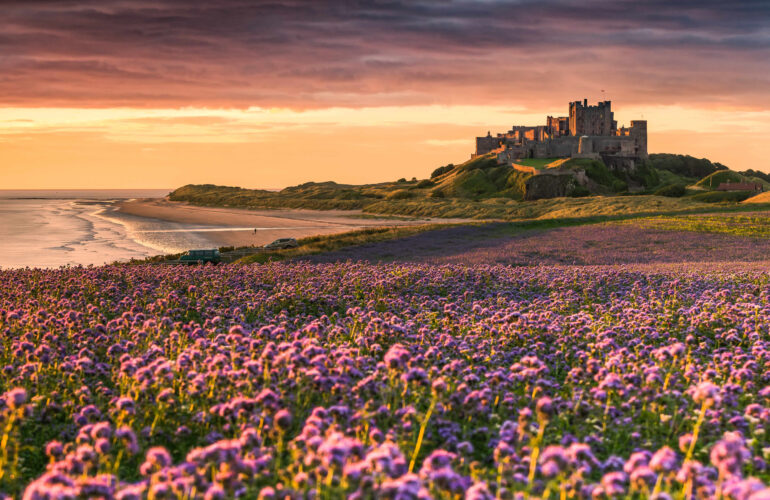
The answer is prompt. ‘Meeting new people and travelling with them, exploring familiar and new places together. Some remarkable hospices are looking forward to welcoming us. The adventure and the personal journey. Programmes like this can feed participants inwardly as well as and externally. I’m also looking forward to visiting some remarkable places and learning from the guides who will accompany us. He adds, ‘I’m particularly looking forward to revisiting Lindisfarne and Durham, which is a UNESCO listed city that has the greatest medieval cathedral set within a castle and university. It is not visited enough by visitors to the UK, in my opinion.’



Lindisfarne, Ely Cathedral & Loch Lomond
And, for those desperate to know, the tour does encompass David’s favourite hospice view in the UK; St Columba’s Hospice Care in Edinburgh, with its spectacular view overlooking the sea.
David says that working in hospice and palliative care is like being an explorer of the human spirit. ‘Just because someone doesn’t have many days left doesn’t mean that they don’t have value,’ says David. ‘In the immortal words of Dame Cicely Saunders – “You matter because you are.”’
It seems only fitting that David’s circumlocutions have finally led him to this exploration of the history of palliative care; of which he is so much a part.
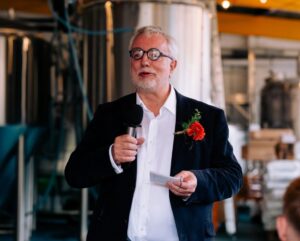
David is leading the Palliative and End of Life Care in England and Scotland – Historical and Contemporary study tour with Jon Baines Tours from 24 September – 4 October 2025.
To book or find out more visit www.jonbainestours.com/ukpall
—————————–
This interview was undertaken by Karen Ginnane on behalf of Jon Baines Tours


This interview beautifully captures David Praill’s remarkable journey into palliative care, shaped by unexpected detours, deep spirituality, and a profound connection to the desert. All good wishes for his study tour.