

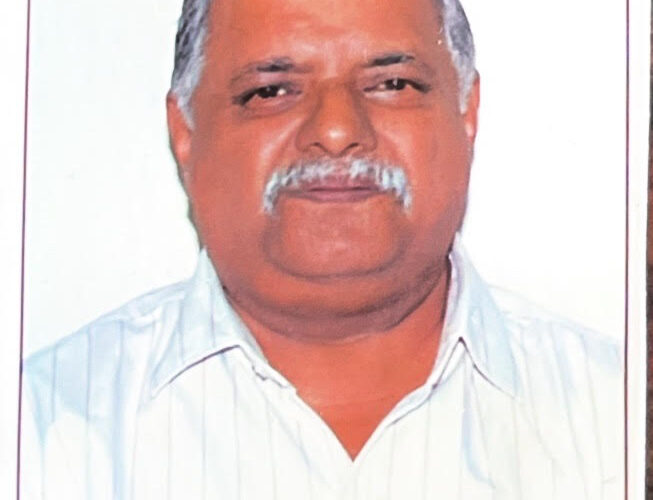
“We cannot change the outcome, but we can affect the journey.” — Ann Richardson Palliative medicine brings back the smile to the faces of suffering patients and their families. Palliative care is often misunderstood, even within the medical fraternity, as being meant only for cancer patients or for those at the end of life. In reality, it focuses on improving the quality of life by managing symptoms with compassionate care, supporting patients and their families, and helping them live with dignity at every stage of illness—until the end, and beyond through bereavement support.
A Patient’s Journey
Mr. Raj, an adult male, was brought to our Palliative Care Outpatient Department with severe
breathlessness. He was anxious, irritable, confused, unable to comprehend what was happening
to his body, and deeply worried about his future.
He was a daily wage worker with a wife, three children, and elderly parents who depended
entirely on him for their livelihood. He was the sole breadwinner of the family. Initially
diagnosed with asthma, he had received treatment as an outpatient at several centres. Due to
financial constraints, he and his family were reluctant to seek hospital admission, fearing the loss
of income and mounting medical expenses.
Mr. Raj was a heavy smoker. Although his wheezing and breathlessness were initially controlled
with medication, his condition gradually worsened, and the treatment became ineffective. As his
breathlessness became severe, hospital admission became inevitable. However, the family
remained distressed about the financial burden. They were eventually referred to our Palliative
Care Clinic, as they were uncertain about the next course of action.
By the time he reached us, Mr. Raj was experiencing breathlessness even at rest, causing
immense physical distress. His family, in turn, suffered silently with emotional and financial
distress. They came to our clinic seeking guidance, support, and hope amidst uncertainty.
After carefully understanding the nature of their distress, we admitted Mr. Raj to control his
symptoms, which we were able to do to a considerable extent. However, we recognized that
symptom control alone was not enough. His psychological suffering, the caregiver’s emotional
burden, and the family’s financial concerns also required equal attention.
A multidisciplinary team was formed consisting of a palliative care physician, psychologist,
pulmonologist, along with Mr. Raj and his caregivers. Together, we formulated an advance care
plan aimed at alleviating distress, ensuring comfort, and improving his quality of life.
He was stabilized on continuous oxygen through nasal prongs, bronchodilators, steroids,
nebulization, and low-dose morphine. During regular follow-up visits and repeated discussions,
the team gently communicated the difficult news to Mr. Raj and his family that he was nearing
the end of life. Gradually, both he and his loved ones came to understand the seriousness of his
illness and accepted the expected outcome with remarkable courage and spiritual strength.
At this stage, Mr. Raj expressed his heartfelt wish to receive Holy Communion, a Christian
sacrament symbolizing redemption and spiritual peace. We were privileged to facilitate this
sacred ritual at his bedside, knowing it would bring comfort and solace to both him and his
family.
During our discussions, we also informed the family that the Supreme Court of India has
recognized the Right to Die with Dignity as a fundamental right under Article 21 of the
Constitution of India. Accordingly, we discussed the process of executing a Living Will
(Advance Medical Directive) as part of advance care planning.
Following Holy Communion, Mr. Raj gradually became unconscious and passed away
peacefully in the early hours of the morning, surrounded by his family and friends. It was, in
every sense, a good death—free from unnecessary suffering and filled with dignity, love, and
spiritual peace.
Unfortunately, Mr. Raj could not execute his Living Will before his passing.
“In India, the poor die in agony in neglect, the middle class die in agony in ignorance, and
the rich die in agony on a ventilator.”
The Need for Greater Awareness
Palliative care is often perceived by patients and families as “giving up on cure.” This
misconception frequently results in the endless pursuit of further interventions—another
medication, another cycle of chemotherapy, another surgery, or another course of radiation
therapy. Many of these interventions offer little or no benefit, may even cause harm, significantly
increase healthcare costs, and ultimately diminish the patient’s quality of life.
It is precisely at this stage that a Palliative Care Team should be involved—to relieve
unnecessary suffering, provide honest communication, support informed decision-making, and
ensure compassionate care. Every hospital should have a dedicated Department of Palliative
Medicine or at least a physician trained in palliative care.Palliative Care in Medical Education
Palliative Medicine should be introduced into the undergraduate medical curriculum. Early
exposure will help the next generation of doctors appreciate the importance of compassionate,
patient-centred care alongside curative treatment.
The older generation of physicians was trained primarily to cure disease, and failure to cure was
often viewed as professional failure. Today, we understand that when cure is no longer possible,
empathy, compassion, and comfort become the highest forms of medical care.
Padma Shri Dr. M. R. Rajagopal, widely regarded as the Father of the Palliative Care
Movement in India, pioneered the palliative care movement in Kerala in the late 1970s.
Compassion was his doctrine, and empathy was his language. His work continues to inspire
healthcare professionals across the country.
The Way Forward
I sincerely hope that the Government of Tamil Nadu will introduce policies to increase public
awareness of palliative care. Community-based palliative care remains the most effective model
to reach the wider population, particularly those from economically disadvantaged backgrounds
who stand to benefit the most.
It is now time for the Government, NGOs, and the medical fraternity to acknowledge this
pressing reality and work together to ensure compassionate care while improving the quality of
life for those living with serious illness.
Unnecessary ICU admissions, futile interventions, and prolonged suffering can often be
prevented through timely palliative care, advance care planning, and the implementation of
Living Wills with the principle of “Allow Natural Death (AND).”
By embracing these measures, we can uphold the dignity of every individual, reduce needless
suffering, and ensure that every person has the opportunity to live—and die—with dignity.
Dr. Asoke Chackalackal Mathew
Specialist Palliative Care Physician
SEARCH Foundation
Palliative Consultant & Coordinator
Chennai Bangalore Mar Thoma Diocese
Chennai


Leave a Reply