


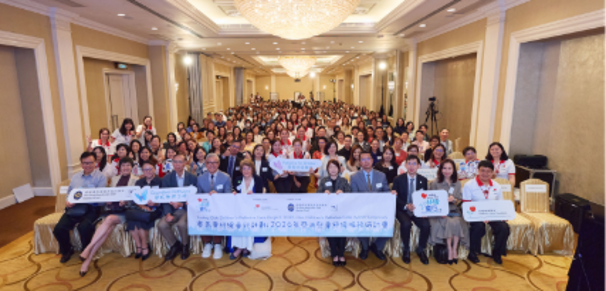
The 2025 Palliative Care Symposium was held at Lagos University Teaching Hospital (LUTH) in Lagos, Nigeria from the 9th-11th July 2025 and it was great to be back at LUTH following the successful palliative care symposium last year which focused on children’s palliative care. This year the focus was on palliative nursing and included care for both adults and children and brough together facilitators from Nigeria, the USA, Kenya, Ethiopia and the UK/Uganda. The symposium recognised the importance of nursing with palliative care and aimed at building capacity for palliative nursing within the area. Key stakeholders were invited and Dr Emmanuel Udontre from the Nursing and Midwifery Council of Nigeria attended the symposium and reiterated their commitment to the development of palliative nursing within the country. The symposium was hosted by LUTH in collaboration with the College of Medicine, University of Lagos and Northwestern University. It was co-chaired by Associate Professor Ashti Doobay-Persaud and Professor Joshua Hauser of Northwestern University Feinberg School of Medicine and Associate Professor Ann Ogbenna of the College of Medicine, University of Lagos. As the leader of the Palliative Care (PC) provider team at LUTH, Dr. Ogbenna has established the PC curriculum at LUTH which has provided the opportunity for the symposium. The symposium aimed to provide essential training for nurses on palliative care, equipping them with knowledge and skills and was held at the Surgical Skills Centre LUTH and generously supported by the Mullooly Carey Foundation, the Northwestern Roberta Buffett Institute for Global Affairs and a Northwestern University Institute for Global Health Catalyzer Award.
 An average of 81 nurses per day attended the symposium, 26 of whom attended virtually and the rest in-person, from a wide range of settings including inpatient and outpatient clinical practices, community-based providers, and non-profit organizations. The training was aimed at nurses who are the backbone of the health system, and key to the work of the multi-disciplinary team with palliative care. The uniqueness of the nurses’ roles was discussed, alongside the importance of teamwork and the multi-disciplinary nature of palliative care. The number of nurses registering for the event showed the importance of and the need for palliative nursing training and for building knowledge and skills in the field. Dr Ann Ogbenna, Associate Professor at the College of Medicine, University of Lagos (CMUL) and a Consultant Haematologist at LUTH led the symposium. Dr Ann leads the palliative care team at the hospital, and her vision is to improve care through the provision of palliative care, giving individuals the right to quality of life even in their illnesses.
There was a packed programme for the symposium, with each session being facilitated by a Nigerian and International facilitator ensuring the topics were rooted in the Nigerian context, whilst learning internationally as well. Topics covered included:
· Introduction to palliative care nursing
· Managing pain and symptom control
· Palliative wound care
· Communication skills in PC nursing for adults and children
· Psychological/ social aspects of care
· Cultural proficiency in palliative nursing
· Family dynamics and family meetings
· Interdisciplinary teamwork
· End of life care
· Loss, grief and bereavement,
· Ethical considerations
· Self-care for palliative care clinicians

The sessions drew upon material from both EPEC and ELNEC whilst ensuring that the principles were adapted and appropriate for the Nigerian context. The third day included a training the trainer component and a nursing stakeholder meeting. Dr Ann Ogbenna was joined by Toyin Adegboye, Maboreje Ololade Abiodun, and Olarinke Ogidolu from Nigeria who facilitated alongside Dr Ashti Doobay-Persaud (Northwestern University), Dr Joshua Hasuer (Northwestern University) Dr Zipporah-Ali, Bedilu Derese, Dr Teresa Vente (Weill Cornell Medicine), Peter Bustzen (Ann and Robert H. Lurie Children’s Hospital), Dr Adeboye Ogunseitan (City of Hope) and Prof Julia Downing (International Children’s Palliative Care Network ICPCN). The mix of facilitators enabled some great discussions around palliative nursing and it was important for the participants to meet with and discuss nursing issues with both Nigerian and international nurses so that they have an understanding of the vital role of nurses in the provision of palliative care and how they can, and do make a difference.
Feedback from participants was positive and they are eager for further training and development within the field. On the final day, participants joined breakout sessions for a “train-the-trainer” programme. The day culminated with a Stakeholder Council Meeting of leaders in Nursing Education which fostered strategic discussions on strengthening palliative care in nursing practice, and a Stakeholder-Driven Process Mapping exercise focused on children’s palliative care at LUTH. During the process mapping session, participants used a sample map that combined elements from general U.S. palliative care systems and the broader care systems at LUTH. Participants identified where their current roles intersected with care processes, proposed feasible improvements, and outlined long-term aspirational changes for the local context. The train the trainer component helped to build ongoing capacity for training in palliative nursing and the stakeholders meeting demonstrated the commitment from nursing stakeholders to support the ongoing development of palliative nursing within Nigeria and the region.
It is hoped that this symposium will lead on to other opportunities for training on, and the development of palliative nursing within Lagos and the surrounding areas, alongside the integration of palliative nursing training through the Nigerian Nursing Council. There are also opportunities for strengthening children’s palliative care provision through ICPCN’s work with the Hospice and Palliative Care Association of Nigeria, and ongoing links with LUTH and the University through Dr Ann Ogbenna.
The Symposium underscored the growing commitment to strengthening palliative care systems in Nigeria and across the region. The energy and ideas shared throughout the three days reinforced the importance of continued partnership between local and international institutions and highlighted the potential for lasting impact through sustained capacity building, knowledge exchange, and mutual learning. As the
Symposium concluded, there was a clear sense of momentum and shared purpose—laying the groundwork for future efforts to improve palliative care access and outcomes in Nigeria and beyond. At the close of the training Dr Ann Ogbenna inspired the nurses with her words:
“As we close this symposium, I want to remind you: we are not just nurses, we are Butterfliers for Palliative Care. Gentle, yet powerful. Called to carry hope, even when that hope must be redefined. We’ve learned that listening is one of our greatest tools; listening beyond words, to the heart of our patients and their families. I believe that by this time next year, there will be hubs across Nigeria, spreading this vision. Others will see the way you care and ask, ‘What changed?” And the answer will be this moment, this movement.
Let nothing hold you back, not even money. Remember, Ann Merriman started palliative care in Uganda with just $8. What she had was a heart for humanity and that was enough. So, go. Fly. Carry this flame of compassion wherever you serve. I believe you will help change the face of nursing in Nigeria.
Butterfliers — let us fly!”
Dr Ashti Doobay-Persaud, Northwestern University also told us:
“I’m incredibly grateful to continue this meaningful partnership with LUTH and to see the symposium training highlight Palliative Care Nursing, an important and intentional step and the outstanding attendance this year was truly energizing. The strong support from the Nursing Council further emphasizes the momentum behind advancing palliative care nursing in Nigeria. The energy and ideas shared throughout the symposium reaffirm the value of these partnerships—between local and international institutions—and demonstrate the lasting impact of capacity building, knowledge exchange, and mutual learning in driving meaningful progress.”

“ICPCN was delighted to be invited to be part of this training and as a nurse it was exciting to see the commitment from the participants to palliative nursing and developing their knowledge and skills in the field. It is also great to strengthen our collaboration with LUTH and HPCAN and looking forward to continuing to work with Dr Ann and her team over the coming months in the development of children’s palliative care and particularly in relation to the integration of the Children’s palliative outcome scale into clinical practice. As always I was encouraged, energised and excited by my time at LUTH.” (Prof Julia Downing, ICPCN)
More on the partnership between Northwestern and LUTH
In 2020, a transformative partnership was initiated between Northwestern University (NU) and Lagos University Teaching Hospital (LUTH). At the time, LUTH, despite being the host of the national cancer center, lacked palliative care services. Recognizing this gap, a project was launched to train providers in palliative primary care, utilizing a multi-disciplinary approach through online and in-person training. Over the subsequent four years, the team hosted multiple trainings for all hospital faculty and staff locally and our focus was on building capacity by formally training nurses, doctors and social workers through the Hospice Africa Uganda both online and in-person. The initiative was met with such positive response within the hospital that it led to the official establishment of a palliative care unit in 2023. The establishment of this unit is considered one of the most impactful outcomes of our collaboration. Currently, consultations are underway, and a dedicated team has been formed to care for patients hospitalized at LUTH and we are committed to ongoing capacity building through education to support symposia such as these to create and disseminate knowledge and skills, build networks, build teachers and communities of practice.
Prof Julia Downing
Chief Executive, ICPCN



Leave a Reply