

Authors: Anu Savio Thelly, Tara Devi Laabar, Archana Ganesh, Sylvester Wambua, Spandana Rayala
In many parts of the world, a nurse caring for a child with a life-limiting illness has no one to call. No children’s palliative care specialist down the corridor to approach. No experienced colleague to explain how pain medicines work and reassure frightened parents.
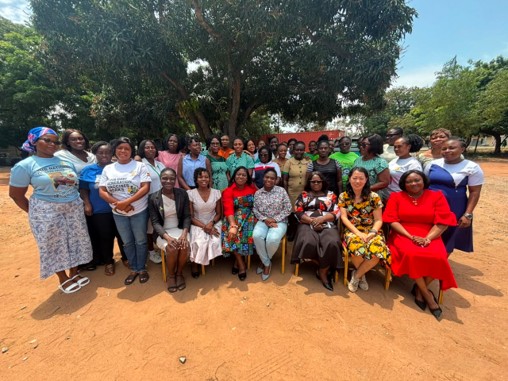
When the third cohort of the Introductory Course in Paediatric Palliative Care Nursing concluded in June 2026, it was also the largest to date. A total of 349 nurses from 33 countries enrolled, with 163 meeting the course completion criteria. Across the first three cohorts, 482 nurses were certified from a total of 743 registered participants, demonstrating the commitment of those who signed up. In the third cohort, Kenya had the largest representation with 51 participants, followed by Sri Lanka, Uganda, Pakistan, and Ghana. Each number represents a nurse in a context where paediatric palliative care is urgently needed yet inadequately resourced. The virtual classroom brought together participants from Indonesia, India, Vietnam, Nepal, Bangladesh, Bhutan, Malawi, Nigeria, Rwanda, the Philippines, South Africa, Tanzania, Zambia, and a dozen more countries, creating a truly global community.
In most of the countries represented, nurses are not part of the paediatric palliative care team. They are the team. Nurses from conflict zones sat in the same virtual room as nurses from Ebola outbreak regions and those from countries where palliative care policy barely exists on paper.
A post-course evaluation of the third cohort revealed what participants took away, and the responses went beyond clinical knowledge. One participant captured it simply: “For the first time, I felt that someone understood what this work actually looks like from where I am.” Another described presenting the case of a child she had cared for in a setting with no specialists, no palliative care teams, no protocols, only to realise that nurses from Uganda, Vietnam, and Pakistan all recognised the same seemingly impossible experience. The learning sessions became spaces for naming: naming the cases that stayed with them, the almost-impossible conversations, the families they could not stop thinking about. What emerged was a sense of being seen, of belonging to something larger than their individual context, and of no longer doing this entirely alone. This was what we at Sunflower wanted to achieve, quietly building both a community for nurses and capacity in resource-limited settings.
On International Nurses Day 2026, this solidarity found a public voice. A piece titled ‘The Nurses Who Show Up and Stay’ was published on e-Hospice, which featured reflections from nurses across this global learning community. Their voices reached well beyond the course through the social media platforms of Two Worlds Cancer Collaboration because these nurses are the voices the field needs to hear.
And now, those nurses are being asked to do something else. To share what they know. The core team at Sunflower is committed to capturing the unique experiences of nurses supporting children’s palliative care through a dedicated blog series, because what these nurses know about working without adequate medicines, about navigating challenging conversations across language and culture, and about being the only trained presence in a community watching a child die belongs in the global conversation.
The course has adopted a new name to better reflect our intent: Resources, Education, and Awareness in Children’s Palliative Care for Health Providers (REACH) Nurses. To reach those across borders and languages, into under-resourced settings, towards nurses who have never had access to this kind of learning community before. You can read about the journey of Cohort 1 and Cohort 2. From their reports on eHospice, three cohorts have empowered nurses to see themselves as advocates, as knowledge holders, and as part of a global movement working towards ensuring that no child with a serious illness suffers and that no nurse has to carry that burden alone.
Somewhere today, a nurse who has completed REACH Nurses will sit beside a frightened child, explain pain medication to anxious parents, comfort grieving siblings, and be there for those experiencing serious health-related suffering. Though she may not meet another course participant in person, she is no longer working alone. That is what REACH Nurses carry forward!




Leave a Reply