

Accra, Ghana, September 2026
Children living with serious health conditions need care that extends beyond the hospital. Globally, 98% of children who need palliative care live in low- and middle-income countries, with almost half living in Africa. The World Health Organization recognizes palliative care as an essential component of Universal Health Coverage and emphasizes its integration into primary health care, community and home-based care. For children and families, this means making appropriate support available not only in specialist facilities, but also closer to where they live.
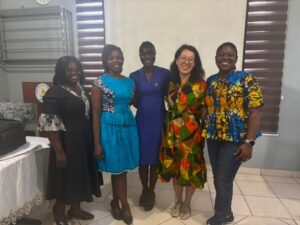 Against this background, the project “Empowering Community Health Nurses for Pediatric Palliative Care in Ghana” is being implemented as part of the China Medical Board Global Health Leadership Development Program. The project is led by Principal Investigator Dr Grace Lei Cheng, Global Health Leadership Fellow and Adjunct Assistant Professor, Yale School of Medicine, Yale University, together with Co-Principal Investigators Dr Eva Mensah, Director of Nursing and Midwifery Services, Ghana Health Service, and Mrs Theresa Abena Jamebe Antwi, Principal, Public Health Nurses’ School, Korle Bu. The initiative builds on Ghana’s existing community nursing system and explores how Community Health Nurses can contribute to primary pediatric palliative care for children and families in the community.
The training programme was developed through a stepwise process beginning with a review of international evidence and a situation analysis involving community and public health nurses, pediatric health professionals, family caregivers, community leaders and health system stakeholders in Ghana. The findings informed the co-design and expert validation of a training and support package adapted to community nursing practice. Rather than preparing Community Health Nurses as specialist palliative care providers, the programme focuses on primary pediatric palliative care within their existing scope of practice. It strengthens their capacity to recognize children who may benefit from palliative care, assess child and family needs at home, provide appropriate nursing and caregiver support, and seek consultation or referral when needs require additional or specialist care.
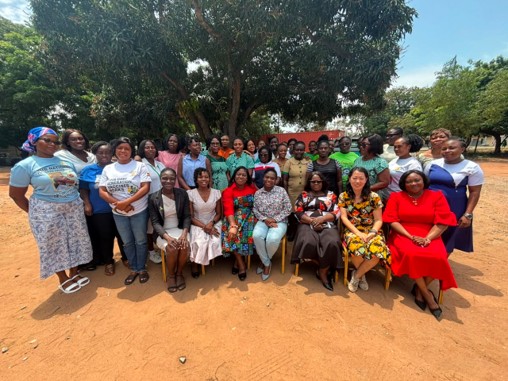
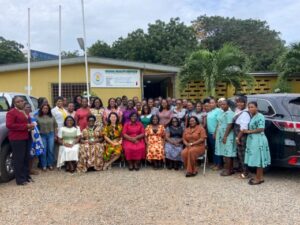
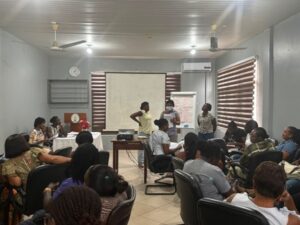 From September 7 to 10 and September 14 to 17, 2026, 75 Community Health Nurses and Public Health Nurses providing community-based services within the catchment areas of Mamprobi Hospital, Ussher Hospital and Kaneshie Polyclinic in the Greater Accra Region participated in two four-day training cohorts at the Greater Accra Regional Training Unit in Adabraka. The programme was delivered by a multidisciplinary team, including Dr Dian Djan Obuobi, pediatrician, Greater Accra Regional Hospital; Sis Naa Martekie Tackie-Martey, Clinical Nurse Specialist, Korle Bu Teaching Hospital; Sis Patricia Oforiwaa Boamah, Senior Nursing Officer, Greater Accra Regional Hospital; Sis Dorcas Seidu, Public Health Nursing Program Manager, Ghana Health Service; Sis Charity Sikanku, Deputy Chief Nursing Officer, Greater Accra Regional Health Directorate; and Dr Lei Cheng, Yale University. The training also received support from national and regional health service leadership. The Director of Nursing and Midwifery Services of the Ghana Health Service and the Greater Accra Regional Director of Health Services visited the training, encouraged participants, and highlighted the role of community nurses in supporting children and families.
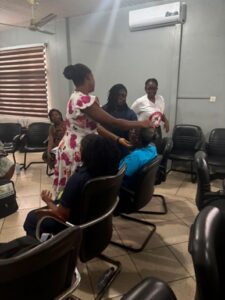
Training combined core concepts of primary pediatric palliative care with communication, holistic assessment, nursing support, home visits, documentation, referral, professional practice and self-care. Practical learning was emphasized through case discussions, demonstrations, role play and simulated home visits. Participants practised assessing the child within the family and home context, identifying priority needs, providing appropriate support, and deciding when to continue community care, seek consultation or urgently escalate care.
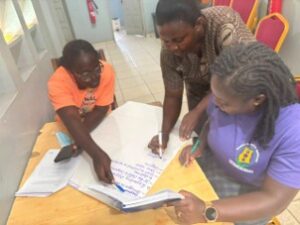 Participant feedback strongly reflected the value of this practical approach. Nurses identified “the practical sessions,” “role play,” “holistic assessment,” “self-care” and “the holistic care of the family” as particularly useful. One participant described the programme as “a great education experience,” while another wrote, “I wish every nurse should have this knowledge.” Participants also called for more practical learning, refresher training, continued supportive supervision and opportunities to extend the training to more Community Health Nurses and Public Health Nurses. One participant suggested “going to the community to use real client for practical,” pointing to the importance of moving from classroom learning to real-world application. Preliminary evaluation indicated positive changes in participants’ knowledge, attitudes and confidence, while also identifying areas for continued learning and support.
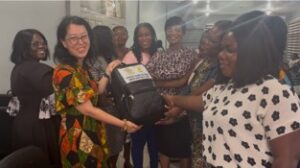
 The completion of the training marks a transition to community application. Participating nurses are now applying the learning in routine practice, supported by a structured home visit tool, consultation and referral processes, and ongoing guidance. The project also provided three home visit bags to each participating site, equipped with basic supplies for community assessment and home visits. Follow-up evaluation will explore how the training is applied in practice, the experiences of nurses and families, challenges encountered, and the support needed to strengthen links between community and facility-based care. These findings will inform further refinement of the training and implementation approach.
Ultimately, the project seeks to strengthen the connection between hospital, community and home for children living with serious health conditions and their families. By building on Ghana’s existing community nursing workforce and learning from implementation in Greater Accra, the project aims to generate practical evidence on how primary pediatric palliative care can be integrated into community health services in a way that is feasible, coordinated and responsive to the needs of children and families.




Leave a Reply