

By Xiohara E. Gentica
In February 2024, I met three-year-old Mara in Brooke’s Point, Palawan, Philippines. A cervical spine injury from a motorcycle accident had left her dependent on a ventilator. Confined to a bed, much of her world was limited to a room.
When I introduced her mother to children’s palliative care, she asked me a question I have never forgotten:
“Doc, ano pa po bang magagawa sa anak ko?” (“Doc, what else can still be done for my child?”)
Being a children’s palliative care (CPC) physician, I let her know that there was much to do even though we could not reverse Mara’s condition. With appropriate manual ventilation, we briefly took Mara off the ventilator so she could sit in her mother’s arms and go outside to feel the morning sun.
It was a simple yet profound moment. It reminded me that CPC is not only about managing symptoms; it is also about preserving comfort, dignity, connection, and meaningful experiences.
It also revealed a larger gap: children’s palliative care remained largely unfamiliar and underdeveloped in this part of Palawan.
From recognizing the gap to building a community
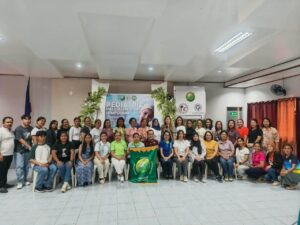
CPC Workshop at Brooke’s Point on August 29, 2026
As Palawan’s only CPC specialist, I started almost from scratch, with limited referral pathways and little provider exposure to CPC. With the support of Dr. Reynaldo Frederick Quicho, a senior pediatric consultant and the Assistant Secretary General of the Philippine Medical Association, I began engaging hospitals, professional organizations, and other stakeholders to raise awareness of CPC and explore its integration into existing services. I learned that service development starts with conversations, not a new facility or formal program.
These efforts led to three educational activities between August and September 2026, made possible through collaboration among stakeholders.
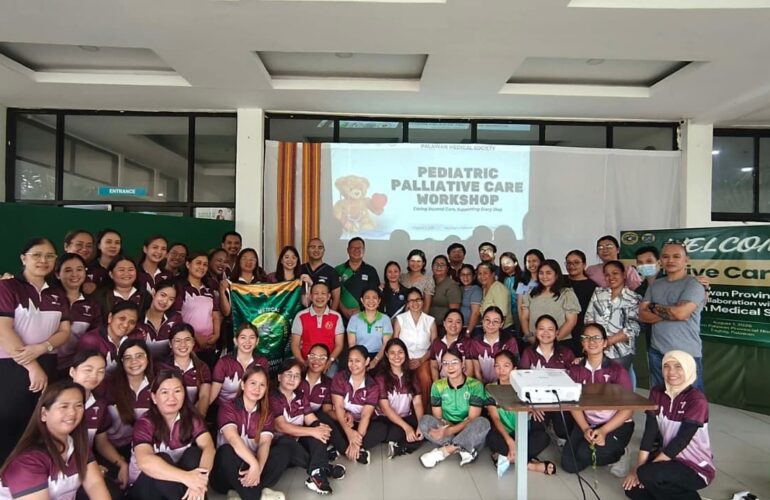
Workshops on August 1st at Northern Palawan Provincial Hospital in Taytay and August 29th in Brooke’s Point gathered a total of 91 healthcare professionals. On September 23rd, a private hospital partnership enabled the Annual Medical Forum to focus on palliative care across the lifespan, including pediatric care, for 90 doctors, 39 nurses, and 2 physical therapists.
Together, these activities reached 223 healthcare professionals across different settings in Palawan.
Beyond numbers, the significance of these activities lay in making palliative care part of the conversation.
When families become advocates
I wanted participants to understand CPC not only through lectures but also through lived experience. At the first workshop, a surgeon shared his perspective as both a physician and a son whose father had advanced lung cancer and received palliative care.
The second workshop brought an especially meaningful moment: Elsa, Mara’s mother, shared her experience. After five years of ventilator dependence, Mara had eventually succumbed to complications of her condition.
Mommy Elsa’s return to our CPC workshop was deeply moving: she was now not just a former patient’s mother, but an advocate for the care other families deserve.
Her story showed that children’s palliative care can ease suffering and help families navigate uncertainty and find meaning, even though outcomes cannot change. In 2024, I answered Elsa’s question by helping Mara feel the sun. In 2026, Elsa’s presence affirmed that we can always do something—for one child and many families.
From individual effort to shared leadership
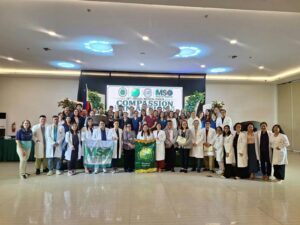
MSO Annual Forum on Palliative Care, September 23, 2026
The journey has also taught me about sustainability. When an anticipated partnership didn’t materialize, we had to reschedule a planned workshop to a later date. Although disappointing, the experience encouraged me to look beyond individual funding sources and ask: Who genuinely shares the mission?
I realized that lasting progress requires shared ownership, not dependence on one person or one partnership. Our next step is to build committed teams that can provide care, support families, strengthen referral systems, and eventually train others.
I began with one child, one mother, and one question: “What else can still be done?”
I now understand that my role is to help create something that more people can contribute to and sustain.
There is still much to build in Palawan. But we are no longer building alone.
Acknowledgement:
The author thanks Dr. Reynaldo Frederick Quicho for his partnership in developing children’s palliative care in Palawan and his contributions to this article, along with Dr. Teresa Vente (Associate Professor of Pediatrics, Psychiatry and Palliative Care at Lucile Packard Children’s Hospital, Stanford).
Author:
Xiohara E. Gentica, MD is a pediatric palliative specialist and a scholar of the Catalyst Lab Leadership Program of the Sunflower Children’s Network (an initiative of Two Worlds Cancer Collaboration), who is involved in building awareness and capacity in children’s palliative care in Palawan, Philippines.



Leave a Reply