


Authors: St. Jude Global Palliative Care Team and International Children’s Palliative Care Network
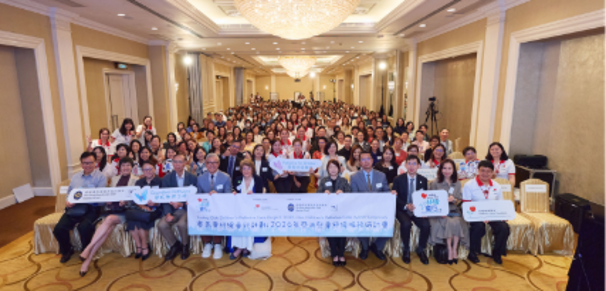
Somehow, a month has already passed since the conclusion of the Pediatric Palliative Care (PPC) Leadership Workshop for Asia Pacific, held 11–12 November 2025 in Manila, Philippines. Designed to precede the main International Children’s Palliative Care Network (ICPCN) conference from 13-15 November, this workshop was co-organized by St. Jude Global, ICPCN and the Ruth Foundation, in collaboration with Asia Pacific Hospice Palliative Care Network, Education in Palliative Care and End-of-Life Education-Pediatrics, and Stanford Medicine Children’s Health. This event brought together 51 leaders and 28 organizers from more than 19 countries for a structured, multidisciplinary exchange on strengthening PPC across the Asia Pacific region – and we have already begun to feel the impact of this continued collaboration. The workshop represented a step forward for the Asia Pacific region: a gathering of clinicians, researchers, policymakers, and foundations – all indispensable to advancing PPC in diverse health systems.
Grounded in the WHO framework for palliative care development, the workshop was designed for regional experts, by regional experts. Content was crafted to be practical and relevant to the work of PPC professionals in Asia Pacific, South Asia, and China. Participants reviewed the current PPC landscape in the region, examined data, and engaged in case-based discussions that illuminated both shared challenges and local innovations. Over 90% of participants reported that the workshop was directly applicable to their professional work.

We were fortunate to invite a diverse cohort to participate in this event, whose collective interdisciplinary expertise demonstrated the importance of engaging many different kinds of PPC professionals. Clinicians, researchers, social workers, foundations & other stakeholders were equal contributors to the workshop. Foundation representatives provided insight into resource mobilization, community-facing programming, and the political advocacy required to build and sustain national PPC strategies.

Several sessions—including the panel on “The Power of Partnership”—demonstrated how clinical care, policy development, and non-profit leadership can jointly accelerate progress. This integrative approach resonated deeply with participants, many of whom cited improved confidence in partnership-building and advocacy following the workshop. As Carmen Auste of Cancer Warriors Foundation expressed to us, “Advocacy is the bridge between hope and reality.”

The workshop also offered a rare opportunity for regional networking at scale that started in the workshop and continued throughout the conference days and beyond. Participants reported that the chance to build relationships across borders was as valuable as the content itself. These connections have already led to planning for institutional trainings, new collaborations with government stakeholders, and proposed adaptation of workshop methodologies in several countries. Throughout the workshop, participants and organizers spoke of finding not just collaborators, but kinship with an open spirit of learning to all. “It didn’t feel like a collection of professionals but rather a welcome to the family,” one participant reflected—a sentiment echoed again and again. Participants departed Manila not only with detailed action plans, but a strengthened sense of collective commitment.

The Pediatric Palliative Care Leadership Workshop for Asia Pacific affirmed that advancing PPC is not just possible – it is happening! Leadership in pediatric palliative care is not measured solely by strategy or structure, but by our willingness to be present with one another within and across organizations. It is the courage to imagine better systems, the humility to listen across borders, and the conviction that every child—no matter where they are born—deserves compassionate care.
The work ahead is vast, but we do not walk alone. We remain immensely grateful for our partners, and look forward to our shared future.



Leave a Reply