

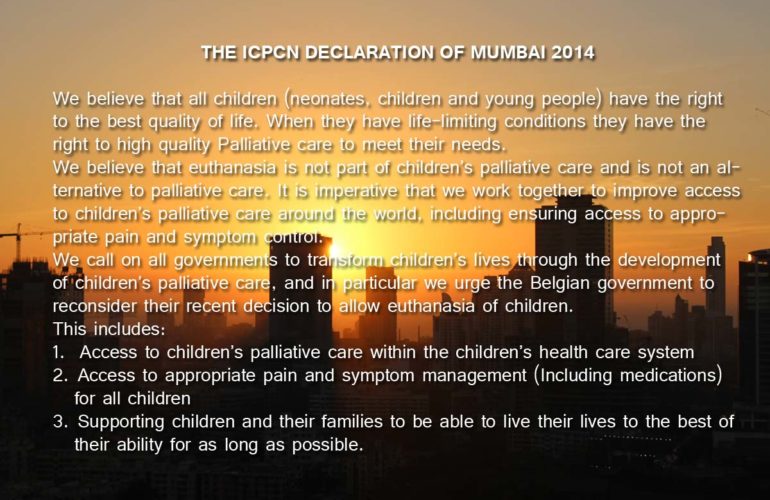
At the conclusion of the first ICPCN conference that took place in Mumbai, India, a declaration, to be known as the ICPCN Mumbai Declaration 2014, was made and signed by delegates. The declaration calls for all children with life-limiting conditions to have access to appropriate pain and symptom control and to high quality palliative care to meet their particular needs.
The declaration in full reads as follows:
We believe that all children (neonates, children and young people) have the right to the best quality of life. When they have life-limiting conditions they have the right to high quality Palliative care to meet their needs.
We believe that euthanasia is not part of children’s palliative care and is not an alternative to palliative care. It is imperative that we work together to improve access to children’s palliative care around the world, including ensuring access to appropriate pain and symptom control.
We call on all governments to transform children’s lives through the development of children’s palliative care, and in particular we urge the Belgian government to reconsider their recent decision to allow euthanasia of children.
This includes:
1. Access to children’s palliative care within the children’s health care system
2. Access to appropriate pain and symptom management (Including medications) for all children
3. Supporting children and their families to be able to live their lives to the best of their ability for as long as possible.
This declaration was signed by both individual delegates and organisations present at the conference.
Joan Marston, CEO of the ICPCN said about the declaration, “Euthanasia is not and has never been a part of palliative care. We believe the answer to a child’s suffering is more and better palliative care services and not the ending of a child’s life.”
The declaration has been quoted on the front page of a Belgian newspaper, La Libre and will be used by groups within that country to advocate for the provision of a greater number of high quality palliative care services for children.


Leave a Reply