


Author: Archana Ganesh
Sometimes, the most meaningful milestone in palliative care is not just the launch of a service, but watching a person grow into a leader.
On 5 September 2026, the Paediatric Pain and Palliative Care OPD (Out Patient Department) at the Indira Gandhi Institute of Child Health (IGICH), Bengaluru, India, was inaugurated. The event provided an opportunity to reflect on a journey that began in 2024. What began with one clinician, Dr. Anuradha Ganigara’s commitment, has now evolved into a network of relationships, partnerships and institutional support.
It all starts with one person
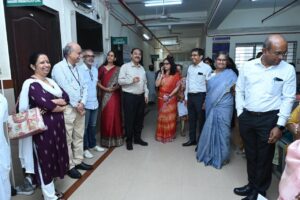 The inauguration brought together hospital leadership, clinicians from different departments, external partners, patients, families and supporters. Throughout the event, speakers emphasised that collaboration is not something to preach, but something to practice.
Dr Anuradha recognised a gap in caring for children with serious illnesses: their suffering was not adequately relieved within the current healthcare system. She then set out to address this gap by building relationships across departments and organisations, creating learning opportunities, and bringing partners together around a shared vision. Several speakers reflected on her enthusiasm and persistence to be key drivers of this initiative. It was a powerful reminder that relationship-building is a valuable skill in health-system change.
From specialist training to independent leadership
Training healthcare professionals in palliative care is often focused on. Our experience led us to ask: “What happens when that person returns to their institution? Can they identify gaps, inspire colleagues around a shared vision, build a team, or navigate systems? How do they create and sustain meaningful change?”
Through the Fellowship and the Leadership program (Catalyst Lab), Sunflower Children’s Network worked with Dr Anuradha to advance her to a specialist with knowledge and clinical confidence, and further to strengthen her leadership skills.
While the fellowship creates a specialist, the specialist utilizes their network to catalyse and become a change agent. Success is when this change agent carries the work forward independently and creates a space for others to grow.
From an individual service to a public health opportunity
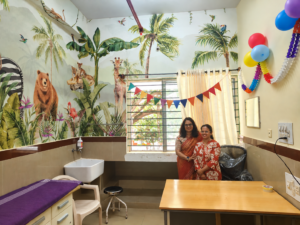 We know that the majority of children’s palliative care needs can be met only when it is integrated into systems where children routinely access care.
An OPD within a large public children’s hospital allows early identification, timely integration, and continuity of care alongside other medical treatment. It also becomes a space for education and mentorship, where residents and other departments build confidence in recognising and responding to children’s palliative care needs.
This is where specialist training, leadership development and public health palliative care meet. We need skilled clinicians, along with clinicians who can build systems around that expertise.
The reason we do this
The child and family are at the center of everything we do.
One of the most moving moments came when Arya (name changed), shared her experience of arriving at IGICH in severe pain on a stretcher and how, once her pain was well managed, she could walk, smile and feel like herself again. I realized that behind every service-development conversation is a child experiencing pain, a frightened or anxious parent, and a family hoping that someone will know how to help.
One speaker reflected on the importance of seeing the person in whole, rather than simply adjusting treatments, while others spoke about early integration and ensuring that children are moved towards better health and holistic wellbeing.
This is what makes palliative care a public health concern. It is about ensuring children and families have access to the right support, at the right time, wherever they might be.
As mentioned aptly during the event, “One cannot wait for change. One must be the change.”




Leave a Reply