


Pictured: Dr. Lannie T. Fofue (in red), together with the Pediatric Palliative Care Team.
Article written by Dr. Lannie T. Fofue, MD, FPPS, MHA. National Children’s Hospital, Philippines.
Pediatric medicine continues to evolve, with advances in subspecialty care offering new possibilities for children with increasingly complex and serious conditions. Yet the true measure of expertise lies not only in what specialists know, but in how that knowledge reaches the child at the bedside—through clinical decisions, meaningful conversations, and compassionate care.
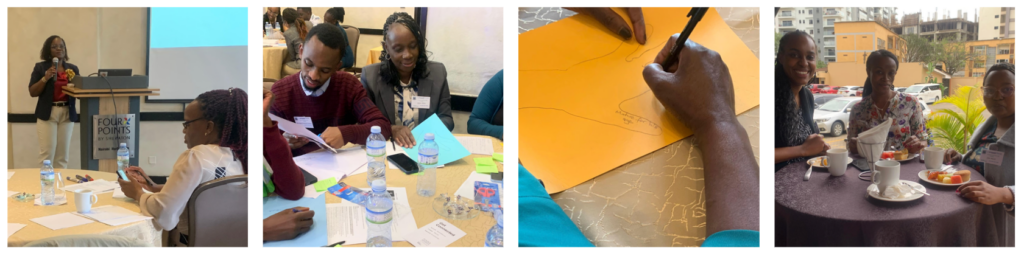
This was the central message of the 22nd Post Graduate Course of the National Children’s Hospital (NCH), held on August 13–14, 2026, at Luxent Hotel, Quezon City, Philippines, under the theme “PEDIATRICS POV: Translating Subspecialty Expertise into Everyday
Pediatric Care.”
The two-day course brought together pediatricians and healthcare professionals to explore how specialized knowledge can be translated into practical and compassionate everyday care. The theme emphasized that clinical excellence is not simply about acquiring knowledge, but about applying it with sound judgment, communication, collaboration, and compassion. Among the subspecialty perspectives featured was Pediatric Palliative Care, which offers an important reminder that pediatric medicine is not defined solely by the pursuit of cure. For children living with serious and life-limiting conditions, care must also address suffering,
symptoms, quality of life, family needs, communication, and dignity.

The session, delivered by Dr. Lannie T. Fofue, emphasized a fundamental principle of palliative care: end-of-life
care is not about giving up, but about continuing to care—with intention, compassion, and dignity.
The session, “Supporting Patients at the End-of-Life: A Palliative Care Specialist’s Guide for Generalists,” was delivered by Dr. Lannie T. Fofue, Pediatric Palliative Care Specialist of the National Children’s Hospital. The session focused on helping general pediatricians recognize palliative care needs, manage distressing symptoms, communicate with families, discuss goals of care, and know when to seek specialist support.
At its heart was a simple but powerful message:
End-of-life care is not about giving up, but about continuing to care with intention,
compassion, and dignity.

General pediatricians have a vital role in this journey. They are often among the first to recognize changes in a child’s condition and may already have an established relationship with the child and family. Strengthening their palliative care skills can help ensure that children receive appropriate support throughout the illness journey and that referrals to specialist services occur when needed.
Pediatric palliative care should not be viewed only as care for the final days of life. Its principles can be integrated throughout serious illness, alongside disease-directed treatment, according to the needs and goals of the child and family.
For families facing serious illness, a change in treatment goals can be one of the most difficult moments in pediatric care. Yet when cure is no longer possible, care remains possible. Relief of symptoms, compassionate communication, emotional and psychosocial support, preservation of dignity, and the presence of healthcare professionals continue to matter. The goal may change, but the commitment to the child does not.
The discussion was particularly meaningful for NCH, recognized as the “Home for Pediatric Palliative Care in the Philippines.” NCH has contributed to the development of pediatric palliative care through clinical services, education, advocacy, and capacity-building. It is also the first institution in the Philippines to offer a Fellowship Training Program in Pediatric
Palliative Care, helping develop specialists who can contribute to expanding palliative care services in the country.
The Philippine experience reflects a challenge shared by many healthcare systems: specialist palliative care may not yet be accessible to every child who needs it. Strengthening the knowledge and confidence of general pediatricians can help bridge this gap and bring palliative approaches closer to children and families.
The broader lesson of the 22nd NCH Post Graduate Course extends beyond any single subspecialty. Specialized expertise becomes most valuable when it changes what happens at the bedside.
For Pediatric Palliative Care, this means asking not only, “What can we treat?” but also, “What is this child experiencing?” “What matters most to this child and family?” and “How can we reduce suffering?” These questions do not replace clinical expertise. They deepen it.

The Pediatric Palliative Care Team, reaffirming their commitment to providing compassionate, dignified, and holistic end-of-life care for children and their families.
The success of the 22nd Post Graduate Course was made possible through the leadership and support of the NCH Administration, Medical Center Chief Philip A. Morales, MD, MA, FPPS; Chair of the Department of Pediatrics Rodaliza M. Gumboc, MD, FPPS, FPIDSP, MHA; Overall Chair Eva I. Bautista, MD, MSc, FPPS; the organizing committee; the Pediatric Palliative Care team under the leadership of Rhea Angelica P. Jayma, MD, DFM, FPHSPM; the distinguished speakers; and all participating healthcare professionals. May the knowledge shared during these two days continue beyond the conference halls—into clinical practice, conversations with families, and ultimately into better, kinder, and more compassionate care for every child.
Even when cure is no longer possible, care remains possible—and that care can make all
the difference.

The hospital’s Medical Center Chief, Dr.
Philip A. Morales (second from the right),
together with the Department of
Pediatrics staff.



Leave a Reply