

By Maria Liza T. Naranjo, M.D., Araceli Lanorio, Fatima Garcia-Lorenzo, Rhea Angelica P. Jayma, M.D.
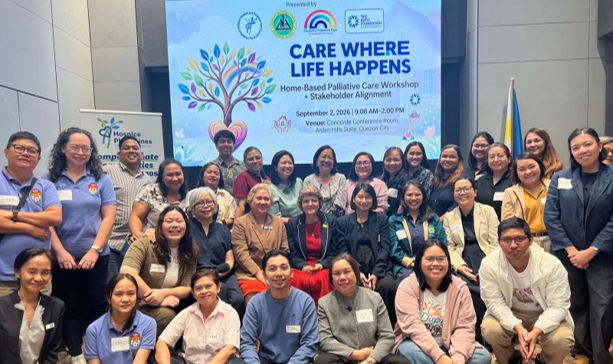
On September 2, 2026, palliative care leaders, educators, clinicians and nurse champions gathered in Quezon City for Care Where Life Happens: From Home-Based Palliative Care to Building the Workforce We Need. What began as a conversation about caring for patients and families at home gradually became a broader opportunity to understand who is already doing the work, where the gaps remain, and how existing efforts might become better connected.
The gathering was jointly organized by the National Hospice and Palliative Care Council of the Philippines (Hospice Philippines) and the Pediatric Palliative Care Center of the National Children’s Hospital, with support from the Ruth Foundation. Nurses practicing palliative care, together with nurse champions promoting its integration into clinical practice, education and community care, were among the key participants.
The presence of Professor Julia Downing, Chief Executive of the International Children’s Palliative Care Network (ICPCN), brought an important global perspective to the gathering. Opening with Closing the Gap in Pediatric Palliative Care: From Global Call to Local Action, she connected international efforts to expand access to pediatric palliative care with the realities faced by patients, families and health professionals in the Philippines.
The morning then moved to a focus on where care actually happens. Milagros Javier Nuez, RN explored the role of nurses in home-based palliative care, followed by an interactive workshop facilitated by the National Children’s Hospital Pediatric Palliative Care team. Working through patient and family scenarios, participants considered what needs to be in place for good care at home—from symptom management and communication to caregiver preparedness, coordination and access to community support.
The discussions were enriched by an expert panel, followed by reflections from Dr. Marianne Joy Naria-Maritana, Head of KWAGO- Philippine General Hospital. Drawing from the community perspective, she highlighted the importance of continuity, coordination and support as palliative care extends beyond the hospital and into patients’ homes and communities.
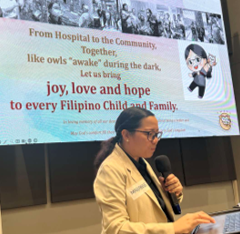
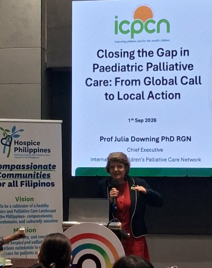
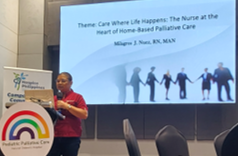
From global perspectives to local realities: Prof. Julia Downing, Milagros Javier Nuez, RN, and Dr. Marianne Joy Naria-Maritana explored the global call for palliative care, the role of nurses in home-based care, and the importance of continuity between hospital, home and community.
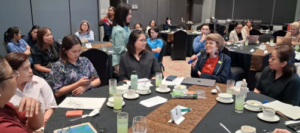
Putting home-based care into practice: Participants worked through three patient and family scenarios in facilitated small groups, identifying the clinical, psychosocial, caregiver and system supports needed for good palliative care at home.
By afternoon, the conversation naturally shifted from the care patients need to the people who must be prepared to provide it. Professor Resty Tan examined nursing education in the Philippines and opportunities for greater integration of palliative care into nursing formation. This was followed by a panel discussion bringing together education, international palliative care and health-system perspectives. Royce Berango of the Department of Health–Disease Prevention and Control Bureau (DOH-DPCB) contributed valuable system-level insights, helping situate the discussion within the realities of national training and service development.
Participants then mapped palliative care initiatives already happening in their institutions and communities. Seeing these efforts together revealed both encouraging activity and important gaps—and, just as importantly, opportunities for stronger connection.
This became the starting point for the HABI-PPC Catalyst Lab session, Connecting the Dots: What the Landscape Tells Us and Where We Go Next. HABI-PPC—Weaving Sustainable Pediatric Palliative Care Teams—used the stakeholder map and the day’s shared experiences to begin a conversation about the Philippine palliative care workforce: what already exists, what still needs attention, and where stronger collaboration may be possible. These initial conversations and insights will help shape the next phase of stakeholder engagement, including the future co-creation of a Professional Palliative Care Workforce Framework.
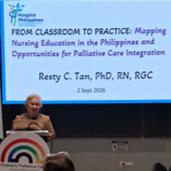
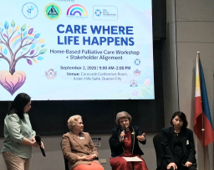
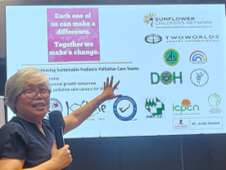
From education to workforce: Prof. Resty Tan explored opportunities to integrate palliative care into nursing education, followed by a panel discussion with Prof. Julia Downing and Ms. Royce Berango of the Department of Health–Disease Prevention and Control Bureau, connecting education, training and health-system perspectives.

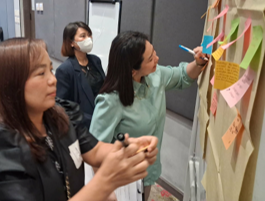
Making the landscape visible: Participants mapped existing initiatives in clinical service, education and training, leadership and advocacy—revealing where work is already happening, where gaps remain and where stronger connections may be possible.
The day concluded with One Workforce, Shared Purpose, where participating nurses and palliative care partners marked their commitment through the ceremonial signing of the Shared Purpose Board. The gesture reflected a collective intention to stay connected, strengthen collaboration, and support one another’s efforts across palliative and hospice care settings.
September 2 did not provide all the answers. Instead, it created space to make existing efforts visible, identify gaps and opportunities, and begin building stronger connections among those already carrying the work forward.
If palliative care is to reach patients and families where life happens, then the people who make that care possible must also be connected, supported, and able to move forward together.
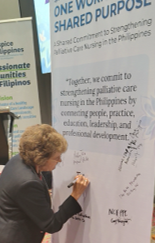

One Workforce, Shared Purpose: Participants closed the day by signing the Shared Purpose Board and coming together as one group—marking a shared commitment to stronger connection and collaboration in palliative and hospice care.




Leave a Reply