

By Lannie T. Fofue, MD, FPPS, MHA, National Children’s Hospital, Philippines
Expanding access to palliative care requires more than developing services—it requires people equipped to teach, lead and sustain them. In the Philippines, the Department of Health (DOH) is taking an important step towards this goal by building a network of healthcare professionals who can bring palliative and hospice care knowledge and skills back to their hospitals,
communities and regions.
Behind every effort to strengthen palliative care is a person living with serious illness and a family seeking not only treatment, but also comfort, dignity, understanding and support. Building the capacity of healthcare professionals is therefore essential to making palliative care an integral part of quality healthcare.
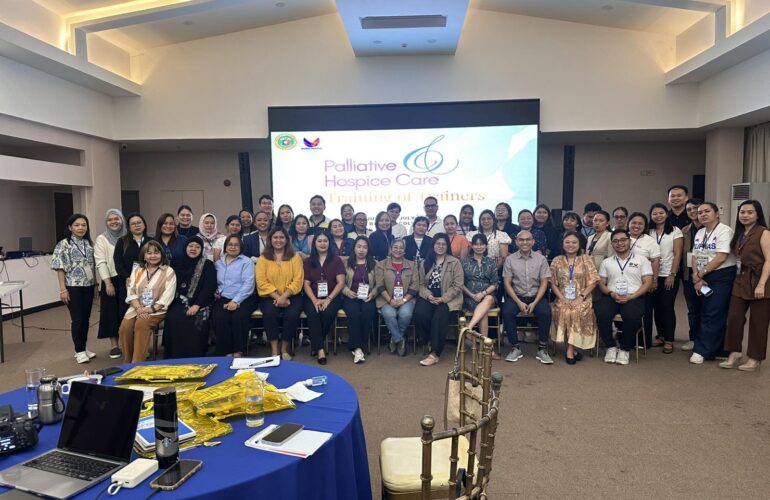
In line with Republic Act 11215, or the National Integrated Cancer Control Act, and the National Integrated Cancer Control Council Strategic Framework 2024–2028, the Department of Health (DOH), through the Disease Prevention and Control Bureau–Cancer Control Program Division (DPCB-CCPD), conducted the Palliative and Hospice Care Basic and Intermediate Training of Trainers Course from 28 June to 4 July 2026 at Hotel Boss, Pampanga, Philippines, in collaboration with Jose B. Lingad Memorial General Hospital (JBLMGH).
The training involved the DOH, through Royce Berango, RM, RN, Senior Health Program Officer of DPCB-CCPD, and JBLMGH, through Agnes Bausa-Claudio, MD, DPAFP, FPSHPM, MPH, Project Lead for Palliative and Hospice Care Training of Trainers. The programme forms part of the DOH’s continuing efforts to strengthen palliative and hospice care capacity across DOH-retained hospitals and Centers for Health Development and to cascade the Manual of Operations on Palliative Care nationally. The activity also aimed to strengthen the capacity of DOH-retained hospitals and Centers for Health Development (CHDs) to provide safe, quality, multidisciplinary palliative and hospice care as part of comprehensive care across the life course. Building a critical mass of trained professionals can help inform national policy, guide resource allocation and expand access to quality palliative care for people with cancer and other life-limiting or life-threatening conditions, in keeping with World Health Assembly Resolutions 58.22 and 67.19. Healthcare professionals from the DOH Central Office, DOH-retained hospitals, Centers for Health Development–Cancer Coordinators, JBLMGH, and other institutions participated. Members of Cohort 1, together with representatives from the National Palliative and Hospice Care Council of the Philippines, the Philippine Society for Parenteral and Enteral Nutrition, and the Philippine Society of Hospice and Palliative Medicine (PSHPM), served as facilitators and lecturers.
The National Children’s Hospital (NCH) was represented in Cohort 3 by Lannie T. Fofue, physician; Milynne O. Anasco, pharmacist; Kathleen T. Parana, nutritionist; Sheena T. Robenta, social worker; and Maria Socorro C. Vargas, nurse. Their participation highlighted the importance of an interdisciplinary approach to palliative care. Physicians provide clinical assessment, symptom management, goals-of-care discussions and coordination of care. Pharmacists promote safe and appropriate medication use and help ensure the availability, procurement, storage and accessibility of essential palliative medicines. Nutritionists address nutritional and feeding needs according to the patient’s condition and goals. Social workers provide psychosocial support and assist families with practical and social challenges. Nurses provide holistic bedside care, symptom assessment, education, coordination and continuity of care. Together, these disciplines contribute to holistic, coordinated and patient- and family-centred care.
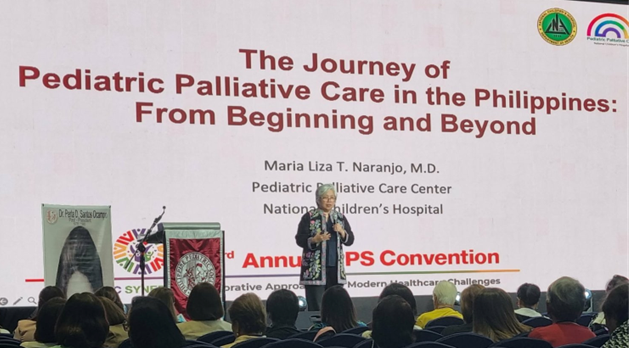
The programme was further enriched by a lecture on the Principles of Pediatric Palliative Care delivered by Rhea Angelica P. Jayma, MD, DFM, FPSHPM, Chair of Pediatric Palliative Care at the National Children’s Hospital. The session highlighted that Pediatric Palliative Care is an integral component of the DOH Manual of Operations on Palliative Care and emphasised the importance of adapting palliative care to the unique needs of children and their families.
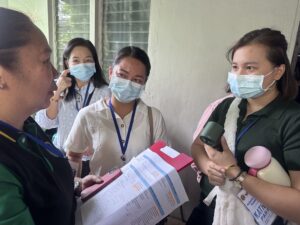
An important component of the programme was the on-site immersion and observership in hospital and community palliative care settings. This practical experience allowed participants to see how palliative care principles are translated into practice and highlighted the importance of continuity between hospital and community services.
For NCH, the Training of Trainers programme is a starting point for further action. The institution plans to conduct its Palliative Care Basic Training Course on 7–9 October 2026, with Continuing Professional Development (CPD) units applied for, in collaboration with the Department of Health, Jose B. Lingad Memorial General Hospital, and CHD-NCR, with Criselou B. Labaro, RN, serving as the CHD-NCR partner for the institutional cascade. The training will provide an opportunity to share the DOH framework and learning gained from the Training of Trainers programme with healthcare professionals at NCH.
Beyond the institutional cascade, NCH hopes to support future training initiatives for other hospitals, in coordination with Dr Jerome Rey T. Delos Reyes and Mr Teddy S. Dizon, Consultants for the Palliative and Hospice Care Capacity Development Project, to help develop additional trainers and expand palliative care capacity across the country. The Training of Trainers programme highlights that strengthening palliative care requires a health system capable of sustaining knowledge and translating it into practice. Through a common national framework, interdisciplinary training and institutional cascading, professionals can become trainers and advocates who help bring palliative care closer to patients and families.
For the National Children’s Hospital, the journey continues—from training to cascading, from cascading to implementation, and from implementation to sustainability. As trained professionals share their learning, knowledge can travel further—from trainers to teams, from hospitals to communities, and ultimately to the patients and families who need palliative care most.
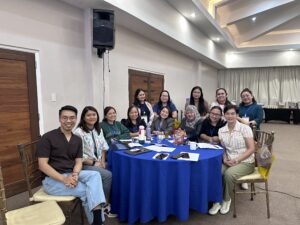
Cohort 3 of the Palliative and Hospice Care Basic and Intermediate Training of Trainers
Course, held on 28 June–4 July 2026 at Hotel Boss, Pampanga, Philippines.

Cohort 3 participants during the on-site palliative care immersion and observership.

National Children’s Hospital interdisciplinary team during the Palliative and Hospice Care
Training of Trainers Course. From right: Kathleen T. Parana, Nutritionist; Sheena T. Robenta,
Social Worker; Lannie T. Fofue, Physician; Maria Socorro C. Vargas, Nurse; and Milynne O. Anasco, Pharmacist.


How to join the Palliative Care Basic Training Course? Is it open for everyone?