

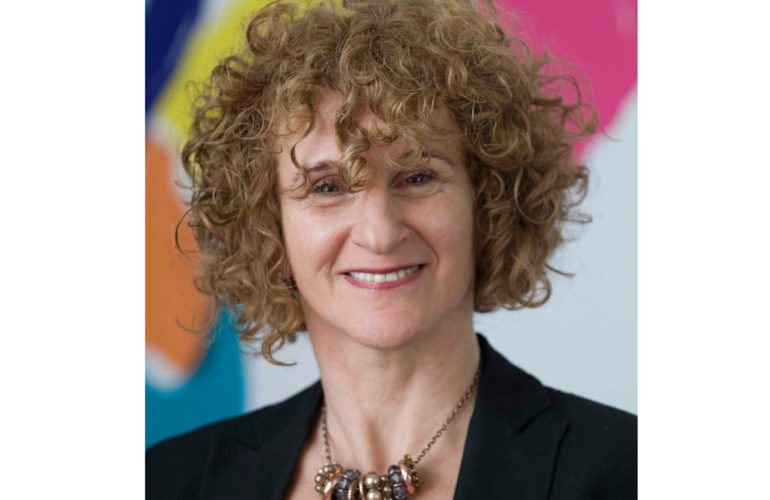
What does the OBE mean for you personally and for the sector?
I feel that the Honour wouldn’t have happened without the great work of the staff and trustees at Together for Short Lives. The team are very passionate about our role, and are driven to make a difference for life-limited children and their families. I want to pay particular tribute to the tremendous vision and leadership brought to the charity by Sir Robin Knowles QC, our Chairman until last month.
The Honour is already proving a real opportunity to profile the significant needs of this group of children and young people, as well as the innovative and exemplary work that is done across the sector, and the many gaps in funding and service provision.
At a personal level, it is of course amazing to receive this Honour; it acknowledges my commitment throughout my career to improving the lives of children and families.
Looking back at your time with Together for Short Lives, can you pick out some key highlights?
There have been so many, it is difficult to choose!
The establishment of the organisation, on 1 October 2011, from the merger of ACT and Children’s Hospices UK, was a huge moment.
Since then, we have enjoyed some real success. Examples include the UK Square Table event in Westminster, the establishment of a UK-wide Transition Taskforce, holding an event at the House of Commons to launch our policy priorities for the sector, launching a new Core Care Pathway for everyone involved in children’s palliative care, and enabling the Leeds research and the Fraser report on the numbers of children in the UK with life-limiting conditions.
We’ve also had some great opportunities to put children’s palliative care on the map. Speaking in her role as Patron of East Anglia Children’s Hospices, HRH The Duchess of Cambridge launched our Children’s Hospice Week in 2012, with her first ever video transmission, and the awareness raising achieved as a result was truly transformational.
The regular highlight in my work schedule is having the chance to hear from children, young people and their families, about the good news stories and, importantly, the bad news stories too, as these are what fuel our work. I always value the chance too to see at first hand the great services that are provided across the sector to support children and families.
Could you tell us more about the merger and the impact this has had?
As I’m sure you can imagine, it was very challenging bringing together two established and independently minded organisations! But through the vision and tenacity of the Chairs of the two former charities – Sir Robin Knowles QC and Heather Wood – and the two staff teams, we stayed focused on the end goal, to do what we believed was going to be best for children and families.
Having a single voice for children’s palliative care has undoubtedly made a big difference to our ability to influence government and policy makers. The message is clearer and more consistent, we are no longer duplicating effort or nuancing what we say, which has enabled us to positively lobby and influence in a number of areas.
Within the sector, it has helped us take a bigger and broader view – one which takes in all the services supporting children and families. Children and young people need a range of different services and they need them, wherever possible, to work in partnership. As one organisation, we can take more of a whole system approach, encouraging partnerships and having different types of conversations with providers about collaboration.
As an organisation born out of merger, we can also help those providers considering closer working, from informal partnerships through to full merger.
How can children’s and adult hospices work together to be better prepared to care for teenagers and young adults?
With the growing number of life-limited young people surviving into adulthood, it is critical and now urgent that adult hospices and children’s hospices work more closely together to provide care for this group.
Transition is such a tough time for these young people. Their social world often shrinks just at the point where they are trying to become more independent. The transition to adult services is often at a point where their health is deteriorating and they really need to feel reassured that their health and broader wellbeing needs are well understood and can be properly provided for by adult services.
Adult hospices have a wealth of expertise that without too much difficulty is transferable to meet the needs of young adults. I would urge all adult hospices to get involved in our Transition Taskforce and to join their Regional Action Group on Transition to help to develop these partnerships and build confidence in caring for young people.
It’s worth having a look at the findings of the STEPP project which was a was a research project commissioned by Together for Short Lives, Hospices UK and the National Council for Palliative Care, undertaken by Professor Bryony Beresford at the University of York Social Policy Research Unit.
Together for Short Lives was chosen as one of the six Text Santa charities and is also the X Factor’s chosen charity. What have the benefits been?
As well as the funds raised, both have provided a brilliant opportunity to raise the profile of Together for Short Lives and to shine a light on the needs of children and young people who may not live to see adulthood and on the needs of their families.
It’s been brilliant for families to have a platform to tell their own unique stories and to talk about the lifeline care and support that they get from children’s hospices across the UK. This has particularly been important for Together for Short Lives because as a relatively newly merged charity, our brand awareness is still very much growing and the platforms that these two campaigns have provided have been invaluable.
What do you see as some of the main challenges for children’s palliative care during 2015?
We face a number of challenges, some which apply to all health and social care services and some specific to children’s palliative care.
We live in constrained economic times and the continued reduction in public spending, regardless of the colour of government, will increase pressure on families and on services. It will require new approaches and collaborations from health and social care providers to make the very most of the resources we have in the system.
We also need to find new ways to support children and families, encouraging greater care and support in the home and support from people living in the child’s local community.
We can’t ignore that a new year means the beginning of a General Election campaign. Elections always bring uncertainty about the long-term direction of health and social care policy and of existing commissioning and funding arrangements. For example, the future of the palliative care funding system in England and the crucial Children’s Hospice Grant remain uncertain.
Children’s palliative care faces a potential future workforce crisis if we can’t recruit and develop more doctors and nurses trained to support larger numbers of children living longer with more complex conditions. We must make this an urgent priority for those responsible for workforce development in all four nations.
We know that families often find the number and range of professionals they have to work with confusing and time consuming, which detracts from their spending precious time together as a family. We want to work with providers and commissioners to improve the integration of care and support around the needs of children and their families.
And finally, what are some of the key areas that Together for Short Lives will be focussing on?
We will shortly launch our new strategic plan for the next three years, designed to lead change to make life better for children and families.
We will work across whole systems to improve the quality and availability of children’s palliative care, and help services understand the data that is out there on the numbers of children with life-limiting conditions so that they can develop services to meet need.
We will continue to work through our UK Transition Taskforce to improve local support for young people, and influence the commissioning and sustainability of children’s palliative care so that providers have a more secure future.
We will influence the development of the children’s palliative care workforce, so that more doctors and nurses are recruited and trained to meet the ever changing needs of this group of children. We will also roll out a programme to engage communities in supporting children who need palliative care and their families.
We can only deliver better lives for these children and families by working in partnership and building strategic partnerships with palliative care and disabled children’s organisations. So, we expect work even more closely with Hospice UK, National Council for Palliative Care and Council for Disabled Children as well as playing an active role in national networks, including the Hospice and Palliative Care Leadership Network.


Leave a Reply