

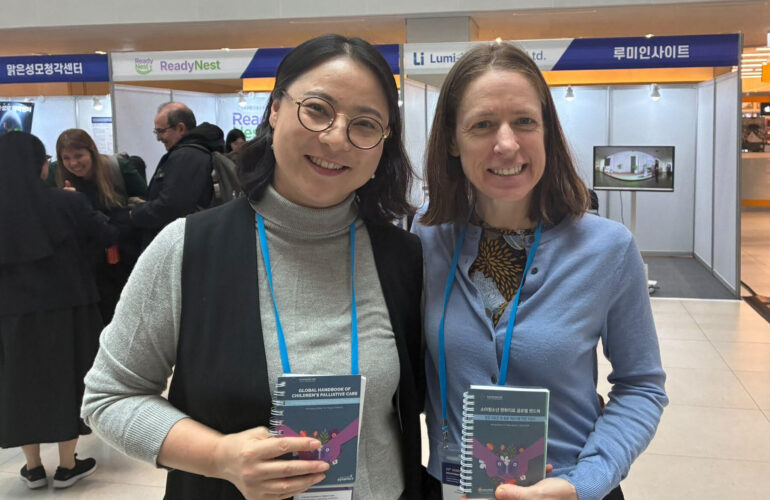
The Korean edition of the Global Handbook of Children’s Palliative Care was launched in Seoul last week. The handbook, a practical guide to caring for children with serious illness, is now in the hands of healthcare providers in 109 countries. Since its launch in February 2025, the Global Handbook of Children’s Palliative Care has been downloaded more than 1,400 times, and more than 1,500 print copies have been distributed. This week, its reach grew again with the launch of a Korean edition in Seoul.
Expanding reach: the Korean edition
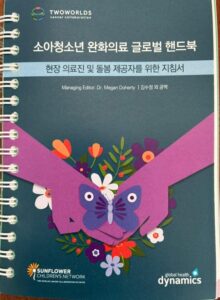
Last week, in collaboration with the Research Institute for Hospice/Palliative Care at the Catholic University of Korea, the Korean translation of the Global Handbook of Children’s Palliative Care was launched in Seoul. The translation was a collaboration between the Korean Society of Palliative Care for Children and Adolescents and the Korean Society for Hospice and Palliative Care, bringing together experts from both adult hospice and palliative care and pediatric palliative care. This collaborative project helped foster greater communication and mutual understanding between the two academic societies.
The handbook was launched with two events: The institute’s 30th anniversary conference and the World Health Organization (WHO) convened Palliative Care Global Action Forum. Healthcare providers in Korea now also have a practical guide to caring for children with serious illness in their own language. The Catholic University of Korea is a recognized regional leader in palliative care. The 30th anniversary conference brought together healthcare providers, researchers, teachers and policy makers to celebrate 30 years of work and look to the future of palliative care.
The Korean edition gives nurses, doctors and other healthcare providers in Korea a trusted guide in their own language. They can use it in hospitals, in the community and in the home, wherever children with serious illness and their families need care. The aim was a guide that reads naturally in Korean while staying true to the original, so that Korean healthcare providers get the same practical advice as readers of the English edition. The Korean edition will be shared at the institution’s website as a PDF file for more knowledge sharing and distribution (http://hospice.catholic.ac.kr/e_main.php) as well as through the TWCC resources page. Already, more than 100 copies of the Korean version have been distributed.
Reaching healthcare providers worldwide
The handbook’s readers span countries across all six WHO regions. Almost three quarters of all downloads (73%) come from low- and middle-income countries, where most children who need palliative care live.
The handbook is reaching frontline healthcare workers including doctors (57%) and nurses (23%), as well as psychologists, counsellors, social workers, pharmacists and other members of care teams. More than one in eight also reported that they train other healthcare providers, further extending the reach of the handbook.
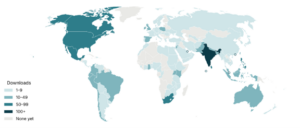
Downloads of the digital edition by country, January 2025 to October 2026.
Small countries and territories are shown as dots. Boundaries shown do not imply any opinion on the legal status of any country or territory.
About the handbook
The handbook was developed and written through collaboration with children’s palliative care clinicians from across the globe. The English print edition, launched in February 2025 in India and the digital edition is free to download. The handbook has been produced and distributed as a collaboration between Two Worlds Cancer Collaboration and Global Health Dynamics.
Palliative care helps children with serious illness and their families. It eases pain and other symptoms and gives emotional and practical support. The handbook is for nurses, doctors and other healthcare providers who have some basic training in palliative care. Many of them work in places where there are few specialists to ask for help. The handbook is intended as a quick reference for front-line clinicians, covering four main topics:
- Physical symptoms: how to assess and treat pain and other symptoms
- Emotional, social and spiritual care: how to support the child, parents, siblings, and caregivers
- Communication: how to share difficult news and plan care together with families
- Medicines: how to prescribe safely for children
Each section is short and practical, so healthcare providers can use it at the bedside, in the clinic or on a home visit.
Part of a Shared Goal: Expanding Access to Palliative Care Globally
Globally, the majority of children who need palliative care do not have access this specialized care. Many healthcare providers have had little training in caring for seriously ill children. Language is another barrier: it is hard to learn from a guide that is not in your own language. Strong uptake of the English edition in Spanish-speaking countries, such as Mexico, Colombia and Spain, shows the demand for the handbook beyond English-speaking settings.
The Korean edition supports our shared vision of supporting healthcare providers to develop the knowledge, skills and confidence to care for children with serious illnesses, wherever they live. Since 2015, Sunflower has trained healthcare providers across South and Southeast Asia through online REACH courses, a Pediatric Palliative Medicine Fellowship, and the Children’s Palliative Care Leadership Program.


Leave a Reply