

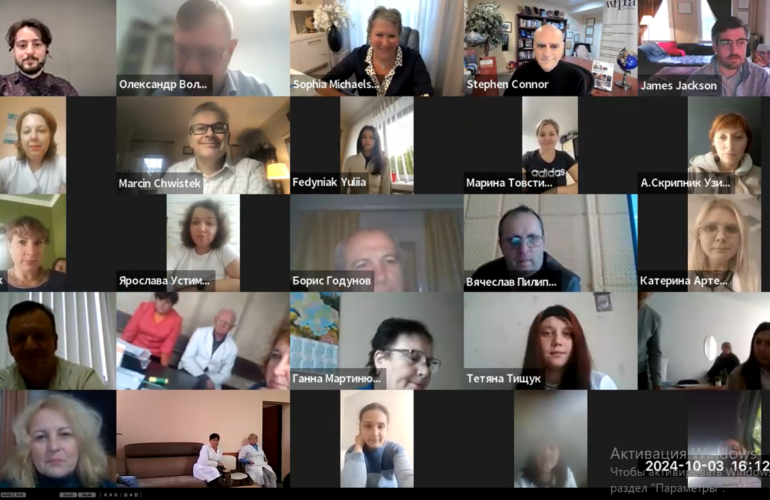
WHPCA is working with the All-Ukrainian Palliative Care Association and the American Eurasian Cancer Alliance (AECA) to conduct quarterly case conferences for palliative care professionals in Ukraine. The most recent case was a Ukrainian soldier who had suffered major trauma during the fighting and was admitted to a palliative care unit. He suffered major head and torso injuries from shrapnel and was experiencing behavioral changes.
While serious injury and trauma have been the subject of guideline development by some of the major surgical, trauma, and intensivist societies this population has not received adequate attention. With the publication of the Lancet Commission Report on Palliative Care and Pain Relief (2018) injury was included as one of twenty major conditions needing palliative care.
Cases of severe injuries fall into several categories. A) there are those that have such severe injuries and suffering that they are not expected to survive long. B) there are those that have injuries that are not life threatening and have good potential for full or significant recovery with time for healing and rehabilitation. C) Then there are those with poly-trauma from multiple injuries that produce high levels of suffering with an uncertain prognosis.
Clearly group A should have access to palliative care while group B likely will not. The case under discussion in this conference fell into group C, which need to be determined on a case-by-case basis, and was complicated by co-occurring mental health issues related to the injury and trauma. Palliative care professionals working with severely injured patients will need some additional skills to help respond to patient needs.
Most if not all these patients will also be suffering from post-traumatic stress disorder (PTSD). There are a variety of evidence-based treatments for PTSD including trauma informed cognitive therapies, exposure therapies, and some conditionally recommended therapies including EMDR and narrative exposure therapy. Sleep disorders and social needs may need to be addressed along with anxiety, depression and spiritual/existential suffering. Family needs also need to be addressed and may need crisis intervention or family therapy for some. Cognitive deficits are not uncommon with head injuries, and a neuropsychological assessment will be very important in interdisciplinary care planning.
In addition, this patient population may have long-term pain management needs that may raise concerns about tolerance and dependence that are not a concern with those in group A. In this case discussion the patient was experiencing significant pain from his injuries and the use of buprenorphine and/or methadone was considered. The WHPCA team helping to conduct these case conferences includes highly experienced palliative care consultants including Dr Tom Smith from John’s Hopkins, Dr Marcin Chwistek from Fox Chase, Dr James Jackson and Eric Krakauer from Harvard along with myself and Dr Sophia Michaelson from AECA. We are very appreciative for the All-Ukrainian Palliative Care Association in helping to arrange these case conferences including simultaneous translation. You can view this case conference on our YouTube channel at palliative care conferences started in Ukraine and palliative care case conferences in Ukraine – PC in Oncology – Metastatic Cervical Cancer


Leave a Reply