

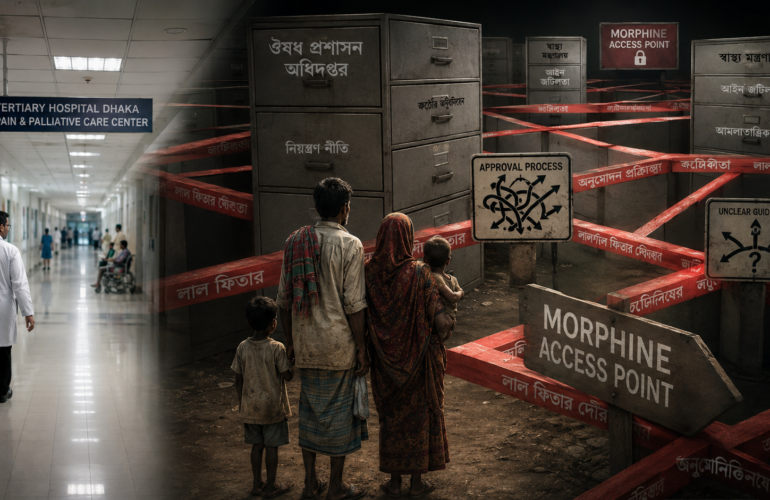
Whether in the sterile corridors of an urban tertiary hospital or the dimly lit room of a rural homestead in Bangladesh, the scene is devastatingly familiar. An individual, cherished deeply by family and community, lies confined to a bed, their body ravished by advanced cancer. When curative options are exhausted, the universal prayer of loved ones narrows to a single, modest plea: that their final days be dignified and peaceful. Yet reality delivers a harrowing verdict.
Families watch in helpless silence as their loved ones thrash in unmitigated agony, their groans piercing through the night, pleading for an ounce of relief that never arrives. Having stood by the bedside of relatives consumed by this unbearable suffering, one comes to understand that unmanaged physical pain dismantles human dignity faster than disease itself.
Faced with such distress, caregivers desperately turn to standard over-the-counter analgesics, escalating to routine intramuscular injections. When these fail to make a dent in the pain, families resign themselves to a tragic fallacy: that excruciating agony is an unavoidable prerequisite to death. Global medical science and public health ethics refute this fatalism. While curing terminal illness may be impossible, eliminating severe physical torment and restoring quality of life is entirely achievable. Pain management is not a secondary luxury; it is the cornerstone of palliative care.
As the global health community observes World Hospice and Palliative Care Day 2026 under the timely theme “Pain Management: An essential part of palliative care,” the spotlight turns directly onto this unresolved humanitarian crisis. This global observance serves as a vital reckoning: across low- and middle-income countries (LMICs), hundreds of thousands of terminal patients are subjected to systemic, preventable physical torture. Relieving pain is not merely clinical good practice—it is an internationally recognized, inalienable human right.
The Multidimensional Anatomy of Suffering: Deconstructing ‘Total Pain’
In advanced oncological and chronic illnesses, pain cannot be categorized simply as somatic inflammation or muscular discomfort. As malignant cells infiltrate neural pathways, bone matrices, and visceral organs, pain transmutes into intractable neuropathic and complex pain. Standard non-steroidal anti-inflammatory drugs (NSAIDs) or paracetamol are structurally inadequate to manage this intensity.
Modern palliative medicine conceptualizes this phenomenon as “Total Pain”—an intricate nexus where severe physiological trauma interlocks with profound psychological terror, social isolation, existential angst, and catastrophic household financial ruin. When physical suffering overwhelms the central nervous system, psychological support, spiritual counseling, and compassionate presence cannot penetrate the barrier of agony. Controlling physical pain is the clinical prerequisite to addressing any other dimension of human suffering. A patient cannot reflect, pray, or connect with their children while writhing in excruciating distress.

Decades ago, the World Health Organization (WHO) established its three-step analgesic ladder, designating oral medical opioids—predominantly controlled, titrated doses of oral morphine—as the indispensable gold standard for moderate to severe cancer pain. Clinical evidence confirms that proper administration of oral morphine alleviates intractable pain in 80% to 90% of terminal cancer patients. Yet across resource-constrained health systems, an immense chasm separates pharmacological reality from patient bedside delivery.
Evidence from the Frontlines: Structural Barriers and Knowledge Deficits
The tragedy of untreated pain in developing contexts like Bangladesh is not rooted in a mystery of science; it is documented rigorously across empirical public health research and policy investigations. An incisive investigative analysis published by Think Global Health, titled “Tolerating Pain: Accessing Medical Morphine in Bangladesh,” unveiled a staggering public health disparity: while hundreds of thousands of patients require urgent palliative relief annually, the national supply of medical-grade morphine satisfies less than 1% of the country’s actual clinical need. The study points directly to draconian regulatory hurdles under outdated narcotics control statutes. Stringent, bureaucratic licensing and replenishment processes dissuade both public and private health institutions from stocking essential opioids.
Consequently, medical morphine remains hyper-centralized within a handful of specialized tertiary hospitals in the capital, Dhaka. For a rural cancer patient from remote corners of the country, traveling hundreds of kilometers in extreme agony merely to obtain a week’s supply of inexpensive pain medication is medically impossible and financially ruinous. Paralyzing fear among physicians of legal persecution, combined with pervasive cultural “opiophobia”—the misplaced dread that morphine induces fatal addiction—condemns terminal patients to end-of-life torment.
This systemic crisis is further entrenched by profound knowledge deficits and institutional neglect within the medical workforce. A pivotal nationwide cross-sectional study published in PLOS ONE, titled “Physicians’ knowledge about palliative care in Bangladesh: A cross-sectional study using digital social media platforms,” evaluated clinical practitioners across government, private, and autonomous healthcare facilities. The findings revealed that approximately 60% of surveyed physicians possessed an inadequate or poor level of knowledge regarding palliative care principles, symptom control, and pain assessment.
The overwhelming majority had never received any formal, structured training during their undergraduate medical education or clinical internships. Because academic curricula overwhelmingly prioritize curative interventions while omitting comprehensive end-of-life care, frontline physicians enter clinical service lacking the technical confidence to assess intractable pain or manage controlled analgesics.
The operational dilemmas resulting from this educational void are underscored by a multi-center study published inPublic Health Challenges (PMC12039347), titled “Opioid-Related Challenges Faced by Palliative Healthcare Providers in Both Hospital and Home Care Settings: A Multi-Center-Based Descriptive Cross-Sectional Study”. Among the patients evaluated, 98.5% suffered from advanced cancer, and intractable pain was identified as the primary presenting symptom managed by 100% of providers.
Yet, 60.7% of healthcare professionals reported encountering severe restrictions when prescribing essential opioids. Crucially, only 10.4% were aware of national opioid regulations, while 38.5% cited persistent referral non-cooperation and 32.6% pointed to deep-seated professional misconceptions about palliative therapy as crippling obstacles. Synthesizing these empirical findings yields an unequivocal verdict: terminal patients in the Global South do not suffer because their physical torment is medically incurable; they suffer because of administrative friction, institutional inertia, pervasive curriculum voids, and artificial drug scarcity.
From Clinical Intervention to Human Dignity
When medicine reaches the boundaries of curability, its moral compass must reorient toward preserving the quality of remaining life. Palliative care makes no promise to arrest mortality; it promises that while breath remains, it shall not be choked by preventable anguish.
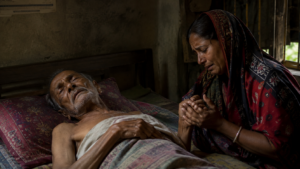
Effective pain management alters the trajectory of human departure. When agonizing bone pain or visceral pressure is controlled, a hospital ward or rural bedroom transforms from a chamber of torment into a space of sacred closure. A mother can embrace her children without wincing in agony; an elder can impart final wisdom, settle family affairs, and find closure. Pain management does not merely numb nerve endings—it restores cognitive agency, safeguards personal dignity, and cushions the psychological trauma inflicted upon surviving caregivers.
A Strategic Call to Action: Integrating Pain Relief into Universal Health Coverage
Unlike complex oncological biologics, oral morphine is off-patent, simple to manufacture, and costs only pennies per tablet. There is no moral, economic, or clinical justification for leaving millions to suffer. To honor the theme of World Hospice and Palliative Care Day 2026, national governments, global health agencies, and health systems must commit to concrete structural reforms:
- Regulatory Modernization: Streamline narcotics control protocols to de-bottleneck the procurement, storage, and dispensing of oral morphine across district and sub-district general hospitals. Decouple palliative analgesia from punitive criminal law enforcement.
- Mandatory Undergraduate Curriculum Reform: Integrate competency-based palliative medicine, validated pain assessment tools, and safe opioid titration into all medical, nursing, and allied health curricula. Close the documented knowledge gap by equipping medical graduates with essential end-of-life competencies prior to independent clinical practice.
- Policy Operationalization: Disseminate National Opioid Policies across secondary and primary care networks, providing clear legal protection and clinical guidelines to eliminate physician hesitancy and fear of litigation.
- Primary Health Care (PHC) Decentralization: Integrate basic palliative care packages and community-based pain relief protocols into primary health complexes and rural clinics, utilizing trained community health workers to support home-based palliative delivery.
- Dismantling Opiophobia: Launch targeted public health campaigns to educate clinical communities and civil society on the vital distinction between clinical opioid analgesia in terminal care and substance misuse.
Death is an inescapable chapter of human existence. But dying in preventable agony is a collective failure of public health stewardship. Relief from unbearable pain cannot be treated as a charitable favor reserved for those fortunate enough to access tertiary private centers; it must be protected as a non-negotiable human right. As we advance toward universal health coverage, bridging the global pain divide is the ultimate test of our shared humanity.
Author Bio: Sumit Banik is a public health professional and palliative care advocate based in Bangladesh, dedicated to building accessible, community-driven care models that restore dignity, empathy, and quality of life for individuals and families facing life-limiting illnesses.
===================
ehospice is proud to help promote individual, local, national and international voices in Hospice & Palliative Care
We are on target to have over One Million page views this year.
To stay in touch with colleagues and news around the world subscribe to our free Newsletter


Leave a Reply