

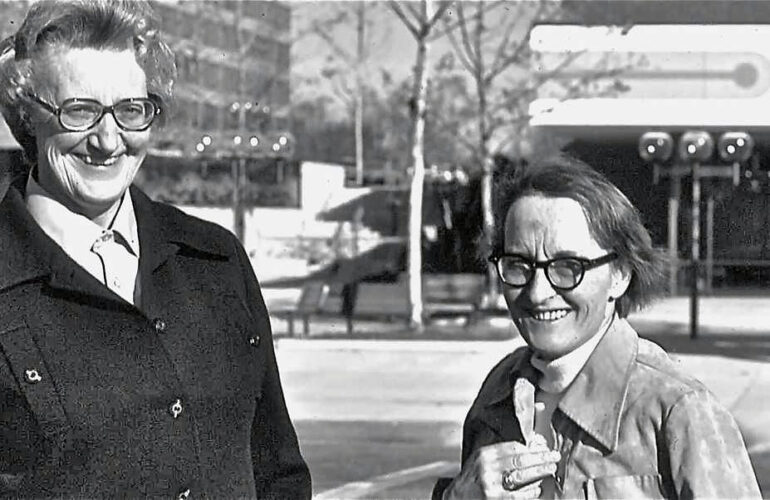
By Ken Ross and Stephen Connor: On July 8, the world marked the 100th anniversary of the birth of Dr. Elisabeth Kübler-Ross, the Swiss American psychiatrist whose work helped transform how clinicians, families, faith communities, and societies understand death, dying, grief, and compassionate care.
Born in Zurich in 1926, Kübler-Ross entered medicine at a time when dying patients were often kept at the margins of care—physically present in hospitals, yet too often emotionally abandoned. She challenged that silence with a simple but radical act: she listened. Sitting at the bedside of people facing the end of life, she heard their fears, hopes, anger, questions, and need for honesty. In doing so, she insisted that dying people were not medical failures, but human beings with voices, wisdom, and dignity.
Her landmark 1969 book, On Death and Dying, grew from interviews with seriously ill patients and introduced a language that reshaped modern conversations about loss. The now-familiar stages—denial, anger, bargaining, depression, and acceptance—were never meant to reduce grief to a tidy sequence. Rather, they opened a door for people to speak more honestly about the emotional terrain of dying and bereavement.
The influence of Kübler-Ross extended far beyond one book. She helped give legitimacy to the emerging hospice movement, challenged the medical profession to treat the whole person, and brought public attention to the importance of pain relief, truthful communication, emotional support, and family care at the end of life. Later, she advocated for children with AIDS at a time when fear and stigma too often overshadowed compassion.
A consequential life is one that changes not only what people know, but what they are willing to face. Kübler-Ross lived such a life. Before her work reached the public, death was still widely treated as a subject to avoid, especially in medical settings. Patients were protected from the truth, families were left without language, and clinicians were often trained to cure but not always to accompany.
Kübler-Ross helped change that culture. Her lectures and seminars invited dying patients into the center of medical education, allowing them to teach doctors, nurses, clergy, and students what they needed most. Her credibility came not only from scholarship, but from presence: she spoke from the bedside, from direct encounter, and from a conviction that compassion begins with listening.
Her five-stage framework remains one of the most widely recognized ideas associated with grief, even as contemporary understanding has grown more nuanced. Grief may include denial, anger, bargaining, depression, and acceptance, but it can also hold shock, guilt, relief, loneliness, anticipatory grief, love, meaning, hope, and the uncertain in-between spaces where people learn to live with loss. Kübler-Ross gave the world a starting point—not a formula—and invited us to meet grief with humility rather than judgment.
One hundred years after her birth, Elisabeth Kübler-Ross remains a defining figure in hospice and palliative care, grief support, and the broader movement for more humane medicine. Her legacy endures wherever a clinician pauses to listen, a family is helped to speak honestly, a patient is treated as a whole person, and a society chooses dignity over silence. She reminded us that how we care for the dying reveals something essential about how we value life.
—————
Image: Elisabeth and Cicely courtesy of EKR Family Trust


Thank you for this article with the picture . Two great personalities in frame . I am from India and a great fan of these two personalities .