


Compiled by Barry R. Ashpole: LAUNCHED IN 2024, THE END-OF-LIFE CARE BEHIND BARS WEBSITE fills a critical information and advocacy gap for a unique, often overlooked population. While general prison healthcare has gained attention, keeping pace with research on palliative care within correctional facilities remains a challenge for busy professionals.
As a dedicated advocacy, teaching, and research hub, this site streamlines access to essential knowledge. Users can find the latest developments, including curated reviews of articles and reports, in the monthly bulletins on the “Current Thinking” page, while the “Spotlight” page offers commentaries on several key issues. As this resource grows, it aims to foster a necessary shift in societal attitudes toward the care and dignity of incarcerated individuals at the end of life.
Following are selected articles, reports, etc., from the latest (October) posting. Access the monthly postings at: https://bit.ly/47sVCRU
_________________________________________________________________________________________________________
Expanding end-of-life options for incarcerated individuals
AMERICAN JOURNAL OF HOSPICE & PALLIATIVE MEDICINE (U.S.), 2026;43(10):1119-1125. The aging prison population in the U.S. presents urgent challenges for providing appropriate end of-life (EoL) care. Currently, there are two primary approaches to deliver this in a compassionate manner: medical release programs(MRP) and prison-based EoL care programs (EoLCPs).
Using New York State as a case study, the authors argue expanded MRP represent the most ethical path forward, while acknowledging the continuing need for prison-based EoLCPs. Their analysis reveals significant barriers to accessing medical release, including lack of knowledge about the application processes, procedural inefficiencies, overreliance on prognostication, and social stigma. While prison-based programs of fer some benefits, studies indicate they frequently fall short of community standards for EoL care, particularly regarding family involvement, pain management, and environment, including a shortage of beds and equipment. Abstract: https://bit.ly/3XZGMOk
Palliative care needs and experiences of people in prison: A systematic review and meta-synthesis
QUEENS UNIVERSITY OF TECHNOLOGY (Australia) | Online – Modified 16 September 2026 – Globally, the prison population is growing and ageing, as is the need for palliative care (PC). Yet, little is known about how people in prison perceive PC provision in this setting. [The aim of this study was] to identify: 1) perceptions of PC provision and dying in custody by people in prison; and, 2) perceived barriers and facilitators of person-centred PC provision in prison.
Experiences of people in prison regarding PC related to two themes: 1) expectations versus experiences of PC; and, 2) prison context complicates access to and provision of PC. People in prison with PC needs want to feel safe, cared for, and acknowledged as they face an expected death. The prison environment can severely restrict access to PC, leaving people in prison feeling isolated and powerless. People in prison expect to receive high-quality PC, but their experiences often do not match their expectations. Abstract: https://bit.ly/4y1Udhk
Death and dying. Darned unpleasant behind bars!
HUMANITY FOR PRISONERS (U.S.) | Online – 14 September 2026 – Being attended by family can bring deep comfort to a dying person. But, often behind bars that just didn’t happen. Dying in prison without loved ones present can cause deep emotional harm to both the dying individual and their family. Inmates often face their final moments alone, sometimes physically restrained or chained to medical beds.
Dying prisoners are routinely denied the right to make meaningful medical or end-of-life decisions regarding their care. Terminally ill prisoners frequently experience untreated or undertreated physical pain due to substandard institutional medical protocol. The absolute fear of dying forgotten and disconnected from family remains one of the most severe emotional burdens of long-term incarceration! A number of men and women die in Michigan prisons each year with no family or friends present, and even, in come cases, no one to claim the body of the deceased. Full text: https://bit.ly/46vjjJm
Artificial intelligence in prison healthcare
CORRECTIONAL NEWS (Finland) | Online – Accessed 10 September 2026 – As artificial intelligence (AI) begins to shape every aspect of correctional systems, healthcare stands out as one of its most promising yet complex frontiers. Prisons face chronic healthcare crises: overcrowding, staff shortages and limited access to specialized treatment. The COVID-19 pandemic accelerated digitalization across correctional systems, making telemedicine, digital self-help and AI-assisted monitoring a permanent part of the landscape. Within this new ecosystem, AI is not merely a technical upgrade – it has become an ethical and operational imperative. The Council of Europe’s recommendation on AI in prisons and probations … identifies healthcare as one of the key areas where AI may support diagnosis and follow-up medical treatment – provided it does not replace face-to-face care.1The principle of “human-centered AI” is therefore critical: technology should enhance medical access and safety, not automate human care. Full text: https://bit.ly/46UCMTG
- ‘Recommendation of the Committee of Ministers to member states regarding the ethical and organisational aspects of the use of artificial intelligence and related digital technologies by prison and probation services,’ Council of Europe (2024). Full text:https://bit.ly/3T0LMUa
N.B. For a broader view of AI from the perspective of palliative and end-of-life care see the latest posting on the Literature Search page of the website of the International Association for Hospice & Palliative Care at: https://bit.ly/4q8IsAJ
The last seven minutes of one man’s life in an Oregon prison
PRISON JOURNALISM PROJECT (U.S.) | Online – 11 September 2026 – Jacob was the third person who died this year in Eastern Oregon Correctional Institution, where I am incarcerated. During the summer, prison administrators finally agreed to schedule a memorial for all three men. Each dead man was allotted 20 minutes for remembrances. I suppose we were meant to feel comforted by the memorial. But the event felt more like an afterthought, the prison’s attempt to sanitize our grief and check off the last box in what they hoped was a tidy way to deal with all the death. At the service, we exchanged memories about the people we lost. I wasn’t there when Jacob died, but dozens of people who lived in the 100-man dormitory witnessed the final minutes of his life, when he fell from a chair to the floor, quietly gasping for air. That’s part of why Jacob affected so many people. They saw him die. Grieving is different for incarcerated people. Full text: https://bit.ly/4gYfb9s
When loss has two addresses: Grief inside prison and at home
COMPASSION CROSSING (U.S.) | Online – 4 September 2026 – Grief does not stop at the prison gate. Incarceration does not erase family bonds. A person in prison may grieve a death, a serious illness, a damaged relationship, years of missed milestones, or the daily absence of people they love. Loved ones outside may experience their own losses. A spouse may grieve sharing decisions alone. A child may miss a parent at bedtime, school events, and holidays. A sibling may become the person who carries family updates, questions, and difficult news. Facility rules, security needs, distance, and available services can affect visits, calls, grief support, and participation in family events. These limits may make already difficult losses feel more isolating. Research has described incarceration as a setting where bereavement may be complicated by separation, limited privacy, and restricted access to ordinary mourning practices. Full text: https://bit.ly/4xEfMUS
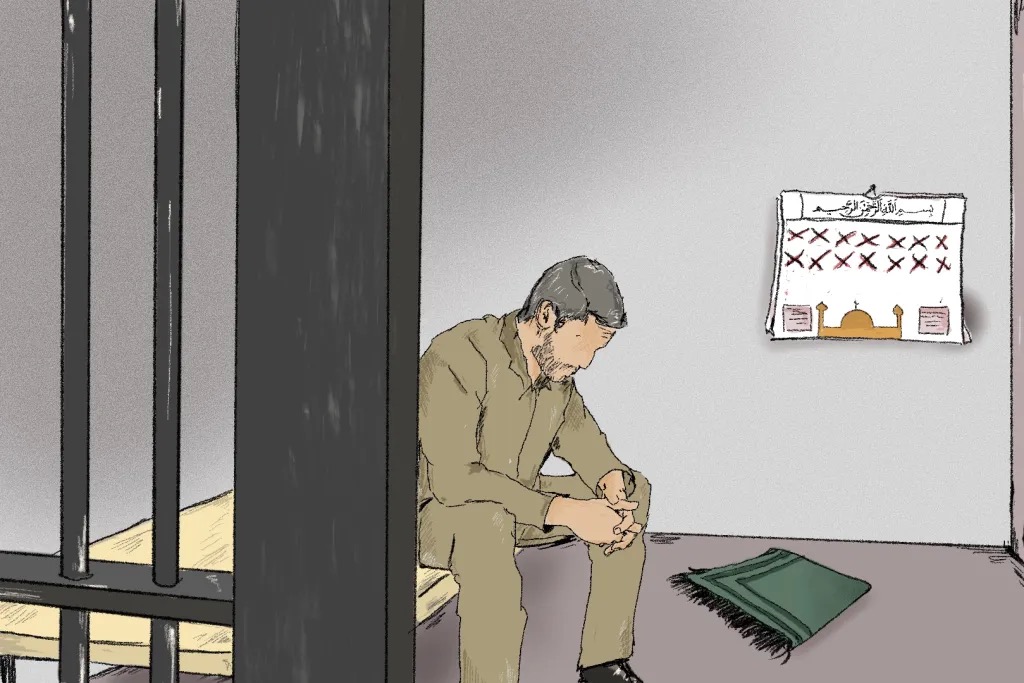
Cover Picture Source: AMA Journal of Ethics (2025): https://bit.ly/3E2PTrd
____________________________________________________________________________________
Barry R. Ashpole, Ontario, CANADA Biosketch: https://bit.ly/3XMTRs4
BARRY R. ASHPOLE is an educator and communications consultant living in Ontario, Canada. Now semi-retired, he has been involved in palliative and end-of-life care since 1985. He established the End of-Life Care Behind Bars website (https://bit.ly/4dU4qmi), an advocacy, teaching and research “tool” to inform and, hopefully, affect a seismic shift in society’s attitudes towards the health and well-being of the incarcerated. Regular postings include annotated listings of current articles, reports, and so on, culled from the professional literature, the news media and other sources.
Republish This Article
The author believes in the free flow of information. Republish this article for free, online or in print, under Creative Commons licence, with due credit to the author and source. https://bit.ly/47sVCRU
====================
ehospice is proud to help promote individual, local, national and international voices in Hospice & Palliative Care
We are on target to have over One Million page views this year.
To stay in touch with colleagues and news around the world subscribe to our free Newsletter



Leave a Reply