

Reflecting on our path to Universal Access to Palliative Care in a LMIC: Almost 80% of patients needing palliative care (PC) are in low-middle-income countries (LMICs) with limited to no access to PC services. In Lebanon, like most LMICs, several factors hinder access to palliative care including capacity building, reimbursement, access to opioids and essential medications.
In LMIC, a lot is needed to achieve universal access to palliative care.
In an attempt to achieve the promise, through interprofessional collaboration and advocacy; the Lebanese Palliative Care Society, in collaboration with the Nursing Department at the American University of Beirut Medical Center (AUBMC) and endorsed by the Lebanese Association for Palliative Care Nursing, organized the Lebanese National Palliative Care Day Conference on October 18, 2025.
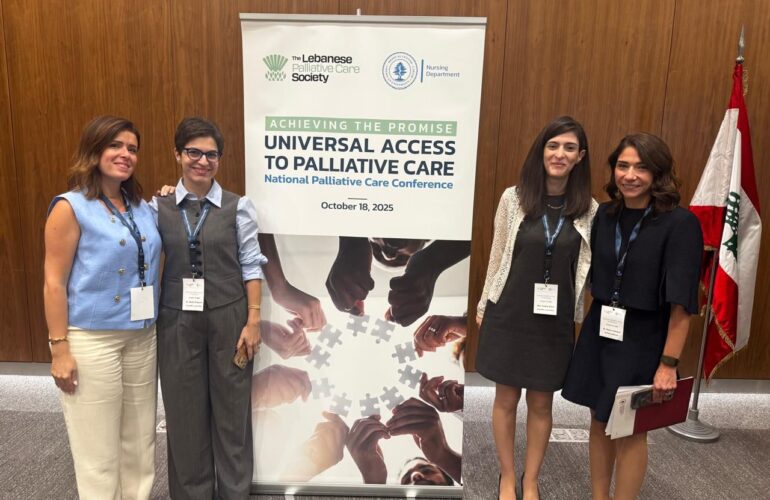
The conference theme was titled “Achieving the Promise – Universal Access to Palliative Care.” Led by two palliative care physicians and two palliative care nurses (Pic1), the initiative embodied the collaborative and interdisciplinary foundation of palliative care. The conference emphasized the preparedness and empowerment of healthcare providers, as well as the critical roles played by government bodies, non-governmental organizations (NGOs), and community partners in responding to Lebanon’s growing palliative care needs.
The program aimed to enhance knowledge and awareness of the importance of palliative care, highlight the benefits of early integration of palliative services for patients and families, and promote collaboration among healthcare providers, policymakers, NGOs, and communities to strengthen palliative care delivery nationwide. The event brought together a diverse group of stakeholders, including physicians, nurses, social workers, psychologists, policymakers, health system leaders, and representatives from healthcare institutions and NGOs, all united by a shared mission to improve the quality of serious illness and end-of-life care across Lebanon.
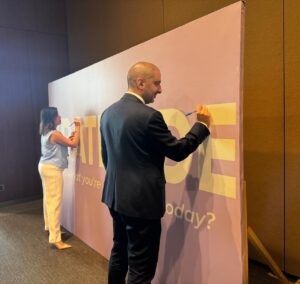
The opening ceremony set a heartfelt and reflective tone for the day, featuring symbolic and interactive activities that highlighted the human essence of palliative care. Participants were invited to write messages of gratitude on a gratitude board (Pic2 ), share their hopes by placing written wishes on a Wishes Tree (Pic3), and light a candle in memory of a loved one (Pic4). These moments encouraged reflection on compassion, remembrance, and unity, and created a warm, meaningful, and inspiring atmosphere throughout the conference, gently accompanied by soft violin music.
With more than 120 participants, the conference program started with a session titled “Provision of Palliative Care Services in Lebanon: Hospital and Community Settings”. The session highlighted palliative care services across Lebanon, fostering shared learning and collaboration. The session provided an overview of hospital and community-based services, multidisciplinary teams, recent developments, and key challenges in coordination of care, with a focus on improving quality of life for patients with life-limiting illnesses. This allowed PC clinicians to learn from each other’s experience and enhance collaboration among each other.
This was followed by a panel discussion titled “Towards Equity in Pediatric Palliative Care: A National Commitment”(Pic5). The panel participants included a neonatologist, two pediatric oncologists, a pediatric intensivist, and a pediatric palliative care physician and nurse. The discussion primarily focused on identifying who can benefit from palliative care in this population, the national need for such services, the importance of raising awareness, and the urgent need to build capacity for perinatal/neonatal and pediatric palliative care in Lebanon.
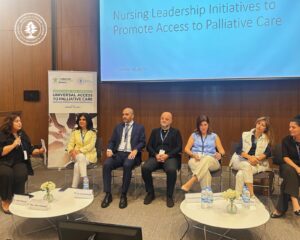
The conference held another panel discussion titled “Nursing Leadership Initiatives to Promote Access to Palliative Care” (Pic6). This panel focused on how nurses in Lebanon often witness firsthand the inequities and fragmentation that limit access to PC services and focused on how nursing leadership at bedside, institutional, and national levels can change that reality.
The conference ended with a panel discussion titled “A National Framework for Palliative Care in Lebanon: Aligning Vision with Action”. The panelists included stakeholders of palliative care ranging from ministry of health representative to WHO representative. This session provided valuable insights into the current landscape and future direction of palliative care in Lebanon, fostering collaboration and innovation across sectors.
The conference concluded with a renewed collective commitment to making quality palliative care accessible to all. Through sustained collaboration, advocacy, education, and action, the Lebanese palliative care community continues to work toward a compassionate, equitable, and sustainable national framework truly striving to achieve the promise of universal access to palliative care.
Celine Bakri, Nursing Department, Palliative Care Program, Clemenceau Medical Center, Beirut, Lebanon.
Dr. Rana Yamout, Department of Internal Medicine, Supportive and Palliative Care Program, American University of Beirut Medical Center, Beirut, Lebanon.
Balsam – The Lebanese Center for Palliative Care, Lebanon.
Dr. Maha Kassem, Palliative Care Program, Clemenceau Medical Center, Beirut, Lebanon.
Sanad -The Home Hospice organization of Lebanon, Beirut.
Janane Hanna, Nursing Department, Supportive and Palliative Care Program, American University of Beirut Medical Center, Beirut, Lebanon.
Balsam- The Lebanese Center for Palliative Care, Beirut, Lebanon.




It really empowerment of Nurses to take charge and have a voice globally. Together we can!