

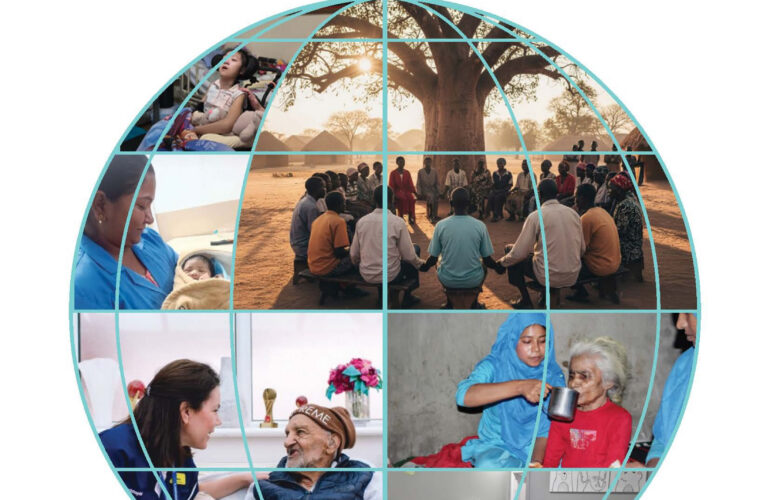
The third edition of the Global Atlas of Palliative Care has been launched at the 50th Montréal International Palliative Care Congress. It offers the most complete picture yet of who needs palliative care worldwide, and who is receiving it. The picture shows real progress, but a gap that remains very wide.
73.5 million people are estimated to need palliative care every year.
About 14% of that need is met by specialised palliative care services. In low- and middle-income countries, only 4% of people in need receive it.
25,000 → 33,720 The approximate growth in specialised palliative care services between 2017 and 2025.
Patients served rose from almost 7 million to over 10.4 million.
The Atlas also challenges some common assumptions:
- Most people in need (62.4%) require palliative care before their last year of life.
- Non-communicable diseases account for 73.6% of adult need. Cancer accounts for 27.9%.
- 10.6 million children need palliative care, and 96.2% of them live in low- and middle-income countries.
- 80% of the world’s population has little or no access to essential controlled medicines.
It sets out ten recommendations for national governments, from embedding palliative care in core health financing to building the workforce and increasing access to children’s palliative care.
In The Forward the Chair of the WHPCA, Dr Jim Cleary, said the following:
The publication of this third edition of the Global Atlas of Palliative Care is a continuation of our efforts, in cooperation with the World Health Organisation, to monitor the progress of palliative care worldwide.
In the past six years since the last edition was published, we have seen significant growth in the delivery of specialised palliative care, up more than 35% in the number of providers and over 50% in the number of patients served.
Along with this growth the need for palliative care for adults and children is also increasing to now over 73 million, though most of this new growth is for those with serious health related suffering before their last year of life.
We are heartened by the creativity of colleagues around the world to find new and innovative ways to deliver palliative care and to integrate palliative care into mainstream health care systems (See chapter 5).
Many challenges remain including continuing lack of access to essential palliative care medicines, education on palliative care for millions of health care workers, volunteers, and community members, policy and political will, research and increased compassionate community support.
Fortunately, we have the tools to meet these challenges if we have the resources needed. Palliative care champions have always risen to the occasion to meet these challenges with our shared sense of mission and purpose.
Palliative care is a model fit for the future of health care.
With the unparalleled ageing of the world’s population and the rise in noncommunicable disease palliative care is the best model of cost-effective people centred care in the healthcare system.
Serious human suffering from illness and injury have been with us since the beginning. We now have the tools to ease this suffering and to provide compassionate whole person care that improves quality of life and dignity for the most seriously ill in our communities worldwide.
It’s time to embrace palliative care and join us in achieving universal access to palliative care for all.
Dr James Cleary
Board Chair, WHPCA
Read and Download the Atlas here


Leave a Reply