

Cancer care in low- and middle-income countries (LMICs) faces unique challenges, with many patients presenting at advanced stages and limited access to comprehensive oncology and palliative services.
In Lebanon, as in many LMIC settings, palliative care services are under-resourced, inconsistently integrated into oncology practice, or introduced late in the disease trajectory. As a result, patients and families often experience a high burden of uncontrolled symptoms, psychosocial distress, and fragmented care.
The European Society of Medical Oncology (ESMO) designation provides an internationally recognized framework for the early and systematic integration of palliative care into oncology, while accounting for local resource constraints in LMICs.
Designation promotes the development of structured, multidisciplinary palliative care services embedded within routine oncology care, including symptom management, psychosocial and spiritual support, advance care planning, and end-of-life care.
Beyond improving individual patient outcomes, ESMO designated centers often strengthen health systems by serving as regional reference centers, supporting workforce training, fostering quality improvement, implementing evidence-based guidelines, and advocating for access to essential palliative care resources. In this way, the designation advances equitable, patient-centered cancer care in resource-limited settings.
Recognizing the importance of ESMO designation and with a commitment to improving care, our (Clemenceau Medical Center, Beirut, Lebanon) journey toward designation began five years ago with a shared conviction: palliative care should not be limited to end-of-life care but integrated early and systematically alongside disease-directed cancer treatment.
Supported by oncologists who championed this vision, we initiated weekly multidisciplinary rounds bringing together oncology and palliative care teams to jointly assess and support patients receiving active treatment. These meetings went beyond symptom management to emphasize communication, shared decision-making, and alignment with patients’ values and priorities.
To ensure early integration, nurse managers were trained to identify oncology patients with uncontrolled symptoms or advanced disease and initiate timely palliative care referrals. Their leadership strengthened interdepartmental collaboration and helped embed palliative care into routine clinical practice. Over time, this approach fostered a cultural shift: palliative care became recognized as an essential component of oncology care. The change translated into improved symptom control, fewer avoidable hospitalizations, and higher patient and family satisfaction, with many describing feeling supported, guided, and less isolated.
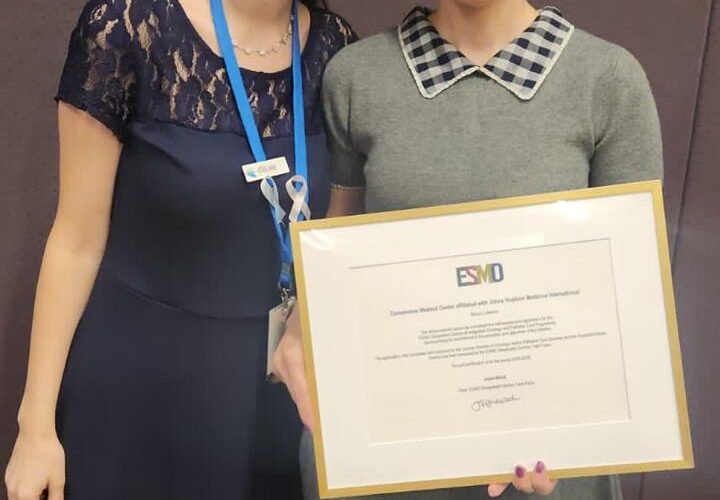
In 2025, our institution, a tertiary care center in Beirut, Lebanon, achieved international recognition as an ESMO Designated Center of Integrated Oncology and Palliative Care, marking a significant milestone in our commitment to comprehensive, person-centered cancer care. (Lead photo)
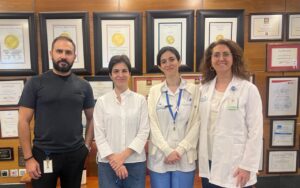
This recognition from the ESMO followed a rigorous, multidisciplinary application process involving oncology, palliative care, nursing leadership, (Pic 2) and pharmacy services, and a comprehensive review of clinical practices, care pathways, education, and quality initiatives.
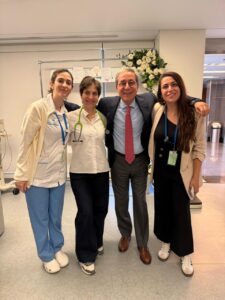
The designation recognizes sustained collaboration between oncology and palliative care teams, integrated service delivery across care settings, a dedicated interdisciplinary palliative care team, ongoing education and quality improvement activities, and comprehensive patient and family support embedded within routine oncology care.
Following this recognition, and coinciding with World Palliative Care Month, our institution held a celebratory event recognizing this achievement. Senior leadership, clinical teams, and staff from across departments came together to acknowledge the collective effort and shared vision that made ESMO designation possible. The event highlighted the importance of early palliative care integration across the cancer care continuum and reinforced institutional commitment to ongoing development in this field.
In conclusion, becoming an ESMO designated center reflects our sustained commitment to excellence, compassion, and collaboration.
As we move forward, our institution remains dedicated to strengthening the integration of oncology and palliative care, expanding education and training opportunities, and contributing to international knowledge exchange and best practice development. This recognition reinforces our mission to deliver comprehensive, person-centered cancer care, ensuring that every patient receives not only optimal oncological treatment, but also dignity, comfort, and support throughout their cancer journey.
This milestone marks an important step toward strengthening palliative care integration and improving care in Lebanon.
Celine Bakri, Nursing Department, Palliative Care Program, Clemenceau Medical Center, Beirut, Lebanon.
Nadine Hindi, Nursing Department, Quality and Professional Practice, Clemenceau Medical Center, Beirut, Lebanon.
Dr. Maha Kassem, Palliative Care Program, Clemenceau Medical Center, Beirut, Lebanon.
Sanad -The Home Hospice organization of Lebanon, Beirut.


A thoughtful article highlighting why integrating oncology and palliative care is so important for improving holistic and patient-centered cancer care.