


Yakhyo: I am a hereditary oncologist, following in my father’s footsteps. My father also worked a lot, so workaholism runs in the family. I practically grew up at the Oncology Centre in Andijan. The nurses and orderlies there were like my second family. Oncology is what it is, and I often saw that at the end of a patient’s life, when there was nothing else to do, my father felt helpless. It troubled him greatly, and it troubled me along with him.
I realised that unless the fundamental question — how to help a terminally ill patient? — was solved, there was no point in discussing grander topics. The thought formed when I worked as a nurse between 2007 and 2010. I graduated in 2015, around the time of the first forum of oncology leaders of Central Asia, which Eric Krakauer attended. The stars aligned. He shared that palliative and hospice care development is a beautiful solution to this problem.
I realised that this was my calling and that I needed to address the most fundamental oncology issue: palliative care. At that moment, in 2016, political changes were taking place: a new president, and the introduction of inclusivity at all levels in Uzbekistan — from society to ministries. We realised that we urgently needed palliative care. That’s how it all started and continued, up to the Cabinet of Ministers’ resolution that guaranteed citizens access to palliative care as part of state-provided services.
My professional interest and decision to engage in palliative care took root in 2015. But even around 2010, I understood that the country needed such a service. In 2017, we started working with Rustam Narbaev, my former student who is now a colleague, and we gathered a team of like-minded people.
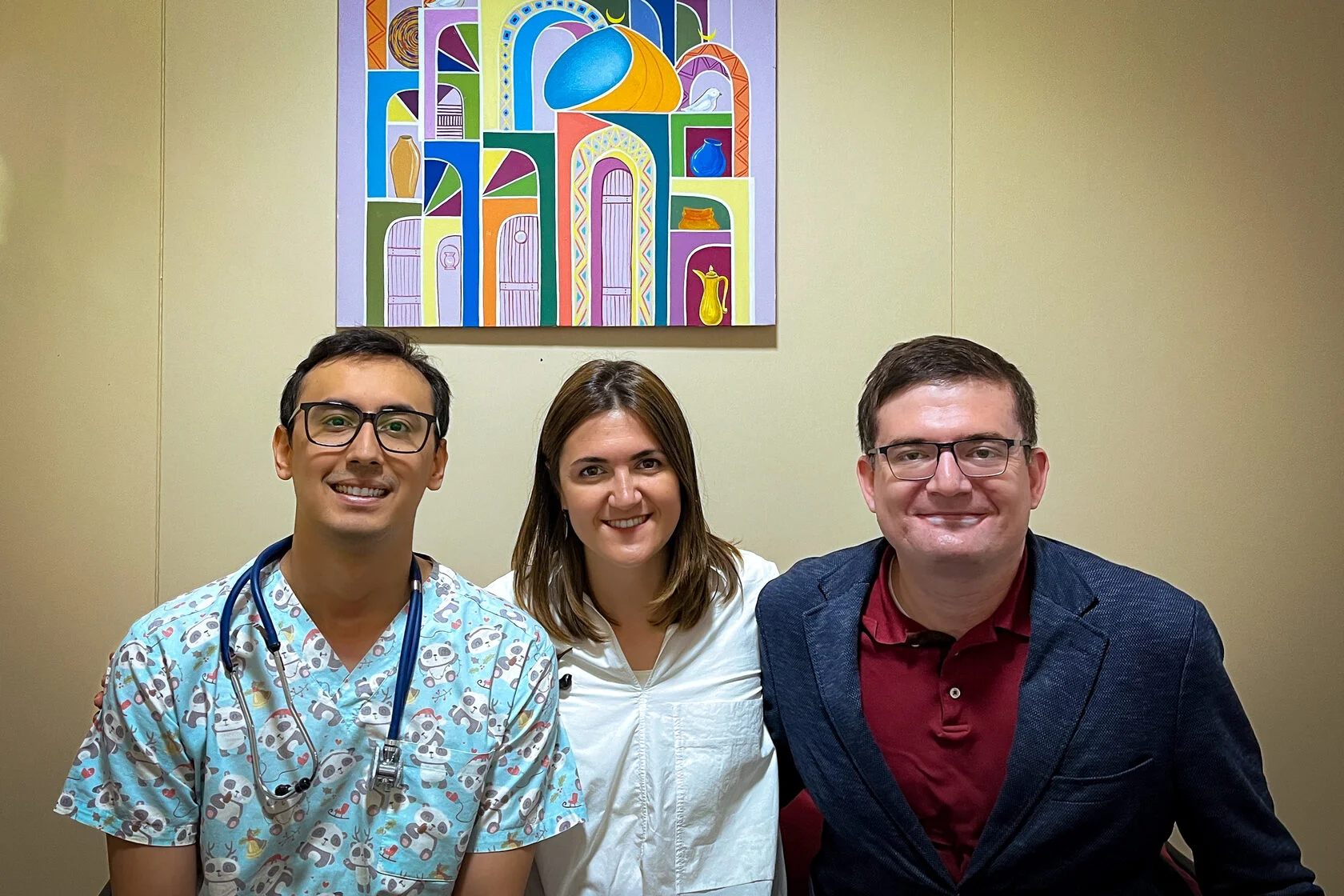
This year, we are launching the cancer register system, which is our brainchild. We decided to focus on developing areas with acute needs. Bringing and implementing a Gamma Knife, CyberKnife, or proton therapy in an unprepared infrastructure is not entirely rational, so we are moving in this direction.
Ira: You are fully involved in curing and accompanying patients at the end of life. Do these two approaches conflict?
Yakhyo: Undoubtedly, they do. But, as is known, palliative care starts with diagnosis. We have already established palliative care services within oncology — providing 200 palliative care beds across Uzbekistan, in all our branches, and here at the centre. I oversee this service. A new hospice is set to open in Tashkent soon, and we are eagerly anticipating it. I still see patients, but most of my time goes into addressing organisational matters. Still, establishing a hospice is not the same as creating a full-fledged palliative care structure.
We are working with the social protection agency to expand our services to other fields. Globally, oncology accounts for about 30% of palliative care, while the rest involves neurodegenerative diseases, gerontology, etc. But in Uzbekistan, it happened that oncologists began implementing this system. I understand this is not uncommon.
Ira: What is the current state of non-oncological palliative care in Uzbekistan?
Yakhyo: It’s lacking; it simply does not exist. Such patients are treated in specialised facilities, but when medical help is no longer possible, these clinics try to avoid admitting them. Unfortunately, patients are left alone with their pain, grief, and problems, which is troubling me.
There is a development strategy for Uzbekistan until 2030, under which we set the goal for hospices to be present in all regions based on actual needs. There are only four hospices in Uzbekistan, five if you count the children’s hospice. So, we are starting with oncology because it’s urgent, but we do not plan to stop there. We will extend palliative care services to other areas.
Ira: In your opinion, what percentage of adult patients who need palliative care receive it?
Yakhyo: Approximately 10% to 20% of palliative patients receive high-quality palliative care, while the rest do not get enough of it. There are direct figures: the number of treated patients, the number of patients who have passed through palliative departments, and indirect indicators, such as “morphine consumption,” meaning morphine use per capita in Uzbekistan. Worldwide, this figure is around 5 milligrams per capita, while in Uzbekistan, in 2020, it was 0.04 milligrams — catastrophically low.
This means that people here die in pain, and that is partly our fault.
When the resolution on palliative care was issued in 2017, I didn’t yet have deep knowledge of its organisation. We thought establishing 50 beds in one region and creating an interregional department would be more efficient back then. Now, we understand that this is not the case. Uzbekistan is a large country, and travelling 200 km from Kashkadarya to Samarkand with a palliative or hospice patient is simply unreasonable. We acknowledge our mistake and plan to optimise and structure everything by 2030.
Ira: Could you tell us a bit about the hospices that already exist in Uzbekistan?
Yakhyo: A hospice was established in Khorezm in 2012. Initially, until 2018, it was more like a nursing home, but we reorganised it, trained the staff, and it began functioning as a full-fledged hospice. The Taskin Hospice appeared in 2022. The third hospice opened in Samarkand in 2023. The fourth and fifth hospices are in Fergana and Tashkent. They are in the final stages. We say they exist, but they are currently in the launch phase. They will start operating at the beginning of 2025. Everything is moving fast, but we wish it were even faster.In 2022, Uzbekistan secured a large concessional loan from the Islamic Development Bank, including for the organisation and development of palliative care. Previously, such funds often got stuck somewhere, rarely reaching their intended purpose. But now everything is strictly monitored by international UN organisations: procurement through UNOPS and the development of palliative care in collaboration with WHO.
Ira: How did you manage to launch such rapid development?
Yakhyo: First of all, the state changed. Do you remember the model for palliative care development? Access to medications and human resources, and overarching it all, like an umbrella, is political will. That is what worked initially. Previously, all attempts to develop palliative care ran into the narrative that our oncology is the best and no one dies of cancer here. Finally, the state stopped deceiving itself, and the Constitution was amended to enshrine that we are a socially oriented country where human dignity is central. Palliative and hospice care emphasise this more than anything else.
Secondly, people. We need people, specialists, and human capital. Everything has to come from within; we need to understand that palliative care is necessary. That is what we have been moving toward for years.
Thirdly, when realisation comes, you need somewhere to draw information from. For Uzbekistan, this is an entirely new field, a new structure, a new philosophy, so to speak. This is where international partners, organisations, and international cooperation came to our aid. With their help, we understood how to develop correctly, where to move next, and what to do.\
Fourth — and I think this is the most important — is persistence. When you do something new, people resist it. Rustam and I went around collecting signatures. When the Cabinet of Ministers’ resolution was being formed, I waited for the deputy minister in the parking lot to talk and get a signature; otherwise, it wouldn’t move forward.
When we opened Taskin, we encountered people of the old school who believed that we would turn children into addicts and pump them full of opioids. I told Rustam that the main thing is to show perseverance and that we would not leave until we achieved our goal. And if something didn’t work out, we would go to the media.
Ira: When will the Tashkent hospice open?
Yakhyo: That’s a good question! Everything is almost ready. If there’s no progress by December 1, we will go there with journalists and do a big report on the delay. But we were promised that the hospice would open in January next year. I hope a video conference will be held directly from the new hospice in early 2025.
We have big plans. With the support of international colleagues, we plan to make the Tashkent hospice an educational centre for palliative care specialists, not only in Uzbekistan but throughout Central Asia. We have already discussed this with Gulnara Kunirova and Taalaigul Sabyrbekova.
Ira: What is currently lacking in the education of specialists in medical universities in Uzbekistan, in your opinion?
Yakhyo: Unfortunately, a major issue is communication with patients. In our universities, students are taught that medicine is powerful, that we can always cure everyone, and that patients should never be told what their illness is. Even in our Taskin hospice, people come with stage four cancer, and no one has informed either the patient or their relatives that this is palliative care, that this is the end of life. They are shocked that they were never told anything before.
The second issue — specific to palliative and hospice care — is the intense opioid phobia that is present in many post-Soviet countries. We are very hesitant to prescribe opioid analgesics. If we do, we often do it incorrectly: there is no competence, no skills to titrate opioids properly, to prescribe them correctly, and to maintain the right dosage.
Until this year, there was a limit on the issuance of opioids — no more than 21 ampoules per prescription, which was a nightmare because patients were always left without enough. Moreover, opioids are only issued in central clinics, so some patients have to travel long distances to get a prescription and pain relief.
Both of these components need to be integrated into the educational program. By the way, after an article in Gazeta in which I discussed this, some progress has been made. We are now revising the bioethics course that second-year medical students take, orienting it toward communication with patients.
Ira: Do you plan to create a dedicated course or specialty in palliative care at a medical institution?
Yakhyo: We have already opened a department of oncology and palliative medicine. In the future, it will be based at the new hospice in Tashkent, but for now, it is at the city oncology branch.
We are also preparing a package of documents to include palliative care in the Health Law of the Republic of Uzbekistan. The law has not been revised on a large scale since 1999, but it is now in the plans, and we want palliative care to be listed there as one of the components of medical care. Right after that, we must include palliative care specialists and palliative care nurses in the professional registry at the Ministry of Labor. All this is planned for 2025. Moreover, we want to give these specialists — doctors and nurses — a status equivalent to resuscitation specialists because their emotional workload, if not more significant, is certainly not less.
Ira: Whose support has helped you influence such significant processes, and how did you secure that support?
Yakhyo: Unfortunately or fortunately, over the last 9 years, we have had nine health ministers. But we have public support. This month, we had a week of awareness in the field of palliative and hospice care. All TV channels dedicated prime-time slots to palliative care issues for an entire week. A week later, we reinforced this with a radio appearance. The media supports us, and influential people in society do as well.
Ira: Which organisations and palliative care specialists do you look up to on your path?
Yakhyo: Of course, IAHPC and WHPCA, as well as the Palliative Care Association, particularly Diana Vladimirovna Nevzorova. Also, Fundacja Hospicyjna — a hospice oncology foundation in Poland — has greatly impressed me. As for specialists: Diana Vladimirovna, Eric Krakauer, Stephen Connor, Julie Ling, Gulnara Kunirova, Taalaigul Sabyrbekova, and Andrzej Ryś from Poland — dedicated individuals who not only develop palliative care in their own countries but also contribute significantly to its advancement worldwide.
Ira: You have learned from specialists from international organisations and aim for global standards. Both you and your colleagues, the people you train, are carriers of Western-style methods that do not always align with Uzbekistan’s cultural code and traditions. Do you feel points of tension? How do you adapt work methods to the practice of your country and the people of Uzbekistan?
Yakhyo: Humanism is, after all, cross-border — humanism is humanism, whether in the USA, Israel, or Uzbekistan. You are right; I learned what I later applied to create the Taskin Children’s Hospice at St. Jude Clinic in the United States through the EPEC and ELNEC programs.
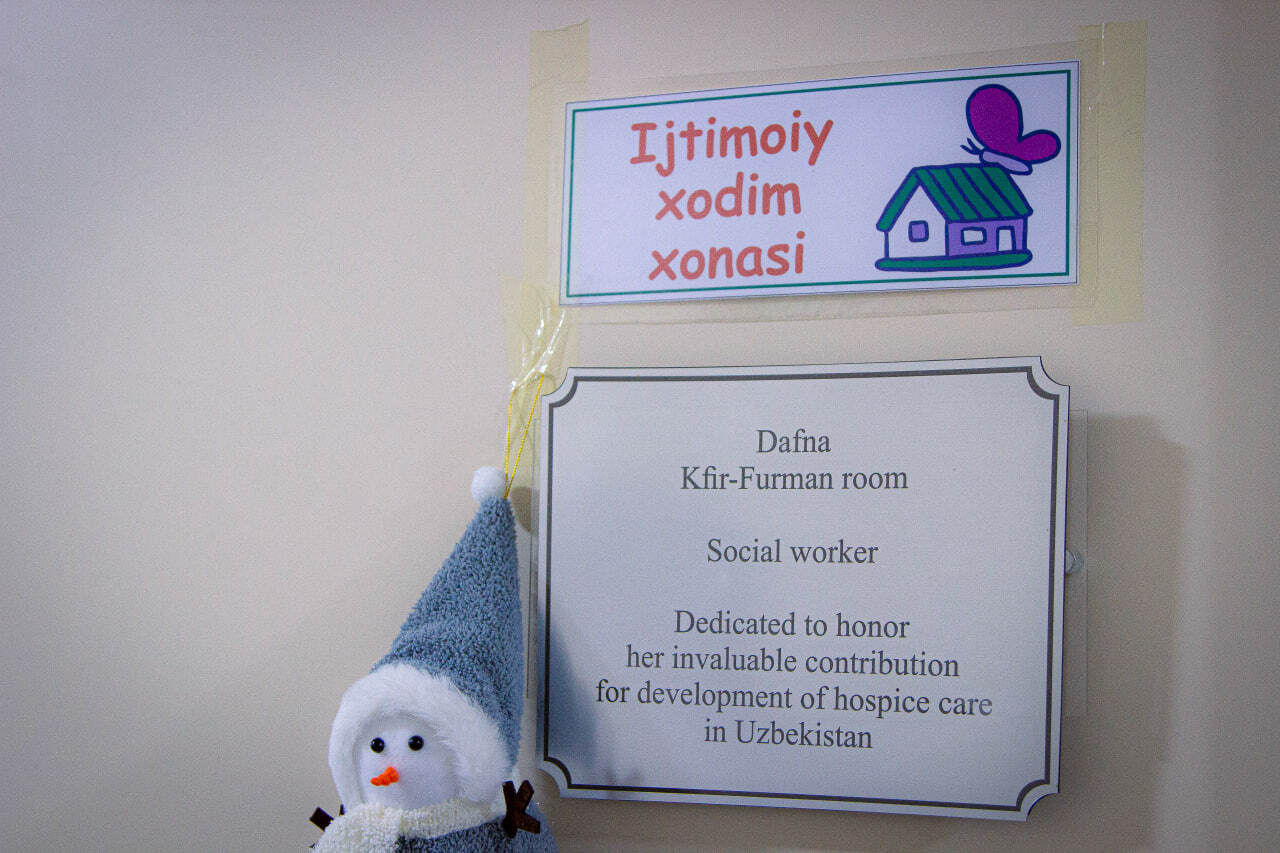
When opening Taskin, we were assisted by wonderful Israeli partners — Dafna Kfir-Furman and Ron Sabar — with whom we conducted three-level training for our specialists.
We did not encounter much resistance from patients. On the contrary, they appreciate that we engage with them more. However, colleagues and patients’ relatives are resistant.
For example, when I am about to go in and tell a patient that they have incurable cancer, their relatives won’t let me. Why? Because they think it will upset or anger them. But that’s a normal reaction! I have to talk to the family and explain the stages of grief according to Kübler-Ross.
The same is true for some colleagues. They think the patient isn’t ready. They fear the patient will commit suicide or file a lawsuit. I understand some of their fears: there have been cases where patients committed suicide, but it wasn’t because they were informed about their illness but because they were told there was no way to help.
ehospice is proud to be a communications partner with PACED and we regularly republish articles from their site. Working together we seek to increase awareness of and access to hospice and palliative care programmes.
PACED articles recently published in ehospice include:
https://ehospice.com/editorial_posts/women-will-save-the-world-i-believe-in-it/


Leave a Reply