

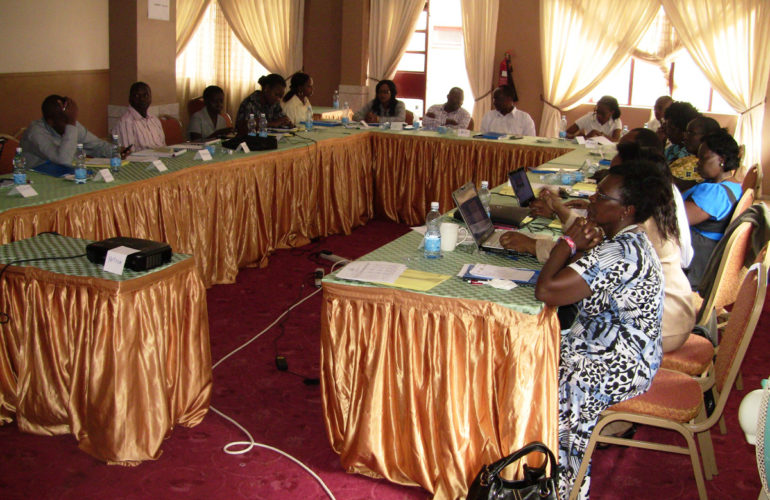
Lecturers and tutors from
training institutions converged in Nairobi for a four day workshop on teaching
methodologies in palliative care through the collaboration of African Palliative Care
Association (APCA) and Kenya Hospices and Palliative Care
Association (KEHPCA) with support from Diana Princess of Wales Memorial Fund.
Palliative care consultant
from APCA, Irene Kambonesa said that the training aimed at equipping the tutors
with knowledge on how to impart knowledge to health care trainees at various
training institutions.
“I believe you have learnt
a lot from us. Take the good things you have learnt from us for the last four
days and pass it on to others,” said Kambonesa.
KEHPCA Executive Director
Dr Zipporah Ali said that palliative care is being integrated into public
hospitals hence the need for more trained health care workers to take up the
task of providing palliative care to patients with life threatening diseases
calls for such a workshop.
“I hope this training has
improved your interest in palliative care so that once you go back to your
stations, you will be able to pass on this noble skills.” Dr Ali said.
Judy Johnson, an oncologist
from the USA consulting for Daystar University said she was pleased with the
progress of palliative care in Kenya.
“Having nurses understand
palliative care is so important,” said Johnson. She added that they are trying
to create a program for health care workers to care for patients at home by instilling
confident in them as most patients do not want their families to have full knowledge
of their illnesses.
As for the trainees,
Gilbert Sigei from Tenwek Hospital said that the course has simplified palliative
care concepts and made it an interesting field to work in. “The forum was
lively and we felt part of the training team,” he added.
Gladys Owira, a nursing
lecturer from the Great Lakes University, Nairobi Campus said that in class,
some of her palliative care students are positive about the course while others
are negative.
“I think it is because they
have not had a practical encounter with patients who need palliative care. I
commit myself to propose placement of our students in a hospice setup to my
colleague so that they practice what they have learnt.”
She said she thought she
understood all training methodologies but the workshop has enlightened her of
two more areas; scalping and problem based methodologies.
“We in the medical field need
this knowledge because we are in touch with these patients, directly or indirectly. I feel many people
are lacking knowledge about palliative care,” said M/s. Owira.
Dennis Nyambane from Kenya
Red Cross is a trainer in palliative care. He said that Red Cross is running a
hospital in Dadaab Camp and there is a need to take care of terminally ill
patients.
“This course has come in
handy and I am planning to do some Continuous Medical Education sessions on
palliative care for the health staff and health assistants at the hospital.”
Mr. Nyambane said.
KEHPCA Education and
Research Officer Dr Asaph Kinyanjui said that the workshop presented a platform
of equipping lecturers and tutors with appropriate knowledge, skills and
attitude for them to effectively train palliative care.
Topics covered during the
workshop include problem based learning, clinical placements/tools, role play,
cooperative learning, care based learning and case conferences among others.


Leave a Reply