

Researchers have spent the last five to ten years researching and highlighting the significant mismatches between patient and carer expectations and actual provision in palliative care in England.
Meanwhile, hospices and others have been exploring alternative ways in which care can be delivered for patients who are in their final weeks and days of life. This very much includes carers and families being at the bedside and being involved in decision making and care. We want to move that involvement further on.
Hospitals will not be able to cope with the forecasted increase in the numbers of deaths in the next 20 years and, in any case, up to a third of those questioned in England would prefer to die in a hospice.
Alongside this research is a great deal of evidence that carers and families want to be actively involved particularly as their relative enters the dying phase – distress is lasting when they feel they have not been able to obtain a good death for their relative.
In working with patients with a terminal diagnoses needing end of life care (defined as the last year of life) and their cares and families, the cottage hospice will seek to prepare all those involved to play their chosen role.
Why cottage hospice?
The ‘cottage hospice’ is an innovative concept first explored in the Demos report ‘Dying for Change’. [1]
The case for cottage hospices is really about patient choice and ensuring there are additional options to the conventional ‘choice’ of either dying in hospital, in a hospice ward or at home. Most hospices accept that we are not about buildings but about a philosophy of care and this idea is no different.
People have powerful, and largely unacknowledged, wishes about how and where they would like to die, and loved ones often become distressed knowing their relatives have not experienced a ‘good death’ – generally defined as a death that is dignified and without pain.
However, many of us involved in the hospice movement see this as without ‘total pain’ in the way Dame Cicely Saunders described, rather than only physical pain.
For some people, because of the nature of their illness and the severity of their symptoms, hospital will be most appropriate environment for them. Equally, some patients with complex needs require the highly specialised palliative care offered by most hospice inpatient facilities.
For many patients, home is the much preferred place of death and, if this is possible, it may be the best option for patient, carers and family. However, home may not necessarily be the most suitable option in all circumstances.
Homely, supportive and cost effective
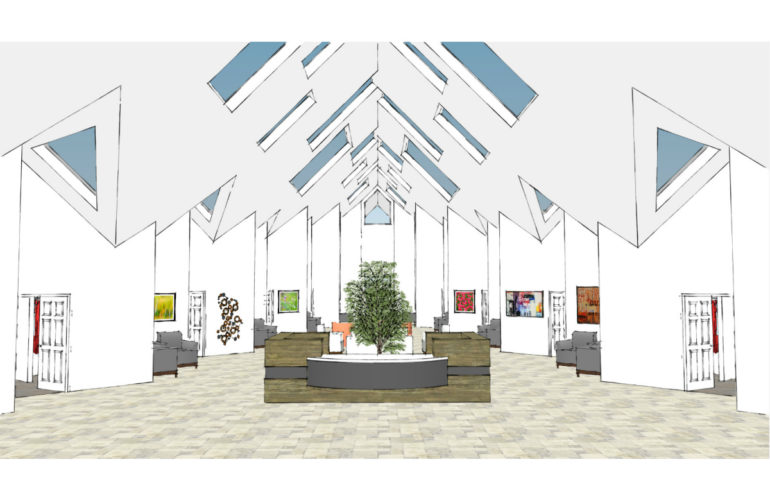
The cottage hospice is not intended to replicate the specialist hospice offer, but to exist in addition to the other traditional services offered by Hospice in the Weald.
Instances where patients might benefit from the cottage hospice include cases where the home environment is not right for whatever reason: perhaps it is too small or crowded; perhaps the washing, toileting and cooking facilities are unmanageable for carers and nurses; or perhaps the main carer cannot cope. In many circumstances, the comfort and welfare of the patients is not best served in the home and hospice at home care professionals are seriously impeded when trying to deliver care.
The cottage hospice will provide a cost effective model of care in a caring and supportive environment for patients, families and carers preventing unnecessary (and undesired) transfers to more intensive hospice inpatient facilities while still offering the best in hospice care.
We will make the cottage hospice more homely by (among other things) having a number of rooms with double beds so partners can spend their last hours close to each other.
Our business case suggests our cottage hospice can deliver hospice care for less than half the cost of specialist care on our own inpatient unit and we know our own costs are already well controlled.
Learning to care
This ground-breaking and crucial part of the cottage hospice concept is aimed at preparing families and carers – in terms of their knowledge, skills, hands-on competences and psychological and emotional preparedness – to play an active role at the bedside of the patient. It’s about empowerment.
Learning sessions will include:
- what to expect and how to manage the personal challenges involved
- patient symptom relief support, eg how to assist in managing pain, breathlessness and fatigue
- how to undertake various procedures, such as dealing with injections, how to lift and move patients, how to wash patients and see to oral hydration
- how to handle participants’ own emotions, psychological needs and personal self-care (eating, resting, getting support and so on).
Making best use of volunteers
Volunteers have always been crucial to the Hospice in the Weald workforce and this will become increasingly so as the need for hospice care grows.
As a charity, with around 11% of total costs coming from government, the only way to extend our coverage of those with a terminal illness is to make best use of volunteers and use staff time efficiently and effectively.
Patients identified as being suitable for the cottage hospice will be those with ‘low-complexity’ needs.
The staffing of the cottage hospice will be ‘nursing facilitated’ and volunteer-led, with no consultants or doctors on site. The key will be nursing assistants and volunteers.
Skilled volunteers who have appropriate training will form a key part of the workforce by being able to take an active role in nursing patients and helping to support families and carers who are actively looking after their loved ones.
The next steps
Hospice in the Weald has been working closely with its own staff to develop the core concepts and has asked designers M E Cassam to draw up plans to match the internally-generated brief. The hospice’s organisational development lead has been designing the syllabus for the ‘learning to care’ programme. We plan to get on site and start building within the next six months.
References
- Leadbeater C, Garder J. Dying for Change. London: Demos; 2010. Available from: http://www.demos.co.uk/project/dying-for-change/


Leave a Reply