

The joint declaration sets out the group’s ambition to ensure that people living with dementia, and their families and carers, have the right information and support so they can live as fulfilling lives as possible, prepare for the future and ensure their preferences for end of life are acted upon.
So far there are 17 signatories, including the Department of Health and Public Health England, charities such as Alzheimer’s Society and Age UK, and a couple of individuals – such as campaigner and consultant Beth Britton.
The declaration outlines the signatories’ shared commitment to joint action across government, health, social care, the third sector and all other relevant partners and the need to deliver integrated and effective services.
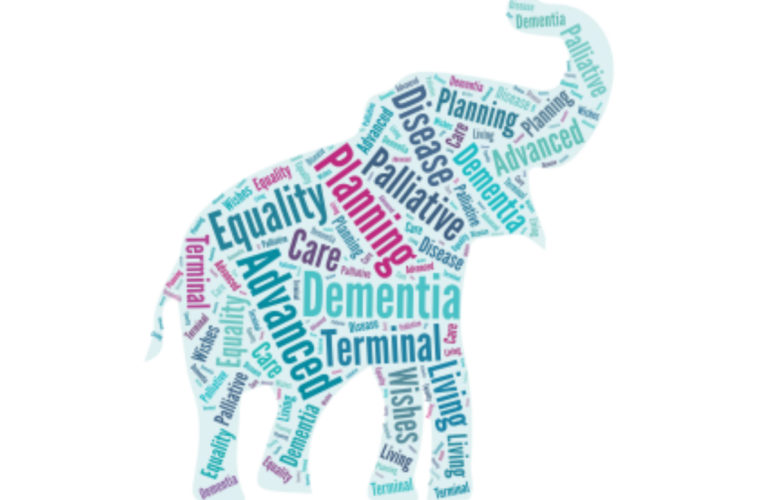
Why the elephant?
One of the declaration’s signatories Dementia UK has been working with Hospice UK to improve palliative and end of life care for people affected by dementia.
Last summer we launched the Dementia end of life care special interest group, a highly interactive forum for practitioners working in the fields of dementia and/or palliative and end of life care.
The forum brings together practitioners and clinical leaders to share skills and knowledge and build their confidence in providing high quality palliative and end of life care for individuals affected by dementia.
At the group’s most recent meeting last month, Professor Claire Goodman from the University of Hertfordshire shared her research on the complexity and associated uncertainty in prognosticating and how this affects care planning for the older frail person, especially with dementia.
Lindsey Collins, dementia care consultant at Bradford University, showcased a range of creative approaches to communication and how vital it is to find ways to ‘connect’ with a person with severe cognitive impairment and for those who care for them, especially the family.
There were also excellent presentations from four group members who are leading locally on dementia related care: Sue Martin from St Michael’s Hospice, Helen Reeves from St Giles Hospice, Louise Eagle from Douglas Macmillan Hospice and Sian Harrison from St Luke’s Hospice & Winterley Grange in Cheshire all shared their approach and the successes and challenges within their service.
Sian shared her ‘elephant’ with us (see above) which illustrates her experience of the stigma she encounters around the ‘double d’ needs: dementia and dying. In her role she encourages social and healthcare colleagues to initiate timely conversations with those in their care.
Her observations resonated with others, suggesting there is a real opportunity to provide support to our colleagues in the wider community to build their confidence and skills with initiating timely conversations for those in their care.
Hospice enabled dementia care
Along with the launch of the special interest group, Hospice UK published a much welcomed and valued resource designed to help hospices support people affected by dementia.
Our guidance stresses the importance of symptom management and the provision of comfort for anyone with dementia, regardless of anticipated prognosis, and suggests hospice care has much to offer people affected by such a diagnosis.
It also argues that hospices should build skills and relationships so they can offer “hospice enabled dementia care” and identifies actions hospice leaders can take to introduce and develop such an approach.
The guidance mirrors the ambitions of the joint declaration published this month, so those who are signed up to using this resource can be reassured they are supporting this national cross-organisational initiative.
Visit Hospice UK’s website to download the free resource ‘Hospice enabled dementia care – the first steps’ and to find out more about the special interest group.
To find out more about the ‘Joint declaration on post-diagnostic dementia care and support’ published this month, visit the government website.


Leave a Reply