

Parkinson’s disease is a neurodegenerative, life-limiting disorder. Many people live well and independently with their disease. However, about 15% of all people with Parkinson’s disease are likely to be in the palliative phase (1).
People in the advanced stages of the disease struggle with complex needs including challenging symptoms such as pain, fatigue, problems with swallowing, weight loss, continence issues, declining physical function, immobility, falls, recurrent infections, weight loss, anxiety, depression and dementia.
Carers’ needs may also be great due to complex care requirements which have grown incrementally over many years.
As the disease progresses, patients may be too unwell to travel to a hospital clinics and so can lose contact with their Parkinson’s specialist teams.
Health professionals looking after them may have limited knowledge about the complexities of managing advanced Parkinson’s disease. This often means that needs are not anticipated, identified or met; impacting negatively on quality of life and often resulting in inappropriate admissions to hospital.
Despite calls for improved access to palliative care for people with Parkinson’s disease, research shows that people with the condition are much less likely to have had the opportunity to make informed decisions about their care and treatment in advance, or to have had input from specialist palliative care services (2).
Barriers to accessing specialist palliative care for people with Parkinson’s disease are widespread. Fear of being inundated, lack of knowledge of the condition and longevity on caseloads are all concerns for hospices.
Getting started
Our service was first launched in 2010 – a nursing grant from the Burdett Trust, administered through Hospice UK, supported its early development.
Initially, key stakeholders met to define the service, consider how to tackle barriers and to agree referral criteria, communication links and the mechanisms for the service to function.
Teaching and additional clinical resources were also developed to support ongoing education of staff and volunteers involved in the care of people with Parkinson’s disease.
Agreed criteria for referral:
- advanced disease; unstable or with rapid deterioration
- complex symptoms related to neurological disease; physical, cognitive and psychological
- repeated crisis events or infections related to neurological disease
- future care planning and/or mental capacity concerns with regard to healthcare issues.
The Scarborough model
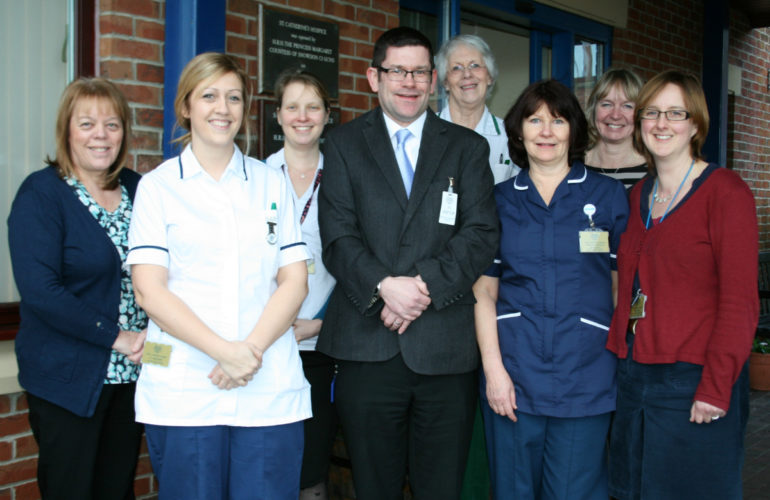
Eligible patients are identified by (and remain under the care of) their movement disorder specialist; benefiting from the expertise and perspectives of both services working in partnership.
Patients are allocated a palliative neurology nurse specialist as their key worker and are supported in any setting (mainly at home) with full access to hospice services.
In addition to complex symptom management, patients and families are supported to consider their prognosis and future care needs – empowering them to establish their own priorities and wishes through advance care planning or best interest decision making.
Clear lines of communication have been established between the two teams, allowing timely access to each other’s expertise, including a monthly clinical meeting where both teams get together and have the opportunity to discuss referrals, support complex management plans and explore end of life issues.
Evaluating the service
Positive feedback has been received from patients, carers and professionals.
Members of both teams have reflected that the integrated model of care has allowed for them to further develop their own knowledge and skills in the management of people with advanced Parkinson’s disease.
We have learnt so much about the needs of this group of patients and their families, of the many challenges they face towards the end of life and, importantly, that hospice care does have much to offer this group without being overwhelmed.
A recent audit found that, of the 74 patients who had been referred to the service, 63% were living at home and 75% had significant cognitive impairment. Many of the patients (42%) had accessed inpatient hospice care, including for respite care.
At the time of the audit, 40 (54%) patients had died and 85% of these patients had an advance care plan or best interest decision in place, protecting their end of life wishes.
The service has also had a significant impact on place of death with only 20% dying in an acute hospital, compared to a 43% average in England. Also, 20% died in the hospice (0.6% nationally) and 60% died in their own home (including care home), compared to 45% nationally (3).
The wife of one patient describes their experience of the service: “The hospice and its services, the Parkinson’s clinic and carers meetings have had such a positive impact on our lives…having this back up and knowing it will be there in the future has been a life-line and has made what, at times, has been an almost unbearable situation far more bearable.”
References
- MacMahon DG, Thomas S. Practical approach to quality of life in Parkinson’s disease: the nurse’s role. Journal of Neurology. 1998; 245(Supplement 1):S19-S22.
- Richfield EW et al. Palliative care for Parkinson’s disease: A summary of the evidence and future directions. Palliative Medicine. 2013; 27:805.
- Sleeman KE et al. Place of death, and its relation with underlying cause of death, in Parkinson’s disease, motor neurone disease, and multiple sclerosis: a population-based study. Palliative Medicine. 2013; 27(9):840-6.


Leave a Reply