

Pain, other symptoms,
and psychosocial distress are highly prevalent among patients with serious
chronic diseases such as cancer and HIV/AIDS and can greatly reduce quality of
life.
Palliative care
focuses on relief of such suffering and on maximizing the quality of life of
patients and their families. Yet, in resource limited settings such as Rwanda, it
is rarely accessible.
This is partly
explained by the lack of opiate availability, but also because of the little training given to providers.
But action is being
taken to rectify this in Kibagabaga Hospital in Gasabo District. The hospital supervises
16 health centers and one prison. The catchment area is 60% of total population
of Kigali city, this is about 585,435 habitants. The hospital also supervises
481 villages in Gasabo District and 1456 community health workers in charge of
different health program in the community.
Kibagabaga hospital is
one of the sites chosen by THET (Tropical Health Education Trust, Partnerships
for World Health) for their programme to strengthen and integrate palliative
care into national health systems in four African countries. This project is a partnership between The
University of Edinburgh, MPCU (Makerere Palliative Care Unit) and APCA (African
Palliative Care Association).
Part of the project is
to send international palliative care experts to mentor in the chosen
hospitals.
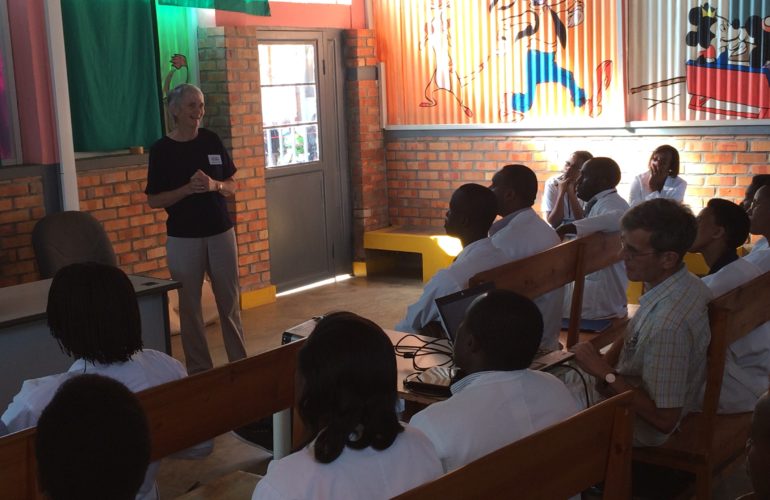
For the past 2 weeks
Dr Karilyn and Dr Richard Collins have been mentoring the palliative care team
and other staff at Kibagabaga. Karilyn is a palliative care specialist with experience
of starting palliative care in several sites in Tanzania. Richard is a
physician with an interest in tropical medicine and palliative care. They have
worked together in Tanzania for many years.
The mentorship
included doing ward rounds with senior doctors and interns, some of whom were
already experienced in palliative care and others who had recently been trained
or had no formal training at all.
The process involved identifying
palliative care patients and looking at the palliative care needs of other
patient’s. It also served as an opportunity to share knowledge and skills. In
the afternoon the two trainers held workshops on subjects like end of life
care, bereavement, breaking bad news and pain control.
Kibagabaga hospital is
already a centre of excellence in palliative care and it will have benefitted
from the mentorship experience provided through THET. One intern Doctor who had
palliative care training in January said, “In the time I have spent with
mentors I have improved my skills. The experience I have gained will help me in
my practice”.
I remember someone else
said, “The question is not “can you wear your father’s shoes?”. The
question is “can you walk in your father’s shoes?”. It is one thing having
a mentor and it is another thing to become like your mentor.”


Leave a Reply