

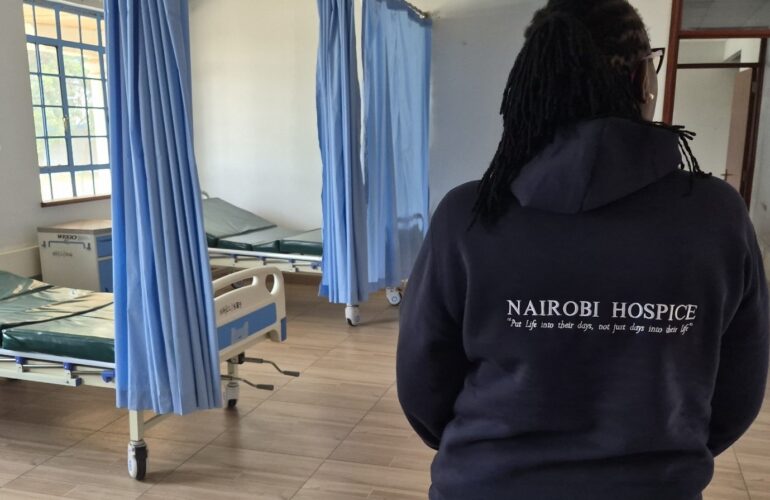
Illness has a way of making the world smaller for the patient. But what if, when the world can no longer be reached, care could find its way to your door? What if someone could come?
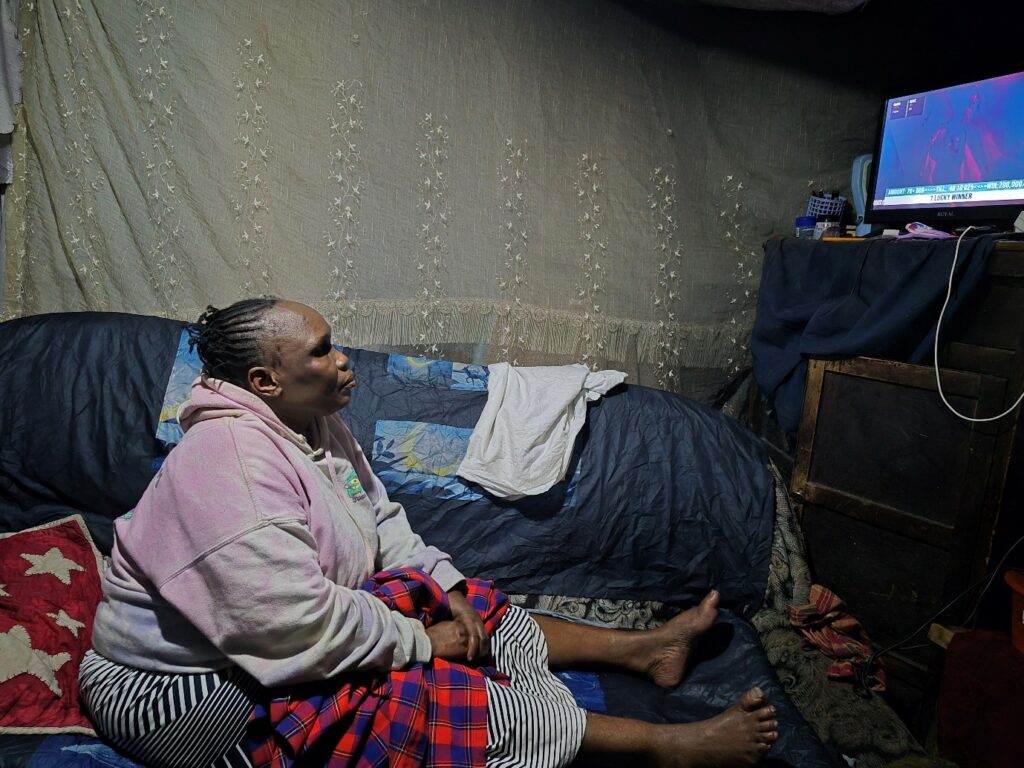
For families in Korogocho community, someone does come. It might be a nurse arriving at the door of their home, bringing care to where they are rather than asking them to travel for it. They may not have to find money for transport across Nairobi, carry a frail relative to a health facility, or wait until pain becomes unbearable before asking for help. When illness makes the journey to care difficult, sometimes the answer is simply to bring care closer.
And this is one of the simplest ways to understand what palliative care can make possible.
At Nairobi Hospice, community-based palliative care has meant taking clinical and emotional support beyond the walls of the hospice and into the places where people live. A multidisciplinary team of doctors, nurses and social workers travels into the community, managing pain and other symptoms, supporting families, treating infections, helping people cope with grief and visiting patients who are too weak to make the journey to a health facility.
For the person receiving that visit, the significance is not necessarily found in the size of the programme or the number of kilometres covered. It may be found in something much more ordinary: someone came.
A caregiver can ask a question that has been worrying them for days. A patient can receive help without leaving home. A family can be shown how to respond when symptoms become difficult to manage. Someone who might otherwise have remained unseen can be identified and connected to care.
In these moments, palliative care becomes less about a service that exists somewhere and more about care that is actually within reach.
That distinction matters because serious illness rarely affects only the person who has been diagnosed.
It can change how a family sleeps, works, eats and plans for the future. It can place new responsibilities on relatives and create emotional and financial pressures for households already trying to cope with everyday life. For people living in communities where transport is expensive and specialist services may be far away, simply getting to care can become another burden.
Nairobi Hospice began extending its services into communities where that distance could make specialist palliative care difficult to access.
Korogocho became one of the communities to benefit from this approach. Home to an estimated 200,000 people, the informal settlement had a growing need for services that could reach people where they lived. Nairobi Hospice worked with local authorities to establish a satellite clinic serving eight villages, while its multidisciplinary team travelled into the community each week.
The model changed the question from whether palliative care existed to whether it could be brought close enough for people to use it.
A patient did not always have to make the journey to the hospice. A caregiver could receive guidance without navigating the city with a sick relative. Someone too unwell to travel could still be assessed and supported at home.
As the service became part of the community, access also began to mean familiarity. People could get to know the team coming into their neighbourhood. Families could become familiar with where to seek help, while Community Health Volunteers could learn to recognise people who might need palliative care and connect them to appropriate services.
That relationship can be important when illness has already made people feel isolated.
Knowing who to call can make it easier to seek help before pain becomes overwhelming. Knowing that someone will come can give a caregiver confidence that they do not have to manage every difficulty alone.
The value of this kind of care is perhaps easier to understand when you step inside the hospice itself.
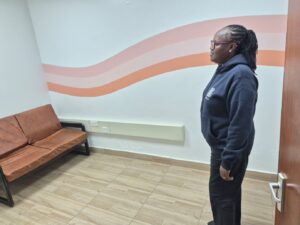
Stella Kathambi, a palliative care specialist at Nairobi Hospice, pauses at the doorway of a small room where patients and families sometimes come simply to cry.
There is nothing particularly clinical about it. A modest sofa. Two chairs. Soft light. No examination couch, no monitors sounding alarms, no smell of antiseptic.
Yet people come here carrying some of the heaviest parts of serious illness.
“I’ve seen people walk into this room carrying months of pain they didn’t know how to express,” Kathambi says. “Sometimes they sit quietly for several minutes before saying a word. Sometimes they cry the moment the door closes.”
Over the years, she has watched husbands finally surrender to the exhaustion of caring for wives with advanced cancer. Mothers have sat before her trying to understand what sickle cell disease will mean for their children. Daughters caring for ageing parents with heart failure have realised, sometimes for the first time, just how exhausted they have become.
“People spend so much time trying to be strong for everyone else,” she says. “This room is often the first place where they feel they don’t have to.”
The room offers another way of understanding what palliative care can do.
It is not only about treating pain, although pain relief remains an essential part of care. It is also about creating space for the fear, uncertainty, grief and practical difficulties that serious illness brings with it.
At Nairobi Hospice, counsellors sit with patients and families, while social workers help households navigate financial strain, disrupted livelihoods and changing family roles. Nurses and doctors prepare caregivers for responsibilities they may never have imagined carrying.
Sometimes, the conversation itself becomes part of treatment.
And sometimes, what a person needs most is simply to know that they do not have to carry everything alone.
But bringing care closer and making it more responsive to the realities of people’s lives, requires more than a clinic, a visiting team and a willingness to serve.
It requires continuity.
A nurse needs to be able to make the home visit. Medicines need to be available when they are required. Community workers need to know what to look for. Referrals need to connect patients to health facilities when more specialised care is needed.
Without those links, the pathway to care can narrow again.
By 2020, Nairobi Hospice reported that the need for services had grown beyond what its clinical team could manage alone, at a time when funding was also becoming more difficult to sustain. The organisation engaged volunteer doctors and nurses to help review some patients and worked with Community Health Volunteers, equipping them with basic palliative care knowledge so they could identify patients, provide basic support and refer them to the hospice or nearby health facilities.
The model was there. The need was there. But maintaining the connections between the two was becoming increasingly difficult.
It was at this point that support from the True Colours Trust, through the African Palliative Care Association, became part of the response.
The grant supported Nairobi Hospice’s community-based care through home visits, outreach, medicines, personal protective equipment and stronger links between community services and health facilities.
In the first half of 2021, more than 300 adults and 15 children received palliative care, while about 500 families were reached. Home-based visits increased from three to five each week, and the service area expanded from about 20 kilometres to almost 40 kilometres. Twenty Community Health Volunteers were sensitised, and one volunteer alone referred more than 10 patients, including five children living with sickle cell disease. Medicines were also provided to 300 patients who needed them.
But the value of the grant did not end with the activities recorded during the funding period. According to Stella Kathambi of Nairobi Hospice, the grant helped lay the foundation for an outreach programme that continues to operate today. Half of all patients currently served by the hospice come through the outreach programme, making community-based care a significant part of how Nairobi Hospice reaches people.
What began with support for home visits, community sensitisation, medicines, protective equipment and stronger links between community services and health facilities has become part of a continuing model of care.
The grant did not remove the difficulties created by serious illness, poverty or limited access to healthcare. What it did was help keep a pathway to care functioning, allowing Nairobi Hospice to reach people in their homes and communities rather than waiting for them to find their way to the hospice.
The value of community-based palliative care is not simply that services have moved outside a building. It is that care has become part of the places where people live, making it possible for serious illness to be met with support rather than leaving families to navigate it entirely on their own.


Leave a Reply