

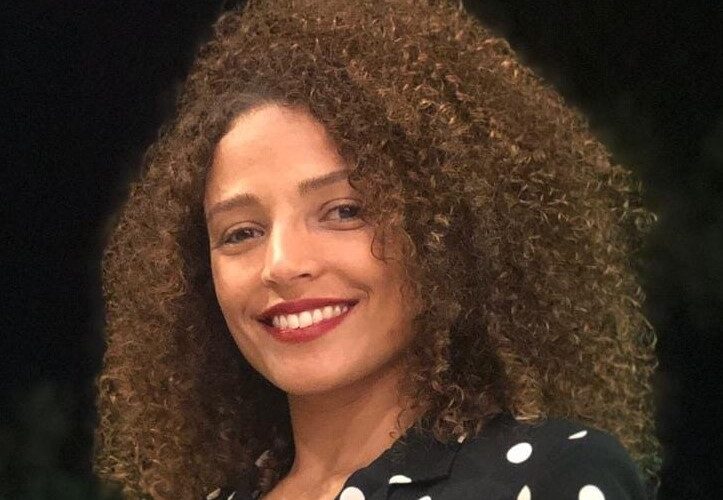
By Farah Demachkieh: When we are expecting a newborn, we prepare beforehand for months and sometimes more. We prepare ourselves physically, emotionally and financially. We talk about it with everyone. We talk about how excited and overwhelmed with all the preparations. We are over the moon.
We celebrate birth despite the pain and the difficult changes that come with it. Yet we do so little when it comes to our time of leaving!
Death is a unanimous and inevitable fact; we will all die. Nevertheless, preparing oneself to the final chapter and talking about death has become one of the greatest taboos in human history.
In our aging world, where people are expected to live beyond 70 years, people are unfortunately more likely to suffer for an average of ten years before dying from serious illnesses such as cancer, heart and respiratory conditions, stroke, Alzheimer among others.
However, this also means people have more time to prepare for their leaving than any time ever. And although COVID-19 brought death to the forefront and pushed people to confront it, death remains to be one of the scariest and least discussed topics in societies!
People avoid and would not dare talk about death easily with family, friends, neighbors or colleagues. Even healthcare professionals who witness death day in and day out, tend to deny the limitations of medical interventions and face challenges in discussing illness progression let alone discussing death and dying with patients and their families.
Several years back, I lost a relative and a dear friend to cancer. At that time, I was still novice in palliative care. Coming from Lebanon, where the role of traditions, religion and family is central, talking about death with my relative or her family seemed impossible.
Treating death as the elephant in the room and escaping those most needed discussions puzzled me. Now after 8 years working in palliative care, I think I got some answers to my questions.
Death and Dying Changed
Death and dying has been changing overtime. The experiences of living with serious illnesses, caring, dying and loss are all societal-rooted experiences, where people used to live, deal with and adapt to them with the support of their communities and social networks.
In the past death used to happen within one’s neighborhood and community, among beloved ones and in one’s home. This meant that people got acquainted with death at a young age. However, with time death shifted from being a social to becoming a medical experience.
Overmedicalization and the use of medical interventions that only aim at prolonging life at the expense of preserving quality and dignity resulted in death becoming a pure physiological event that happens in cold spaces surrounded by strangers while dismissing its relational and spiritual elements.
I was 20 years old and a 2nd year nursing student when I faced my first death experience. It was not a patient on the floor. It was my grandfather. He suffered from cancer and several other serious illnesses. He died while in his 70’s, in a hospital bed after suffering several medical complications post a chemotherapy session. He was intubated and sedated for several days. At that time, this is how death happened. At that time there was no palliative care. Dying at the hospital while being intubated and sedated was normal. Doing all possible medical interventions was considered optimal care.
The “Invisible Death” within the Healthcare System
Our healthcare systems are antideath. Saving lives at the expense of quality of life is still the prevailing ethos, especially in medical care and education.
Healthcare systems and providers perceive death as a failure. They fail to identify people who are dying let alone prepare them and their families for death.
Discussing in advance healthcare measures, decisions and wishes is an alien concept and is perceived to be extremely challenging. Clinicians find it very difficult to open such topics with patients and families, who often are in denial even when previous discussions have been conducted.
In our society, such discussions, if they ever happen, are mainly conducted with the family, in the very last days or hours of life and with little empathy or compassion. Adopting a palliative and a comfort care approach where aggressive interventions like intubation and resuscitation at the end of life are avoided is perceived in many instances as a defeat and giving up on the patient. Avoiding end of life discussions further alienates death making the visible more invisible.
During my early nursing years, dealing with death felt very emotional and awkward. With time, I learned to deal with death as another medical event.
There was little time and energy amid the chaotic busy shifts to focus on the humane part of death. There was little attention on death discussions and preparations. Death was perceived as an outcome rather than a process.
We learned to robotize death. During my nursing education, we never learned about death, how to talk about it and what matters most in those moments. Getting into palliative care I learned to appreciate death and its value.
I learned what it means to provide people with the chance to prepare for their death. I realized that it is a privilege and an honor to be part of people’s most vulnerable moments. It changes your perspective to life and death. It humbles you.
Death Paradox: A Loss or an Opportunity?
In the past, death used to be a natural part of people’s lives. They would talk about it despite how hard and difficult it seemed. When someone is seriously ill, everyone in the neighborhood would know and would ensure that the sick is well cared for, the family is well supported, and funeral preparations are taken care of.
Nowadays death is being pushed to the margins, it is denied. It is not common anymore for people to talk about who they wish to bid farewell to, the type of care they would like to receive, the place they prefer to die at or the type of funeral arrangements they wish to have. Even in our societies where religion and faith fundamentally shape how health, illness and death are perceived, preparing for and talking about death and dying is not usual.
You would think that in religious communities, talking about death is normal because all religions describe how death is something to be embraced rather than denied.
The number of times death is mentioned in the holy books of the different religions is endless. Verses such as “By the sweat of your face You will eat bread Until you return to the ground, For from it you were taken; For you are dust, And to dust you shall return” From the Bible Genesis 3:19 and “Every soul will taste death, then to Us you will all be returned” (29:57) from the Quraan are some clear evidence that religions ask us to prepare for death and embrace it. Yet, this is not the case!
Accepting and talking about death has been influenced by cultural taboos. This denial comes along a massive anti-aging movement and an increasing reliance on aesthetic and plastic procedures, rejuvenation enzymes and supplements and countless “staying young forever” tricks and routines!
Talking about death is perceived as bizarre and often described as inviting evil or bad things to happen. These discussions are avoided at any cost!
This is mainly observed among family members caring for the people living with serious illnesses and among younger generations. It is very common to hear “God forbid such an evil” when someone attempts to talk about death. Denying death is reflected in families’ negative attitudes towards death discussions, refusal to accept illness progression, continuous need to seek medical life saving measures and concealing the truth about the illness.
Many families avoid talking with their beloved sick about their illness and death due to believing that such conversations would bring unnecessary emotional pain that would affect their beloved’s willingness to maintain hope and continue treatment. The difficulty in dealing with death and mortality probably stems from the fear of discovering the need to change how we live and perceiving death as just a loss.
How we perceive death is very much affected by how content we are about the way we lived our life. Death is only perceived as a painful experience and never as a valuable opportunity to reflect, contemplate, change or celebrate life journey. We probably should try viewing death from a different perspective; death as the opportunity to reflect on life, the chance to change or act upon things and the culmination of one’s spiritual journey.
Two years ago, on a sunny afternoon in Halifax, reading through Irvin Yalom’s book Starring at the Sun-Overcoming the Terror of Death, I came across the famous lines of Nietzsche about the eternal return. Those lines were so powerful, they shook me to the core. And here I quote,
“What if some day or night a demon were to steal after you into your loneliest loneliness and say to you: ‘This life as you now live it and have lived it, you will have to live once more and innumerable times more; and there will be nothing new in it, but every pain and every joy and every thought and sigh and everything unutterably small or great in your life will have to return to you, all in the same succession and sequence – even this spider and this moonlight between the trees, and even this moment and I myself. The eternal hourglass of existence is turned upside down again and again, and you with it, speck of dust!’”
I remember reading it more than 3 times and then crashing into tears. The idea of reliving my life all over again the same way I have lived was something that I have never thought of before. I pondered for a long time, and till now I keep on going back to these lines. Preparing for death is trying constantly to live our lives the way that reflects the true us without regrets.
Knowing that we are nearing death and preparing for our departure is a “blessing in disguise” as my friend describes it. Before we die, we would want to finish an unfinished business, confess things we never said, complete a book we never finished, visit a place we never saw, resolve disputes we never addressed and so many other things.
Preparing to leave is a spiritual journey that starts as we grow older, unfolds with time and gets profound as we face illness and get closer to death. It is a process that we experience both in solitude and with the support of our beloved ones and our community.
The more we avoid talking about death, the more it becomes a taboo. Normalizing death discussions within our social network and community is a step to acceptance. Breaking the taboo can happen when we, as individuals and communities, instead of escaping death, we look it up in the eye. We talk about it, we share our thoughts with others, we express our pain, anxiety and fear, we feel it, we allow it.
It will feel awkward, it will feel dreadful, it will feel painful, but surprisingly we might discover a greater courage and societal thirst for such difficult yet deep spiritual conversations. Facing our greatest fears can only elevate us and help us live a more spiritual and fulfilling life.
In this life, we die only once. Yet in embracing death we may have the chance to live and die in the way we believe we truly desire and deserve.
As Irvin Yalom says in his Book Staring at the Sun,
“In learning to die well, we learn to live well”.
——————-
Farah Demachkieh is a nurse, a public health professional and a researcher in palliative care from Lebanon. She is the head of quality, research and development at SANAD a home hospice organization. She is a co-founder and the vice president of the Lebanese palliative care nursing association and a general council member at the Public Health Palliative Care International.
Email: farahdemachkieh@gmail.com




Leave a Reply