


When people think about conferences, they often remember the keynote speakers, scientific sessions, or new research findings. Yet some of the most important conversations happen away from the stage.
That was certainly true at the 1st HOPE (Hospice, Outreach and Palliative Ecosystem) International Symposium, held in Jakarta, Indonesia, in June 2026. Alongside the scientific programme, the HOPE Exhibition brought together hospitals, hospices, foundations, community organisations, volunteer groups, and professional associations working in palliative care across the country.
The symposium was organised under the theme Building a Palliative Ecosystem: Connecting Community, Hospice and Hospital. The exhibition gave participants an opportunity to see what that ecosystem could look like in practice.
Palliative care in Indonesia has made important progress over the past decade. More hospitals are developing palliative care services, awareness is gradually increasing, and new initiatives continue to emerge. However, the field remains at an early stage of development. Services are often concentrated in larger cities, resources vary considerably between regions, and many teams work independently with limited opportunities to connect with one another.
As a result, the palliative care landscape remains fragmented. A team developing a new service may not know that another organisation has already faced similar challenges. Hospitals, community programmes, and volunteer groups may share the same goals but have little opportunity to meet and learn from one another.
The HOPE Exhibition offered a rare chance to bridge some of those gaps.
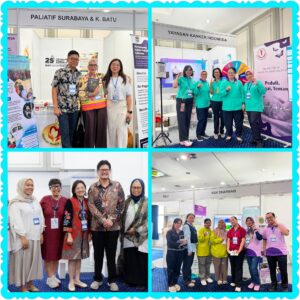 Throughout the day, participants moved between exhibition booths, exchanged ideas, shared educational resources, and learned about services they had previously known only by name. Some exhibitors represented established programmes with years of experience. Others were newer initiatives taking their first steps in palliative care. Together, they reflected the diversity and growing momentum of palliative care across Indonesia.
The value of the exhibition was not measured by the number of agreements signed or projects launched. Instead, it created space for conversations.
Participants discussed how they support patients and families, train healthcare professionals, engage volunteers, and address challenges within their local communities. Many discovered that despite working in different settings, they faced remarkably similar obstacles: limited staffing, funding constraints, low public awareness, and difficulties building effective referral pathways.
These conversations may seem simple, but they are important.
Strong palliative care systems depend not only on clinical knowledge and technical expertise, but also on relationships. Patients often require support across multiple settings, including hospitals, community services, hospices, and home-based care. For these transitions to work well, providers need to know one another, understand available resources, and have trusted networks they can call upon when needed.
In a country as large and geographically diverse as Indonesia, those connections are particularly valuable.
Several participants remarked that the exhibition was the first time they had met colleagues whose work they had previously encountered only  through social media, professional networks, or word of mouth. Others discovered organisations operating in nearby regions that they had never known existed. Contact information was exchanged, experiences were shared, and new possibilities for future collaboration began to emerge.
While it would be premature to claim that the exhibition created partnerships in a single day, it clearly established the conditions that make collaboration possible. Awareness, trust, and communication are often the first steps toward stronger referral networks, shared educational activities, joint advocacy efforts, and coordinated patient care.
Perhaps most importantly, the exhibition reminded participants that they are not working alone.
For many attendees, seeing so many individuals and organisations committed to palliative care gathered in one place was both encouraging and inspiring. It highlighted the growing community of professionals, volunteers, and advocates working to improve quality of life for people living with serious illness and for their families.
The work ahead remains significant. Building a truly connected palliative care ecosystem in Indonesia will require continued investment, education, advocacy, and collaboration. Yet ecosystems do not begin with policies or structures alone. They begin with people finding one another and recognising a shared purpose.
The HOPE Exhibition represented one important step in that journey. At a time when palliative care services in Indonesia are still evolving and often scattered across different sectors and regions, opportunities to connect are more valuable than ever.
Because every strong network starts with a conversation, and every ecosystem begins with connection.
About author :
Lianda Tamara is the Head of Pediatric Palliative Care and a key leader in the development of the Jang Seng Ie Life Center, Husada Hospital Jakarta- Indonesia.
Lianda can be contacted at tamaralianda@gmail.com
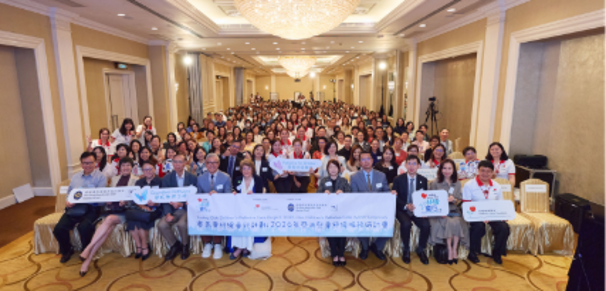
Featured picture: Opening Ceremony of the 1st HOPE International Symposium, with representatives from the Elisabeth Kübler-Ross Foundation, Husada Hospital and the Ministry of Health of the Republic of Indonesia.
Picture 2 -3 : The HOPE Exhibition brought together palliative care providers, hospitals, foundations, community organisations, and professional associations from across Indonesia. In a country where palliative care services are still developing and often geographically dispersed, the exhibition provided a valuable space to build connections and strengthen the foundations of a national palliative care ecosystem.


Leave a Reply