


By Gaby García-Durán and Alex Daniels
ICPCN Education Team
An upgraded ICPCN e-learning course invites professionals to rethink grief, not as an event that begins when a child dies, but as a human experience that can accompany children, families, and professionals throughout the entire illness journey.
Grief does not always begin with goodbye.
Sometimes, it begins with a diagnosis.
With the sentence that divides a family’s life into before and after.
With a parent finding that the future they had imagined is suddenly uncertain. With a child discovering that things they once did with ease are no longer possible. With a sibling trying to understand why life at home has changed. With a healthcare professional recognising that a cure may no longer be possible.
And sometimes, grief begins while everyone is still hoping. 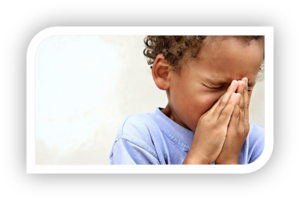
This is the starting point for ICPCN’s newly upgraded e-learning course, Grief and Bereavement in Children’s Palliative Care: an invitation to look beyond death and recognise grief as a thread woven through the experience of serious illness.
Because to care well, we must learn to see loss before, during, and after death.
Grief is not a straight line.
For decades, grief has often been represented as a journey through stages. But human beings rarely grieve according to diagrams.
This course explores key theories and models of grief and bereavement, including the work of Kübler-Ross, Lindemann, Worden, and Parkes, as well as contemporary approaches such as the Dual Process Model, Continuing Bonds Theory, and Tonkin’s Growing Around Grief model.
Together, these theories encourage learners to move away from the idea of “moving on” and instead focus on learning to live with loss.
Grief can move back and forth over time. A person may confront the reality of their loss in one moment and engage with the routines and demands of everyday life in the next.
And grief itself may not necessarily become smaller.
Life may begin to grow around it.
This becomes particularly powerful when we listen to children.

Children jump in puddles.
Julie Stokes offers one of the course’s most memorable images:
“For adults, grief is like wading through this enormous river, whereas for kids, it is puddle jumping.”
A child can be devastated — and then ask to play.
They can cry for their sibling — and moments later laugh at something on television.
They have not forgotten. They are not grieving incorrectly. They are puddle jumping.
The course explores how children understand death differently across developmental stages and how grief may be revisited as they grow. As the American Academy of Pediatrics reminds us:
“At each new milestone, the loss of someone for whom we care deeply is redefined, and grief is revisited.”
This changes practice. Instead of expecting children to grieve like adults, professionals are encouraged to enter the child’s world. This can happen through conversation, drawing, play, rituals, making memories, or sometimes just being quietly present.
When a child dies, parenthood does not.
The course also turns towards mothers and fathers.
What happens to parenthood when the child is no longer physically present?
The answer is not to sever the relationship.
It may help it find a different form.
With the Continuing Bonds approach, learners see how memories, photos, rituals, belongings, stories, and saying a child’s name can help keep a lasting connection.
Good bereavement care does not demand forgetting.
Sometimes it says:
Tell me about your child.
What were they like?
Say their name.
And then, listen.
Another person is in the room.
The professional:
The nurse who knew the child for years. The doctor who delivered difficult news. The psychologist who accompanied the family. The team member who walks out of one room carrying grief and into another where someone else needs them.
The course makes room for professional grief, compassion fatigue, burnout, debriefing, and self-care. It recognizes that working in children’s palliative care can be both very rewarding and emotionally demanding.
Rachel Naomi Remen captures this beautifully:
“The expectation that we can be immersed in suffering and loss daily and not be touched by it is as unrealistic as expecting to be able to walk through water and not get wet.”
Caring leaves footprints on the caregiver too.
Education should not ignore that.
By reflecting, debriefing, building self-awareness, and planning for self-care, learners are encouraged to notice their own reactions and find ways to keep practicing with compassion. The course highlights debriefing as a way to process grief, share feelings, build team strength, find meaning, and support resilience.
Learning about grief is really learning how to stay.
This is not a course about finding the perfect words. Sometimes there are none.
It is about listening when there are no answers, being present when nothing can be changed, recognising grief in its unexpected moments, and appreciating that silence can be a powerful expression of care.
Throughout the course, learners will engage with a variety of learning activities designed to deepen understanding and connect theory with clinical practice. And ultimately, to ask:
What will I do differently because of what I have learned?
This reflective approach echoes a simple but powerful idea attributed to John Dewey:
“We do not learn from experience… we learn from reflecting on experience.”
Because education in grief and bereavement should do more than increase knowledge. It should transform presence.
From knowing about grief to recognising it.
From recognising it to responding to it.
From trying to fix it to learning to accompany it.

And that is where compassionate bereavement care truly begins.
Not at death. Not even at diagnosis. But at the moment we are willing to say:
You do not have to walk through this alone.
Explore the upgraded course here:
https://www.elearnicpcn.org/course/view.php?id=550
For further information about the course, educational resources or any questions, please contact:
Gaby García-Durán
Education Officer, ICPCN
Email: education.officer@icpcn.org


Leave a Reply