

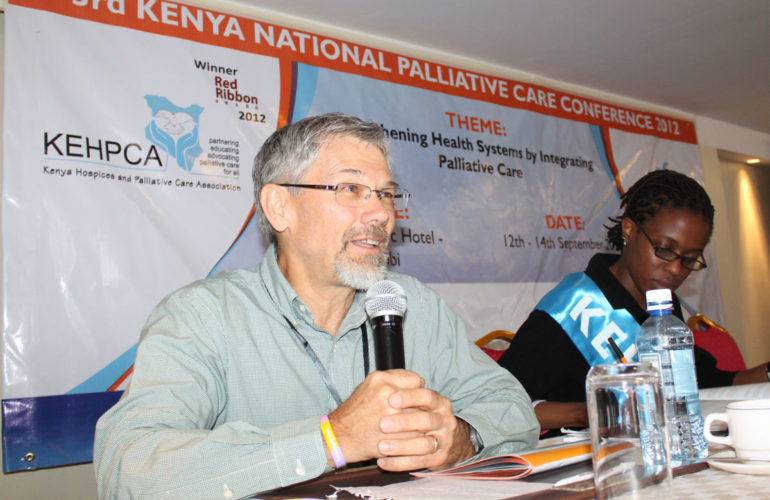
The third Kenya National Palliative Care Conference held at Sarova Panafric Hotel – Nairobi was a big success to be emulated.
Organized by the Kenya Hospices and Palliative Care Association (KEHPCA), the conference attracted over 300 local, regional and international delegates with Uganda, Rwanda, Malawi, Botswana, Namibia, Zambia, UK and USA represented.
The event saw delegates deliver thought provoking presentations with messages surrounding the conference theme ‘Strengthening Health Systems by Integrating Palliative Care’.
Topics ranging from leadership and governance, to spirituality, suffering and healing took center stage as participants sought better ways to stimulate palliative care provision to all.
In her welcoming note, the KEHPCA Chair Dr Brigid Sirengo said palliative care has been developed since inception of the first hospice in Kenya in 1990.
Dr Sirengo attributed this to the efforts of many dedicated individuals, organizations, donors and the Government of Kenya.
The KEHPCA Executive Director, Dr Zipporah Ali identified the conference as an ideal platform where global experts, medical professionals and government policy makers would share achievements and shape the future of palliative care services in Kenya.
Dr Ali paid a special tribute to the Diana Princess of Wales Memorial Fund, saying, the fund has supported KEHPCA over the past five years as well as other hospices in the country. “Many will be affected by the closure of the fund” she added.
Opening the event officially, the Minister of Medical Services Professor Anyang’ Nyong’o said most cancer patients in Kenya are dying because of lack of treatment as a result of ignorance of the disease, late presentation and poor referral systems.
Prof. Nyong’o said that having a healthy lifestyle and changing eating habits can help fight cancer, which has become a major life threatening illness in the country and the world at large.
He added that Cancer has emerged to be the third killer disease after cardiovascular diseases and other infectious diseases which are the major life limiting illnesses.
“This is having a major effect on the Kenyan economy and labor force.” He noted.
Integrating palliative care into the health system, Prof. Nyong’o said, will be a major milestone in ensuring access to crucial palliative care services to all citizens.
Delivering his key note address headlined by the theme of the conference, the Executive Director of African Palliative Care Association (APCA) Dr Emmanuel Luyirika said that there is a necessity to address the needs of patients including children and the aged at a time when they are most vulnerable.
Dr Luyirika said that integration of palliative care into the health systems using the six World Health Organization (WHO) building blocks will add value by addressing the burden of symptoms and pain caused by cancer, HIV, aging and non-communicable diseases (NCDs) and research evidence to offer best ways of doing it should be a priority.
He said that ignorance on the part of policy makers and financiers of the health system and limited financial allocations to the health sector were major challenges crippling the effort of enhancing palliative care to all.
The APCA Executive Director said if better results are to be realized, there is need to employ appropriate research models for each local environment and enhance data collection and management mechanisms.
Presentations from plenary speakers ranged from establishment challenges to successes achieved by various hospices and palliative care units across the globe.
Lydia Warui, a nursing officer at the Nyeri Provincial General Hospital narrated how her organization’s request for a room to carry out palliative care led them to some abandoned toilets which they had to renovate before setting off.
Warui said that lack of trained personnel, drugs stock out, cultural issues, religious belief and lack of support from the family are some of the challenges facing palliative care provision.
Workshops provided a platform where discussion on various topics in palliative care could be handled at a more engaging approach.
Communication, education, research and psychological issues are some of the topics that dominated the breakout sessions.
Dr Stephen Connor, the Senior Fellow to the Worldwide Palliative Care Alliance took participants through the Communication Skills for Palliative Care Workers workshop.
Participants went through the six-step method of breaking bad news which encompasses: attending, paraphrasing, clarifying, perception checking summarizing and empathizing with patients with life limiting illnesses.
Dr John Ellershaw, the National Clinical Lead for the Liverpool Care Pathway for the Dying Pathway LCP programme led the Leadership and Governance workshop where participants were able to understand how they can be exemplary leaders as palliative care providers and advocates.
“To integrate Palliative Care in the Curriculum of Health Professionals in Institutions of Higher Learning, awareness creation & sensitization of heads of departments, lecturers & tutors is crucial.” Basemera Bernadette, the Programmes Officer, Education and Standards at APCA said.
Basemera added that a palliative care working group for institutional coordination or focal person will provide a wider support from departments of the institution.
Jill L. Miller of Hospice and Community Care said that the last days or hours of a patient will be remembered by the loved ones for the rest of their lives.
Miller noted that preparing their families can help to ease suffering and anxiety, provide better comfort for the patient, and offer some consolation to the family at large.
The success of the conference indicated how dedicated various stakeholders are towards having decent and affordable palliative care to all persons with life limiting illnesses.


Leave a Reply